




Custom Thin Lithium Polymer Battery for Smart Watch: Complete Design and Manufacturing Guide
Quick Answer:
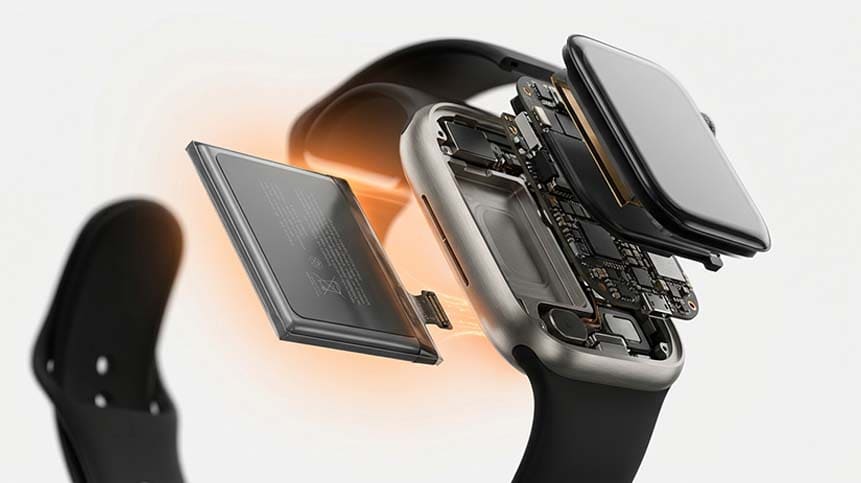
A custom thin lithium polymer battery for a smart watch is an ultra-thin rechargeable LiPo battery specifically designed to fit the limited internal space of wearable devices while maximizing battery capacity, safety, and runtime. Typical smart watch batteries range from 80mAh to 700mAh, with thicknesses between 2mm and 7mm and certifications such as IEC62133, UL2054, UL1642, and UN38.3.
Smart watches have evolved from simple fitness trackers into sophisticated wearable computers capable of health monitoring, GPS navigation, wireless communication, and mobile payment functions. Despite these advancements, one engineering challenge remains constant: delivering sufficient power within an extremely limited space.
At A&S Power, we have worked with wearable device manufacturers, smart watch brands, and OEM/ODM developers that require highly customized lithium polymer batteries tailored to compact product designs. In our experience, battery performance often determines whether a wearable product succeeds or fails in the market.
This guide explains everything manufacturers need to know about custom thin lithium polymer batteries for smart watches, including design considerations, capacity optimization, safety requirements, certification standards, and supplier selection.
What Is a Custom Thin Lithium Polymer Battery?
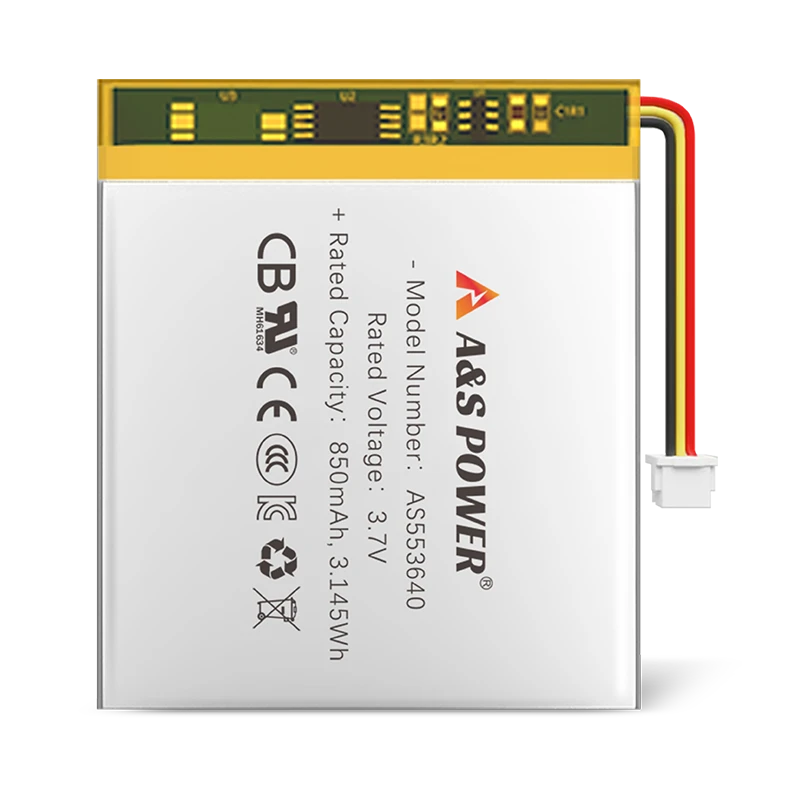
A custom thin lithium polymer battery is a rechargeable lithium-ion battery that uses a polymer electrolyte and flexible pouch structure instead of a rigid cylindrical or prismatic metal casing.
For smart watches, these batteries are engineered to meet strict requirements for:
- Ultra-thin profile
- Lightweight construction
- High energy density
- Safe operation
- Flexible shape customization
- Long cycle life
Unlike standard batteries, custom batteries are specifically designed according to the dimensions and electrical requirements of the wearable device.
Common smart watch battery thicknesses range from:
| Battery Thickness | Typical Application |
|---|---|
| 2.0 mm–3.0 mm | Slim fitness trackers |
| 3.0 mm–4.0 mm | Entry-level smart watches |
| 4.0 mm–5.0 mm | Advanced smart watches |
| 5.0 mm–7.0 mm | GPS and LTE smart watches |
Why Smart Watches Require Custom Batteries
Unlike smartphones, smart watches provide very limited internal space.
A typical smart watch must accommodate:
- Display module
- Main PCB
- Bluetooth module
- GPS module
- Sensors
- Vibration motor
- Speaker
- Waterproof structure
- Battery
As a result, standard battery sizes rarely maximize available space.
Custom batteries allow manufacturers to:
Increase Battery Capacity
Utilize unused internal volume.
Improve Product Runtime
Extend operating hours between charges.
Reduce Product Thickness
Support slimmer industrial designs.
Enhance Product Differentiation
Create unique wearable designs competitors cannot easily replicate.
Key Technical Specifications for Smart Watch Batteries
When developing a custom battery, several specifications require careful consideration.
Voltage
Most smart watches use:
- Nominal Voltage: 3.7V
- Full Charge Voltage: 4.2V
Some advanced platforms use:
- High Voltage Cells: 4.35V
- High Voltage Cells: 4.4V
Higher voltage designs can improve energy density but require compatible charging circuitry.
Capacity
Typical capacities include:
| Smart Watch Type | Battery Capacity |
|---|---|
| Fitness Tracker | 80–150mAh |
| Entry Smart Watch | 150–250mAh |
| Premium Smart Watch | 250–450mAh |
| LTE Smart Watch | 400–700mAh |
Battery capacity directly affects runtime.
However, increasing capacity generally requires:
- Larger footprint
- Increased thickness
- Higher weight
Design engineers must balance these trade-offs.
Thickness
Thickness is often the most critical requirement.
Common custom thicknesses:
- 2.5mm
- 3.0mm
- 3.5mm
- 4.0mm
- 4.5mm
- 5.0mm
Reducing thickness improves aesthetics but may reduce energy storage capacity.
Battery Shape Customization Options
One major advantage of lithium polymer technology is design flexibility.
Custom smart watch batteries can be produced in:
Rectangular Shapes
Most common option.
Curved Shapes
Used for ergonomic wearable designs.
Semi-Circular Shapes
Found in round smart watches.
Stepped Structures
Designed around internal components.
Irregular Shapes
Maximize available internal space.
This flexibility often increases energy utilization by 10%–30% compared with standard battery formats.
Smart Watch Battery Runtime Expectations
Consumers increasingly expect multi-day battery life.
Industry expectations generally follow:
| Smart Watch Functionality | Expected Runtime |
|---|---|
| Basic Tracker | 5–14 Days |
| Bluetooth Smart Watch | 3–7 Days |
| GPS Smart Watch | 1–3 Days |
| LTE Smart Watch | 1–2 Days |
Battery life depends on:
- Screen brightness
- GPS usage
- Heart rate monitoring frequency
- Bluetooth activity
- Processor efficiency
- Battery capacity
Safety Requirements for Wearable Batteries
Because smart watches are worn directly on the body, safety standards are particularly important.
Manufacturers should prioritize batteries complying with:
IEC 62133
International safety standard for portable rechargeable batteries.
UL 1642
Cell-level safety certification.
UL 2054
Battery pack safety certification.
UN38.3
Transportation safety testing.
RoHS
Environmental compliance.
Certified batteries help reduce:
- Thermal risks
- Product recalls
- Regulatory issues
- Transportation delays
Manufacturing Process of Custom Smart Watch Batteries
Developing a custom battery typically follows several stages.
Requirement Analysis
Engineers review:
- Device dimensions
- Runtime requirements
- Charging system
- Operating temperature
Battery Design
Engineers determine:
- Cell chemistry
- Capacity
- Dimensions
- Protection circuit
Prototype Development
Samples are manufactured and tested.
Verification Testing
Testing includes:
- Cycle life
- Capacity verification
- High-temperature testing
- Drop testing
- Charging performance
Mass Production
Once validated, production scales according to customer demand.
Battery Cycle Life and Longevity
Battery lifespan is a major concern for smart watch users.
Typical cycle life:
| Battery Type | Cycle Life |
|---|---|
| Standard LiPo | 300–500 Cycles |
| Premium LiPo | 500–800 Cycles |
| High-End Wearable Battery | 800+ Cycles |
Factors affecting lifespan:
- Charging temperature
- Discharge depth
- Charging speed
- Storage conditions
Proper battery management can significantly extend operational life.
Challenges in Designing Ultra-Thin Smart Watch Batteries
Developing ultra-thin batteries presents unique engineering challenges.
Reduced Capacity
Thinner batteries contain less active material.
Increased Mechanical Stress
Thin cells are more susceptible to deformation.
Thermal Management
Compact designs limit heat dissipation.
Manufacturing Precision
Small dimensional tolerances require advanced production equipment.
Experienced battery manufacturers can help overcome these challenges through optimized cell design and quality control.
How to Choose a Custom Smart Watch Battery Supplier
Selecting the right supplier is critical.
We recommend evaluating suppliers based on:
Manufacturing Experience
Look for proven wearable battery expertise.
Certification Portfolio
Verify:
- IEC62133
- UL2054
- UL1642
- UN38.3
Engineering Support
Strong technical teams accelerate development.
MOQ Flexibility
Important for startups and prototype projects.
Quality Systems
ISO 9001 and ISO 13485 capabilities provide additional assurance.
Why Many Smart Watch Brands Choose Custom LiPo Batteries
Custom lithium polymer batteries offer several advantages:
✓ Higher energy density
✓ Lightweight construction
✓ Flexible dimensions
✓ Better space utilization
✓ Enhanced product differentiation
✓ Improved user experience
For wearable electronics, custom batteries are often the most practical solution for achieving both compact design and competitive battery life.
Future Trends in Smart Watch Battery Technology
Several innovations are shaping the future of wearable power systems.
Higher Energy Density Materials
New electrode technologies continue improving runtime.
Fast Charging
Consumers increasingly expect full charging within one hour.
Flexible Batteries
Flexible cell structures may enable new wearable designs.
Solid-State Batteries
Although still developing, solid-state technology may improve safety and energy density.
AI Power Management
Advanced software algorithms optimize battery usage patterns.
Conclusion
Custom thin lithium polymer batteries have become the preferred power solution for modern smart watches because they combine compact dimensions, lightweight construction, and high energy density. As wearable devices continue to add health monitoring, GPS tracking, wireless connectivity, and AI-powered features, battery customization becomes increasingly important.
At A&S Power, we help wearable device manufacturers develop custom lithium polymer batteries tailored to their product dimensions, runtime goals, and certification requirements. From prototype development to mass production, our engineering team supports every stage of the battery design process to ensure safe, reliable, and high-performance power solutions for smart watch applications.
Looking for a custom smart watch battery solution? Contact A&S Power to discuss your project requirements and receive a tailored battery design recommendation.
FAQ
What battery is commonly used in smart watches?
Most smart watches use rechargeable 3.7V lithium polymer batteries due to their high energy density, lightweight design, and flexible form factor.
Can a lithium polymer battery be customized for any watch shape?
Yes. Custom LiPo batteries can be designed in rectangular, curved, circular, or irregular shapes to fit available internal space.
What is the ideal battery thickness for a smart watch?
Most smart watches use batteries between 3mm and 5mm thick, depending on capacity requirements and product design.
How long does a smart watch battery typically last?
Modern smart watch batteries typically provide 1–14 days of operation depending on capacity, display settings, GPS usage, and wireless activity.
What certifications should a smart watch battery have?
Recommended certifications include IEC62133, UL1642, UL2054, UN38.3, CE, and RoHS.
How many charge cycles can a smart watch battery support?
High-quality lithium polymer batteries generally achieve 500–800 charge cycles before noticeable capacity degradation.
-

 May.2026.08.0521700 Battery Pack with BMS: Design, Safety and Custom SolutionsLearn More
 -
 May.2026.08.04Smart Beauty Equipment Battery Pack ManufacturerLearn More
 -
 May.2026.08.04High Reliability Polymer Battery for Handheld Dental DevicesLearn More
 -
 May.2026.08.04Ultra Thin Lithium Polymer Battery 0.4mm 0.5mm Custom GuideLearn More
 -
 May.2026.07.30Smoke Detector Battery Guide: Choosing the Right Battery for Reliable Fire ProtectionLearn More