




12V 100Ah LiFePO4 Battery Deep Guide for Energy Storage Systems
Quick Answer:
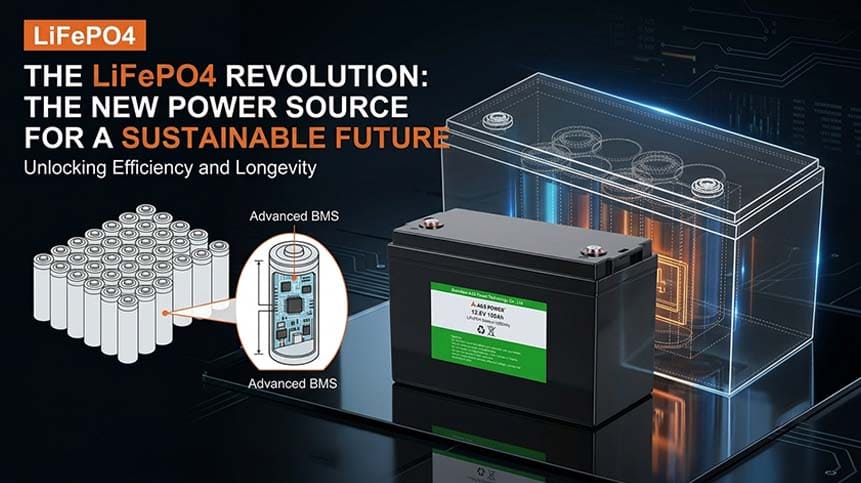
A 12V 100Ah LiFePO4 battery is a lithium iron phosphate deep-cycle battery designed to provide around 1280Wh of stable, usable energy. Compared with traditional lead-acid batteries, it offers 5–10 times longer cycle life (3000–6000+ cycles), lighter weight, faster charging, and higher usable capacity (up to 100% depth of discharge). It is widely used in solar energy storage systems, RVs, marine applications, and backup power systems due to its safety, efficiency, and long service life.
Introduction
As a lithium battery manufacturer working closely with OEM clients across energy storage, mobility, and industrial applications, I have seen a clear shift: the 12V 100Ah LiFePO4 battery has become one of the most widely adopted energy storage solutions for off-grid and backup systems.
Its popularity is not accidental. It comes from a combination of long cycle life, thermal stability, high usable capacity, and compatibility with solar, RV, and marine systems. In this article, I will break down how this battery works, why it outperforms traditional lead-acid batteries, and how custom OEM solutions—such as our AS32700-12.8V-100Ah LiFePO4 battery pack—are shaping the next generation of energy storage.
What Is a 12V 100Ah LiFePO4 Battery?
A 12V 100Ah LiFePO4 battery is a lithium iron phosphate energy storage system designed to deliver:
- Nominal voltage: 12.8V
- Capacity: 100Ah
- Energy output: ~1280Wh
- Chemistry: Lithium Iron Phosphate (LiFePO4)
- Cycle life: 3000–6000+ cycles depending on usage
Unlike traditional lead-acid batteries, LiFePO4 maintains a stable discharge curve, meaning voltage remains consistent until the battery is nearly depleted.
This is especially important for:
- Solar energy storage systems
- RV and camper power systems
- Marine trolling motors
- UPS backup systems
- Off-grid cabins
Why LiFePO4 Outperforms Lead-Acid Batteries
From my experience working with global OEM customers, the transition from lead-acid to LiFePO4 is driven by measurable performance improvements.
1. Cycle Life Advantage
| Battery Type | Cycle Life (80% DOD) | Usable Years |
|---|---|---|
| Lead-Acid (AGM) | 300–500 cycles | 1–2 years |
| Gel Battery | 500–800 cycles | 2–3 years |
| LiFePO4 | 3000–6000+ cycles | 8–12 years |
This means a LiFePO4 battery can last 5–10 times longer than traditional options.
2. Weight Reduction
A typical 12V 100Ah LiFePO4 battery weighs around 10–12 kg, while a lead-acid equivalent can exceed 28–30 kg.
This difference is critical in RV and marine systems where weight directly impacts efficiency.
3. Higher Usable Capacity
Lead-acid batteries should only be discharged to ~50% to preserve lifespan. LiFePO4 allows 80–100% depth of discharge safely.
That means a “100Ah” LiFePO4 battery effectively delivers nearly double usable energy compared to lead-acid.
Inside a 12.8V 100Ah LiFePO4 Battery Pack Design
Our AS32700-12.8V-100Ah LiFePO4 battery pack uses a 4S17P configuration based on high-performance 32700 cylindrical cells.
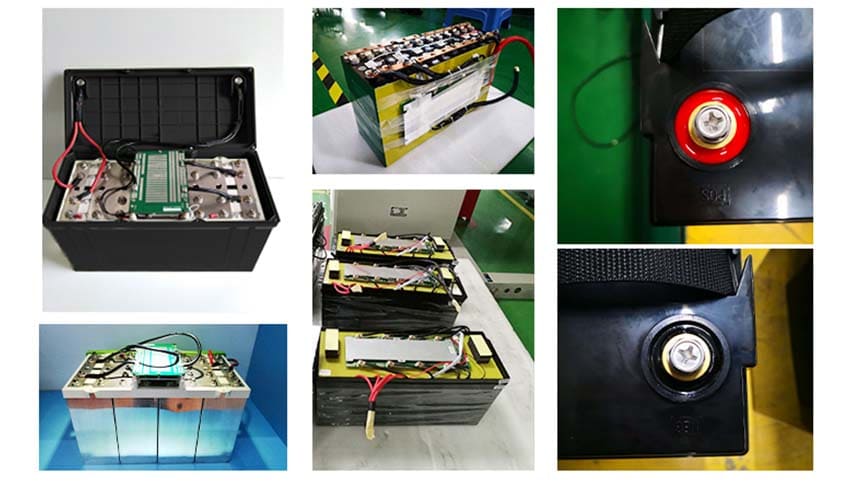
This design ensures:
- High current stability
- Balanced thermal performance
- Improved mechanical durability
- Longer cycle life consistency
Battery Architecture Overview
- Cell type: 32700 LiFePO4 cells
- Configuration: 4S17P
- Nominal voltage: 12.8V
- Capacity: 100Ah
- Energy: ~1280Wh
- Built-in BMS: Overcharge, over-discharge, overcurrent, short circuit protection
This structure is commonly used in premium-grade OEM energy storage systems due to its balance of safety and scalability.
Key Technical Specifications (Data Table)
| Parameter | Specification |
|---|---|
| Nominal Voltage | 12.8V |
| Rated Capacity | 100Ah |
| Energy Output | 1280Wh |
| Chemistry | LiFePO4 |
| Configuration | 4S17P |
| Cycle Life | 3000–6000+ cycles |
| Discharge Efficiency | ≥95% |
| Operating Temperature | -20°C to 60°C |
| Storage Temperature | -10°C to 45°C |
| BMS Protection | Integrated smart BMS |
| Weight (approx.) | 10–13 kg (varies by design) |
Real-World Applications of 12V 100Ah LiFePO4 Battery
Solar Energy Storage Systems
One of the most common applications is residential and small commercial solar storage.
- Stores excess solar energy during the day
- Powers appliances at night
- Reduces dependence on grid electricity
RV and Camper Power Systems
In RV systems, energy efficiency and weight are critical. LiFePO4 batteries provide:
- Longer off-grid runtime
- Faster charging via alternator or solar
- Stable output for appliances
Marine Applications
For trolling motors and onboard electronics:
- Stable discharge under load
- Corrosion-resistant chemistry
- Safer operation in enclosed compartments
UPS and Backup Systems
In telecom and emergency systems:
- Instant power switching
- Long service life
- Reduced maintenance cost
OEM & Custom Battery Manufacturing Perspective
As a manufacturer, I often work with clients who require customized versions of 12V 100Ah LiFePO4 batteries.
Customization options include:
- Different cell formats (18650 / 32700 / prismatic)
- Custom BMS communication (CAN, RS485, Bluetooth)
- Waterproof housing (IP65–IP67)
- Smart monitoring systems
- Branding and enclosure design
Our AS32700-12.8V-100Ah battery pack is specifically designed for OEM scalability, ensuring consistent performance across mass production batches.
Safety Advantages of LiFePO4 Chemistry
Safety is one of the most important reasons LiFePO4 dominates modern energy storage.
Compared with NMC or lead-acid systems:
- Higher thermal runaway threshold
- Stable phosphate structure
- Lower risk of fire or explosion
- Strong chemical stability under abuse conditions
This makes it ideal for residential and industrial environments.
Performance Comparison Chart
| Feature | LiFePO4 | Lead-Acid | NMC Lithium |
|---|---|---|---|
| Safety | ★★★★★ | ★★★ | ★★ |
| Cycle Life | ★★★★★ | ★★ | ★★★★ |
| Energy Density | ★★★ | ★ | ★★★★★ |
| Maintenance | None | High | Low |
| Cost Over Time | Low | High | Medium |
Economic Value
Although LiFePO4 batteries have a higher upfront cost, the long-term economics are significantly better.
Example calculation:
- Lead-acid battery replacement: every 2 years
- LiFePO4 lifespan: 8–10 years
Over a 10-year period:
- Lead-acid: 4–5 replacements
- LiFePO4: 1 unit
This reduces total ownership cost by up to 60–70%.
Installation and Usage Recommendations
From my engineering experience, I recommend:
- Use a LiFePO4-compatible charger
- Avoid deep discharge below manufacturer limits
- Maintain moderate temperature environment
- Use proper BMS communication in parallel systems
These practices significantly extend battery lifespan.
Why Manufacturer Expertise Matters
In the lithium battery industry, not all 12V 100Ah batteries are equal.
Key factors that define quality:
- Cell grading consistency
- BMS protection accuracy
- Thermal design structure
- Welding and internal resistance control
- Quality assurance testing (UN38.3, CE, RoHS, IEC standards)
As an OEM manufacturer, we ensure each pack undergoes:
- Capacity testing
- Internal resistance measurement
- Aging cycle validation
- Safety compliance checks
This is critical for industrial-grade reliability.
In our experience working with OEM battery projects, LiFePO4-based 32700 cells offer one of the best balances between safety, lifespan, and total ownership cost.
Engineers often select 32700 LiFePO4 battery packs because they provide:
- Stable voltage output
- Excellent cycle life
- High reliability
- Lower maintenance costs
- Enhanced safety
For products expected to operate for many years, these advantages often outweigh the slightly lower energy density compared with other lithium chemistries.
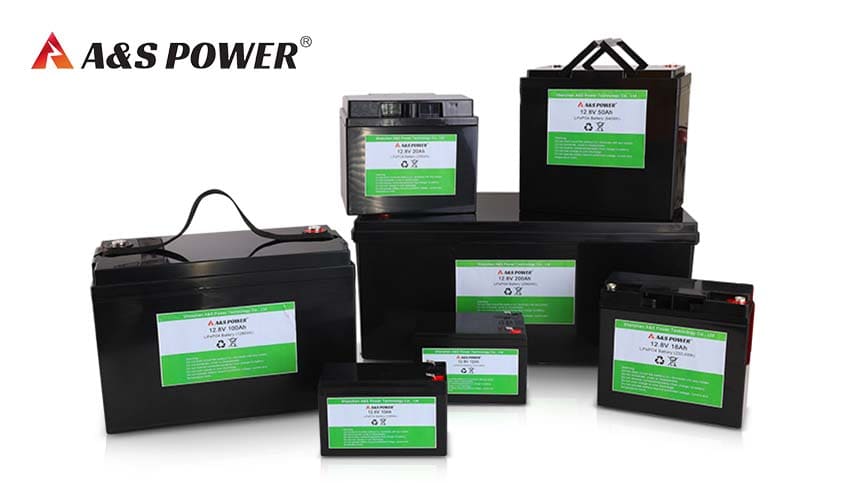
Need a custom Lithium battery solution? Contact A&S Power to discuss your project requirements, battery specifications, certification needs, and production goals.
Conclusion
The 12V 100Ah LiFePO4 battery represents a major evolution in modern energy storage. From my perspective as a manufacturer, it is not just a replacement for lead-acid—it is a complete upgrade in performance, safety, and lifecycle economics.
Products like our AS32700-12.8V-100Ah LiFePO4 battery pack demonstrate how OEM engineering can deliver scalable, reliable, and high-efficiency power solutions for solar, RV, marine, and industrial applications.
As global demand for clean and efficient energy storage continues to rise, LiFePO4 technology will remain the backbone of next-generation battery systems.
FAQ
How long does a 12V 100Ah LiFePO4 battery last?
Typically 8–12 years depending on usage and charging habits.
Can it replace a lead-acid battery directly?
Yes, in most cases it is a drop-in replacement, but charger compatibility should be checked.
How many solar panels are needed to charge it?
Usually a 300W–600W solar system can fully charge it in one day depending on sunlight.
Is a 12V 100Ah LiFePO4 battery safe for indoor use?
Yes. LiFePO4 chemistry is considered one of the safest lithium technologies.
Can it be connected in parallel?
Yes, multiple units can be connected for higher capacity systems with proper BMS matching.
-

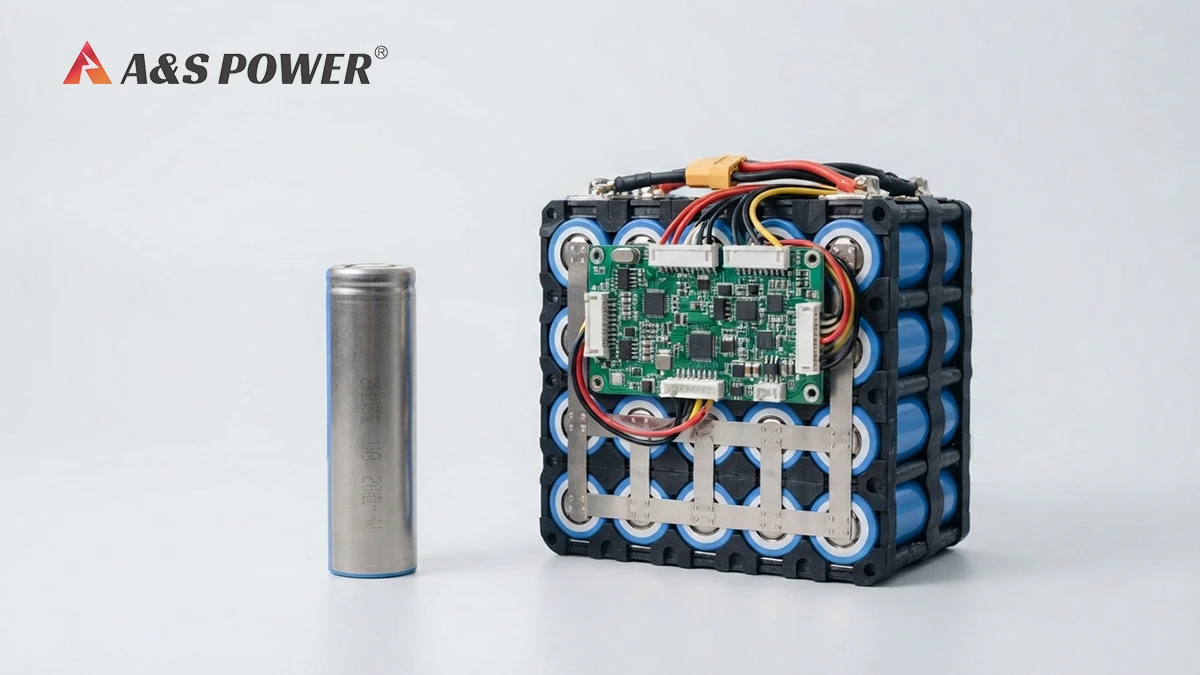 May.2026.08.0521700 Battery Pack with BMS: Design, Safety and Custom SolutionsLearn More
 -
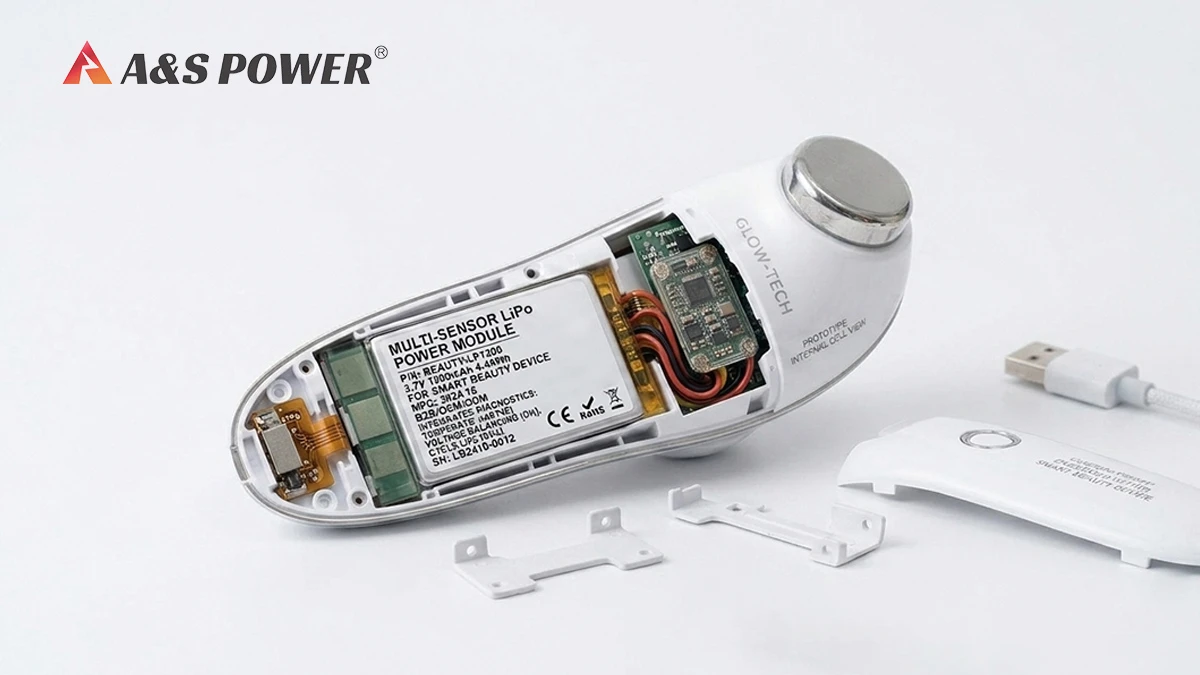 May.2026.08.04Smart Beauty Equipment Battery Pack ManufacturerLearn More
 -
 May.2026.08.04High Reliability Polymer Battery for Handheld Dental DevicesLearn More
 -
 May.2026.08.04Ultra Thin Lithium Polymer Battery 0.4mm 0.5mm Custom GuideLearn More
 -
 May.2026.07.30Smoke Detector Battery Guide: Choosing the Right Battery for Reliable Fire ProtectionLearn More