




21700 Battery Pack with BMS: Design, Safety and Custom Solutions
Quick Answer:
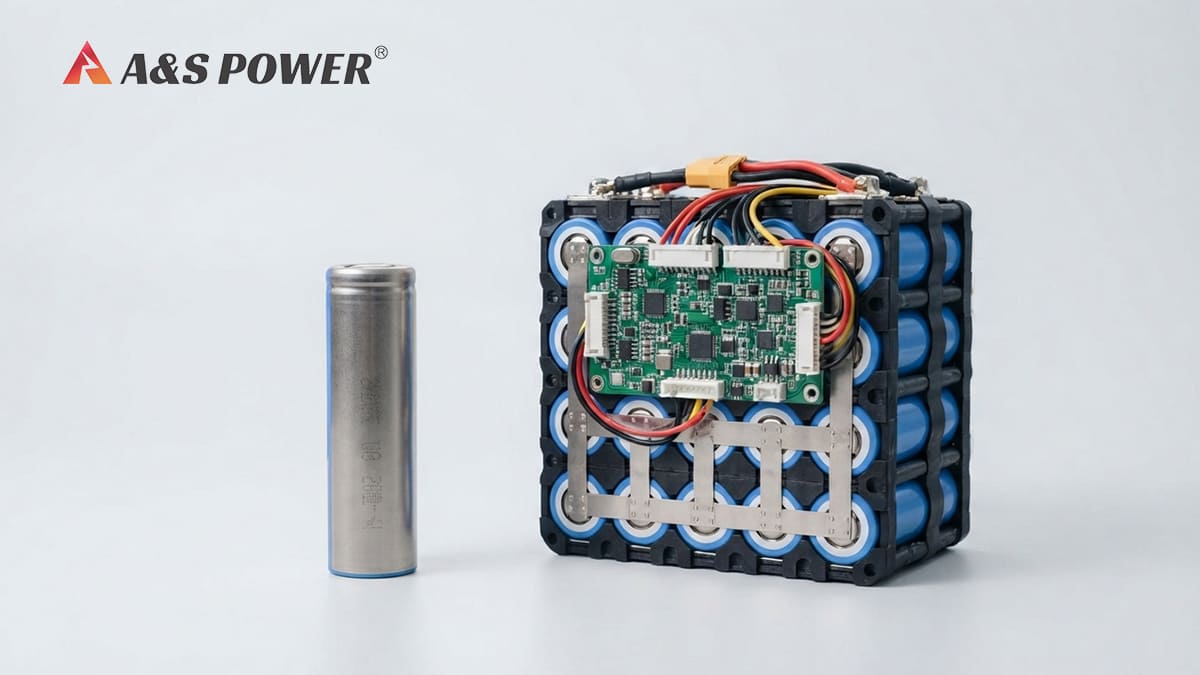
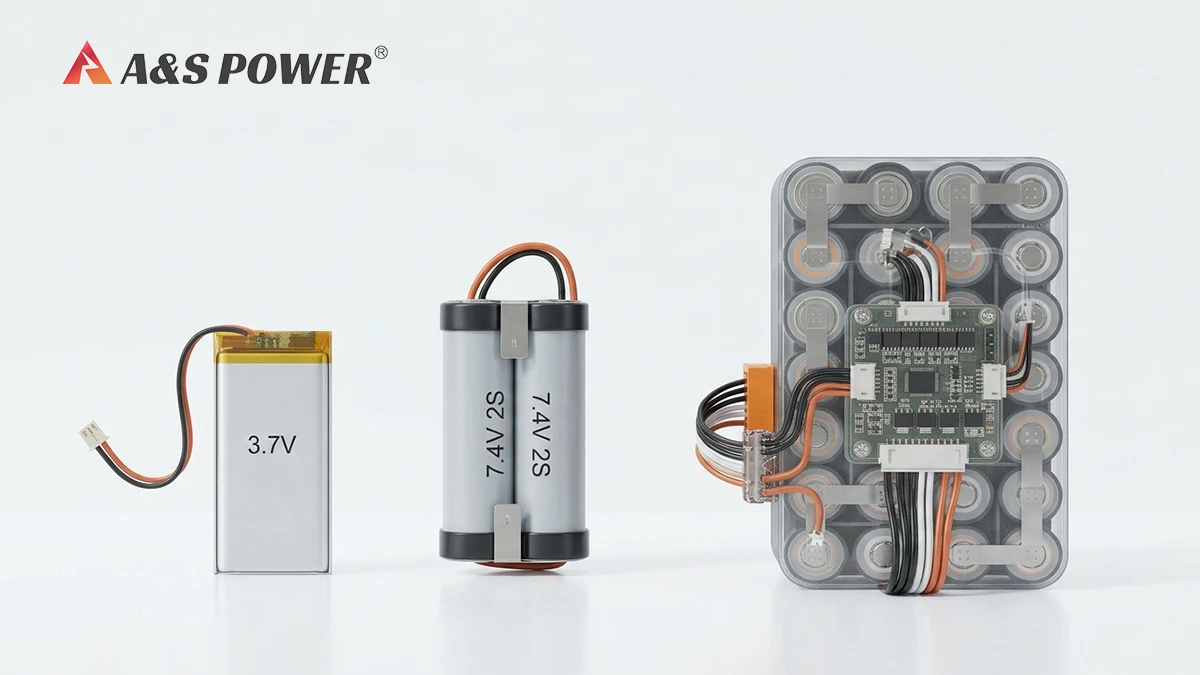
A 21700 battery pack with BMS is a rechargeable lithium-ion battery system made by connecting multiple 21700 cylindrical cells with an integrated Battery Management System.
The BMS monitors and controls critical battery parameters, including:
- Overcharge protection
- Over-discharge protection
- Overcurrent protection
- Short circuit protection
- Cell voltage balancing
- Temperature monitoring
- State of Charge (SOC) estimation
Compared with a battery pack without protection electronics, a 21700 battery pack with BMS offers higher reliability, improved safety, and longer operating life, making it suitable for demanding applications such as robotics, medical equipment, portable power stations, and industrial devices.
Introduction
As a professional lithium battery manufacturer, I have seen the demand for 21700 battery packs with BMS (Battery Management System) increase significantly in industrial equipment, portable electronics, energy storage systems, robotics, and smart devices.
Compared with traditional 18650 battery packs, the 21700 lithium-ion cell provides a larger diameter and longer length, allowing manufacturers to achieve higher energy capacity, improved power output, and better space utilization. However, simply connecting multiple 21700 cells together is not enough for a reliable battery system. A properly designed BMS is essential for safety, battery life, and stable performance.
In custom battery pack projects, I focus not only on selecting suitable 21700 cells but also on optimizing the complete power system, including cell configuration, protection circuits, charging requirements, thermal management, connectors, and certification compliance.
A well-designed 21700 battery pack with BMS can provide reliable energy solutions for applications requiring high capacity, long cycle life, and strict safety requirements.
A&S Power has more than 15 years of experience in custom lithium battery pack manufacturing, providing OEM and ODM battery solutions for industrial, medical, consumer electronics, and energy storage applications.
Understanding 21700 Battery Pack with BMS Technology
The 21700 battery format has become increasingly popular because it provides a balance between energy density, output capability, and mechanical strength.
The name “21700” represents the physical dimensions of the cylindrical cell:
- 21 mm diameter
- 70 mm length
This larger size allows manufacturers to increase active material volume compared with the widely used 18650 cell.
For example, a typical 18650 lithium-ion cell may provide approximately 2500mAh–3500mAh capacity, while modern 21700 cells can commonly achieve 4000mAh–5000mAh or higher depending on chemistry and manufacturer design.
For OEM battery projects, the larger cell capacity means fewer cells may be required to achieve the same energy output, which can simplify battery pack structure and reduce assembly complexity.
Why Choose 21700 Cells for Custom Battery Packs?
When designing a custom lithium battery solution, I evaluate several important factors:
Higher Energy Capacity
One of the biggest advantages of 21700 cells is their increased capacity.
A larger cylindrical structure provides more space for electrode materials, allowing manufacturers to store more energy in each cell.
Typical comparison:
| Battery Cell Type | Typical Capacity Range | Nominal Voltage | Main Advantage |
|---|---|---|---|
| 18650 Li-ion Cell | 2500mAh–3500mAh | 3.6V/3.7V | Mature technology, compact size |
| 21700 Li-ion Cell | 4000mAh–5000mAh+ | 3.6V/3.7V | Higher capacity and energy density |
| 32700 LiFePO4 Cell | 5000mAh–6000mAh+ | 3.2V | Long cycle life and safety |
For applications where space is limited but higher runtime is required, 21700 battery packs provide a strong advantage.
Better Energy Density and Space Utilization
Energy density is a key factor for portable devices.
The energy calculation of a lithium battery pack is:
Energy (Wh) = Voltage (V) × Capacity (Ah)
For example:
A 21700 cell:
- Voltage: 3.7V
- Capacity: 5000mAh (5Ah)
Energy:
3.7V × 5Ah = 18.5Wh
A 10-cell pack could theoretically provide:
18.5Wh × 10 = 185Wh
Actual usable energy depends on:
- BMS protection settings
- Discharge current
- Temperature conditions
- Battery chemistry
- Aging condition
This is why professional battery pack design requires testing rather than relying only on theoretical calculations.
What Does the BMS Do in a 21700 Battery Pack?
The Battery Management System is the control center of the battery pack.
Without a properly designed BMS, lithium-ion cells can experience unsafe conditions that may reduce performance or create safety risks.
Overcharge Protection
Lithium-ion cells have a maximum charging voltage limit.
For standard lithium-ion chemistry:
- Nominal voltage: 3.6V–3.7V
- Full charge voltage: approximately 4.2V per cell
If charging voltage exceeds the safe limit, the BMS disconnects the charging circuit to prevent cell damage.
Over-Discharge Protection
Deep discharge can permanently reduce lithium battery capacity.
A BMS monitors individual cell voltage and disconnects the load when voltage reaches the protection threshold.
This helps maintain:
- Longer cycle life
- Stable capacity
- Safer operation
Cell Balancing
When multiple 21700 cells are connected in series, small voltage differences naturally occur between cells.
For example:
A 4S battery pack:
- Nominal voltage:
4 × 3.7V = 14.8V - Full charge voltage:
4 × 4.2V = 16.8V
If one cell reaches the maximum voltage earlier than others, imbalance can reduce available capacity.
A balancing function helps maintain similar voltage levels between cells.
Temperature Monitoring
Temperature has a significant impact on lithium battery performance.
A professional 21700 battery pack with BMS usually integrates:
- NTC temperature sensors
- Charging temperature protection
- Discharging temperature protection
Typical lithium-ion operating ranges:
| Operation | Typical Temperature Range |
|---|---|
| Charging | 0°C to 45°C |
| Discharging | -20°C to 60°C |
| Storage | Around 20°C to 25°C recommended |
Specific limits depend on cell manufacturer specifications.
How to Design a Custom 21700 Battery Pack with BMS
When developing a custom 21700 battery pack with BMS, I do not consider the battery cells and protection board as separate components. A reliable battery system requires the integration of:
- Battery cell selection
- Series and parallel configuration
- BMS specifications
- Charging requirements
- Mechanical structure
- Thermal management
- Safety certifications
Each application has different power requirements. A portable medical device may prioritize lightweight design and stable discharge, while an industrial robot may require high discharge current and advanced communication functions.
Therefore, the battery pack design process should begin with understanding the equipment’s voltage, current, operating time, and environmental conditions.
Understanding 21700 Battery Pack Configurations
The configuration of a 21700 battery pack determines the final voltage, capacity, and power output.
The basic design principle is:
- Series connection (S) increases voltage
- Parallel connection (P) increases capacity and current capability
For example:
A 3S2P 21700 battery pack means:
- 3 cells connected in series
- 2 groups connected in parallel
Total cells:
3 × 2 = 6 cells
Voltage:
3.7V × 3 = 11.1V nominal
Capacity:
5000mAh × 2 = 10000mAh (10Ah)
Energy:
11.1V × 10Ah = 111Wh
Common 21700 Battery Pack Configurations
| Configuration | Nominal Voltage | Example Capacity (5000mAh Cells) | Typical Applications |
|---|---|---|---|
| 1S2P | 3.7V | 10Ah | Portable electronics |
| 2S2P | 7.4V | 10Ah | Small equipment, robotics |
| 3S2P | 11.1V | 10Ah | Industrial devices, tools |
| 4S2P | 14.8V | 10Ah | Medical equipment, mobility systems |
| 7S3P | 25.9V | 15Ah | Robotics, industrial systems |
| 10S4P | 37V | 20Ah | Energy storage, high-power equipment |
The final configuration depends on: Required voltage, Runtime requirements, Maximum discharge current, Available installation space, Weight limitations.
How to Select the Right BMS for a 21700 Battery Pack?
Choosing the correct BMS is one of the most important steps in battery pack development.
A BMS should match the electrical characteristics of the battery pack.
The main selection factors include:
1. Battery Series Number
The BMS must match the number of cells connected in series.
Examples:
| Battery Pack | Required BMS |
|---|---|
| 2S 21700 Pack | 2S BMS |
| 3S 21700 Pack | 3S BMS |
| 4S 21700 Pack | 4S BMS |
| 7S 21700 Pack | 7S BMS |
| 10S 21700 Pack | 10S BMS |
Using an incorrect BMS may cause inaccurate voltage monitoring or protection failure.
2. Continuous Discharge Current
The BMS current rating should be higher than the equipment's maximum operating current.
For example:
If a device requires:
- Continuous current: 15A
- Peak current: 30A
A suitable BMS should not only support 15A continuous discharge but also handle short-term peak loads.
A common engineering approach is selecting a BMS with approximately:
20%–30% current margin
to improve reliability.
3. Communication Functions
Modern battery systems increasingly require intelligent monitoring.
Advanced BMS options may support:
UART Communication
Used for:
- Smart devices
- Portable equipment
- Embedded systems
Advantages:
- Simple communication
- Low cost
- Easy integration
CAN Bus Communication
Common in:
- Robotics
- Electric vehicles
- Industrial automation
Advantages:
- Reliable communication over longer distances
- Multi-device networking capability
SMBus / I2C Communication
Often used in:
- Medical electronics
- Consumer devices
- Battery-powered instruments
Communication functions allow users to monitor:
- Battery voltage
- Current
- Temperature
- Remaining capacity
- Cycle count
- Battery health status
Key Design Factors for 21700 Battery Packs
A high-quality battery pack requires more than selecting high-capacity cells.
Cell Quality and Consistency
Battery pack performance depends heavily on cell matching.
During production, professional manufacturers normally evaluate:
- Capacity consistency
- Internal resistance
- Voltage difference
- Cycle performance
Cells with similar characteristics reduce:
- Capacity loss
- Heat generation
- Cell imbalance
For multi-cell packs, consistency is especially important because one weak cell can affect the performance of the entire battery system.
Thermal Management Design
Although lithium-ion batteries are efficient, heat management remains important for high-power applications.
Heat may come from:
- Internal resistance
- High discharge current
- Fast charging
- Poor ventilation
A professional 21700 battery pack design may include:
- Insulation materials
- Heat-resistant adhesive
- Thermal pads
- Metal enclosure
- Temperature sensors
Maintaining suitable operating temperatures helps improve:
- Battery lifespan
- Safety
- Charging efficiency
Mechanical Protection
A cylindrical 21700 cell has a strong metal casing, but the complete battery pack still requires protection.
Common mechanical design elements include:
- Cell holders
- Nickel strip welding
- Insulation films
- Protective housing
- Custom connectors
For industrial applications, vibration resistance and impact protection are also important considerations.
Advantages of 21700 Battery Pack with BMS Compared with 18650 Packs
Many customers ask whether they should choose 21700 or 18650 battery packs.
Both technologies are mature, but they serve different requirements.
| Feature | 18650 Battery Pack | 21700 Battery Pack |
|---|---|---|
| Diameter | 18mm | 21mm |
| Length | 65mm | 70mm |
| Capacity | 2500–3500mAh typical | 4000–5000mAh+ typical |
| Energy Density | Good | Higher |
| Pack Size | More cells required | Fewer cells required |
| Manufacturing Cost | Lower | Slightly higher |
| High Power Capability | Good | Excellent |
| Future Development | Mature | Growing adoption |
For applications requiring higher energy capacity in limited space, 21700 battery packs provide clear advantages.
Applications of 21700 Battery Pack with BMS
Based on my experience working with OEM customers, 21700 battery packs are widely used in:
Portable Power Stations
Portable energy storage systems require: High capacity, Long cycle life, Stable output.
21700 cells are increasingly adopted because they provide more energy in a compact design.
Robotics and AGV Systems
Autonomous equipment requires reliable batteries because unexpected power interruption can affect operation.
A BMS helps provide: Real-time monitoring, Protection control, Predictable battery performance.
Medical Equipment
Medical devices require strict reliability.
Typical requirements include: Stable voltage output, Low self-discharge, Safety protection, Certification compliance.
Examples include:
- Portable diagnostic equipment
- Mobile medical instruments
- Healthcare monitoring devices
Industrial Equipment
Industrial applications often require: High discharge capability, Long operating time, Rugged construction.
21700 battery packs with intelligent BMS are suitable for:
- Inspection equipment
- Measurement instruments
- Automation systems
Manufacturing Process of a Custom 21700 Battery Pack with BMS
As a lithium battery manufacturer, I understand that producing a reliable 21700 battery pack with BMS requires strict quality control throughout every manufacturing stage.
A battery pack is not simply an assembly of cells. The final performance depends on how well the cells, protection system, structure, and testing process are integrated.
The typical manufacturing process includes the following steps:
Step 1: Battery Cell Selection and Testing
The first step is selecting suitable 21700 lithium-ion cells according to the application requirements.
Important evaluation factors include:
- Nominal voltage
- Capacity
- Continuous discharge current
- Internal resistance
- Cycle life
- Operating temperature range
Before assembly, battery cells are normally tested and sorted to ensure consistency.
Key testing parameters:
| Test Item | Purpose |
|---|---|
| Capacity Test | Verify actual energy output |
| Internal Resistance Test | Evaluate cell health and consistency |
| Voltage Matching | Reduce imbalance between cells |
| Appearance Inspection | Identify physical defects |
| Self-discharge Test | Evaluate storage stability |
Consistent cells help improve battery pack reliability and reduce premature aging.
Step 2: Cell Assembly and Welding Process
After cell matching, 21700 cells are assembled according to the required configuration.
Common connection methods include:
- Nickel strip spot welding
- Laser welding (for specific designs)
- Insulation protection
Professional assembly should avoid excessive heat during welding because high temperatures may damage internal cell structures.
Typical protection materials include:
- Insulation paper
- Heat-resistant tape
- PVC shrink film
- Plastic holders
These materials help prevent:
- Short circuits
- Mechanical damage
- Electrical leakage
Step 3: BMS Installation and Programming
The BMS is installed after the battery structure is prepared.
Depending on customer requirements, the BMS may include:
Basic Protection BMS
Functions:
- Overcharge protection
- Over-discharge protection
- Overcurrent protection
- Short circuit protection
Suitable for:
- Consumer electronics
- Basic portable devices
Smart BMS
Additional functions:
- Battery monitoring
- Communication interface
- SOC calculation
- Fault recording
- Temperature monitoring
Suitable for:
- Industrial equipment
- Robotics
- Medical systems
- Energy storage applications
The BMS parameters must be configured according to:
- Cell chemistry
- Series configuration
- Charging voltage
- Discharge requirements
Step 4: Battery Pack Performance Testing
Before shipment, professional battery manufacturers perform multiple tests to verify safety and performance.
Common tests include:
| Testing Item | Purpose |
|---|---|
| Charge and Discharge Test | Confirm capacity performance |
| Protection Test | Verify BMS functions |
| Temperature Test | Evaluate environmental reliability |
| Aging Test | Check long-term stability |
| Short Circuit Test | Verify safety protection |
| Insulation Test | Prevent electrical risks |
These tests help ensure that the final battery pack meets customer specifications.
Safety Standards for 21700 Battery Packs with BMS
Safety compliance is essential for international battery applications.
Depending on the market and application, 21700 battery packs may require different certifications.
UN38.3 Transportation Testing
United Nations Subcommittee of Experts on the Transport of Dangerous Goods UN38.3 testing is required for lithium batteries transported by air, sea, or land.
Testing typically evaluates:
- Altitude simulation
- Thermal test
- Vibration
- Shock
- External short circuit
- Impact/crush
- Overcharge
- Forced discharge
Passing UN38.3 helps ensure safe transportation compliance.
IEC 62133 Battery Safety Standard
International Electrotechnical Commission IEC 62133 is one of the most recognized safety standards for rechargeable lithium batteries.
It evaluates:
- Electrical safety
- Mechanical safety
- Abnormal operation
- Charging behavior
Many portable electronic products require IEC 62133 compliance.
UL Battery Safety Requirements
For the North American market, customers often consider: UL 1642 for lithium cells, UL 2054 for household and commercial battery packs.
These standards evaluate risks such as:
- Overcharge
- Short circuit
- Mechanical abuse
- Abnormal conditions
A properly designed BMS plays an important role in meeting these safety requirements.
Why Choose a Professional 21700 Battery Pack Manufacturer?
Selecting a battery supplier is not only about battery price.
A reliable OEM battery manufacturer should provide:
Engineering Support
Professional manufacturers can help customers optimize:
- Voltage design
- Capacity selection
- BMS functions
- Connector solutions
- Mechanical structure
Customization Capability
Different devices require different battery designs.
Customization options may include:
- Custom voltage
- Custom capacity
- Custom dimensions
- Custom connectors
- Custom communication protocols
Quality Control Experience
Battery reliability depends on manufacturing consistency.
A professional factory should have:
- Incoming material inspection
- Cell matching process
- Production testing
- Aging evaluation
- Final quality inspection
Conclusion
A 21700 battery pack with BMS provides a powerful combination of high energy density, reliable protection, and flexible customization.
From my experience in lithium battery manufacturing, successful battery projects require more than selecting high-capacity cells. The battery pack must be designed as a complete system, including cell selection, BMS configuration, safety protection, thermal management, and application requirements.
For OEM customers looking for reliable lithium battery solutions, a professionally designed 21700 battery pack can provide longer operating time, improved safety, and better product performance.
With proper engineering and quality control, 21700 battery technology can support the next generation of portable electronics, industrial equipment, robotics, and energy storage systems.
FAQ
Q1: What is a 21700 battery pack with BMS?
A 21700 battery pack with BMS is a rechargeable lithium-ion battery system using 21700 cylindrical cells combined with a Battery Management System.
The BMS protects the battery from unsafe conditions such as overcharging, over-discharging, overheating, and excessive current.
Q2: What voltage is a 21700 battery?
A standard 21700 lithium-ion cell typically has: Nominal voltage: 3.6V–3.7V, Fully charged voltage: approximately 4.2V
Multiple cells are connected in series to achieve higher voltages.
Examples: 2S pack: 7.4V, 3S pack: 11.1V, 4S pack: 14.8V
Q3: How long does a 21700 battery pack last?
The lifespan depends on: Cell quality, Charging method, Operating temperature, Discharge rate, BMS protection settings.
A well-designed lithium-ion battery pack can commonly achieve several hundred charge cycles, while premium cells and optimized systems may achieve longer service life.
Q4: Can I customize a 21700 battery pack with BMS?
Yes. Custom 21700 battery packs can be designed according to: Required voltage, Capacity, Size limitations, Discharge current, Connector type, Communication requirements.OEM customization is commonly used for industrial equipment, medical devices, robotics, and energy systems.
Q5: Is 21700 better than 18650?
Neither technology is universally better.
21700 cells provide: Higher capacity, Higher energy density, Fewer cells needed for the same energy.
18650 cells remain popular because of: Mature supply chain, Lower cost, Wide availability. The best choice depends on application requirements.
-

 May.2026.08.24What Is a Smart Battery?Learn More
 -
 May.2026.08.24Custom Battery Pack vs. Off-the-Shelf Battery: OEM Cost & Time ComparisonLearn More
 -
 May.2026.08.21Soft Pouch LiPo vs. Hard Plastic Enclosure Lithium Pack: Durability & SafetyLearn More
 -
 May.2026.08.20Custom LiPo Battery vs. Cylindrical 18650 Pack: Which Is Better for Your Device?Learn More
 -
 May.2026.08.19Custom Lithium Battery Pack Voltage & Capacity Selection GuideLearn More