




Beauty Equipment Rechargeable Battery Pack Guide

Quick Answer:
A beauty equipment rechargeable battery pack is a rechargeable power source specifically designed for portable beauty and personal care devices such as facial cleansing brushes, IPL hair removal systems, RF beauty instruments, microcurrent devices, LED beauty masks, and skin analyzers. Most modern beauty equipment uses lithium polymer (LiPo) or lithium-ion battery packs because they offer high energy density, lightweight construction, long cycle life, and compact dimensions. Choosing the right battery pack requires careful consideration of safety certifications, capacity, charging performance, operating temperature, and OEM customization requirements.
Introduction
The global beauty technology industry has evolved rapidly over the past decade. Consumers increasingly demand portable, cordless, and rechargeable beauty devices that provide professional-level treatments at home.
Whether it is a facial cleansing brush, an IPL hair removal device, an anti-aging RF machine, or a smart beauty instrument connected to a mobile app, the battery has become one of the most critical components affecting product performance and user experience.
As a battery manufacturer working with beauty device brands, OEMs, and product designers, I have found that battery selection often determines:
- Product runtime
- Device weight
- Charging speed
- Safety compliance
- Product lifespan
- End-user satisfaction
This guide explains everything beauty equipment manufacturers need to know about rechargeable battery packs.
Why Rechargeable Battery Packs Are Essential for Modern Beauty Equipment
Consumers expect beauty devices to deliver convenience and mobility.
Cordless operation has become a standard requirement for products such as:
- Facial cleansing brushes
- Electric facial massagers
- IPL hair removal devices
- LED beauty masks
- RF skin tightening equipment
- EMS beauty instruments
- Microcurrent facial devices
- Blackhead removers
- Heated eyelash curlers
- Portable beauty guns
Rechargeable battery packs enable manufacturers to eliminate power cords while improving portability and user comfort.
Key Benefits
Improved User Experience
Cordless beauty devices are easier to use in bathrooms, bedrooms, salons, and travel environments.
Lightweight Design
Lithium batteries provide significantly higher energy density compared to older battery technologies.
Faster Charging
Modern lithium battery packs support USB-C charging and intelligent charging management.
Longer Product Life
Rechargeable batteries reduce disposable battery waste and improve sustainability.
Battery Technologies Used in Beauty Equipment

Not all rechargeable batteries are suitable for beauty devices.
The following battery chemistries dominate the market.
Lithium Polymer (LiPo) Batteries
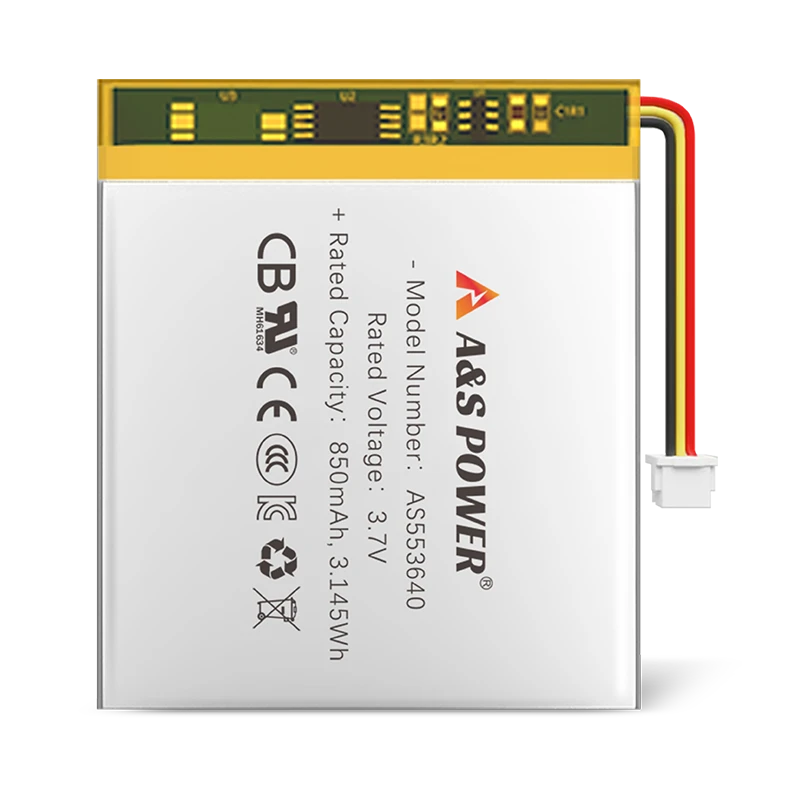
Lithium polymer batteries are currently the most widely used solution.
Advantages
- Ultra-thin design
- Lightweight
- Flexible dimensions
- High energy density
- Excellent customization options
Typical Applications
- Beauty masks
- Facial massagers
- Smart beauty devices
- Skin analyzers
- Portable skincare equipment
Lithium-Ion Batteries
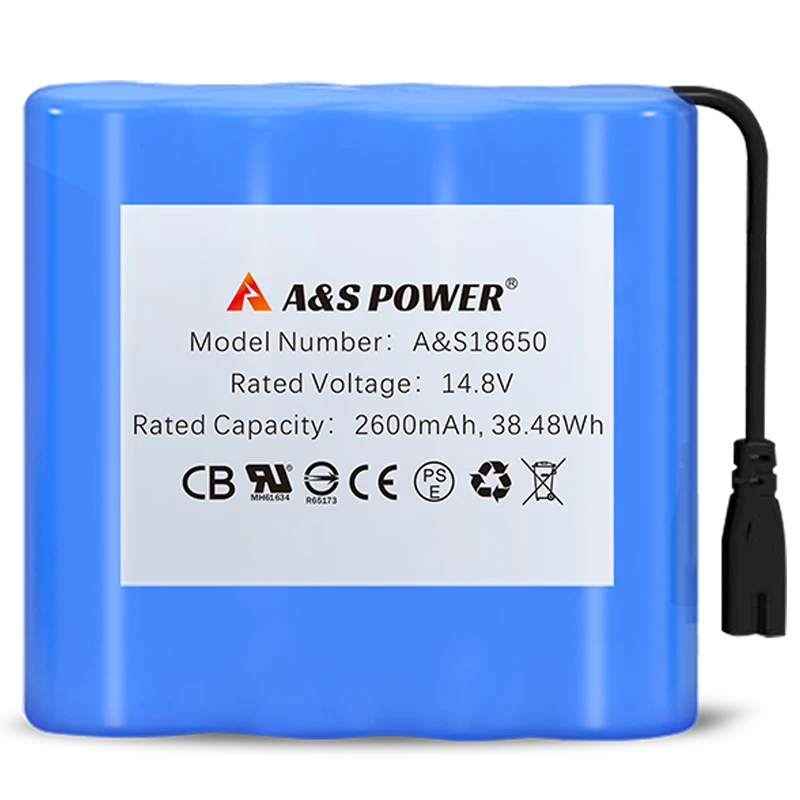
Lithium-ion batteries generally use cylindrical cells such as 18650 or 21700 formats.
Advantages
- High capacity
- Long cycle life
- Cost-effective for larger products
Typical Applications
- IPL devices
- Professional beauty equipment
- Salon-grade machines
Comparison Table
| Feature | LiPo Battery | Li-ion Battery |
|---|---|---|
| Energy Density | High | High |
| Thickness | Ultra Thin | Limited |
| Weight | Very Light | Moderate |
| Design Flexibility | Excellent | Limited |
| Capacity Range | Small to Medium | Medium to Large |
| Beauty Device Usage | Very Common | Common |
| Custom Shapes | Yes | No |
Battery Requirements for Different Beauty Devices
Different beauty devices have unique power requirements.
Facial Cleansing Brushes
Typical Requirements:
| Parameter | Typical Range |
|---|---|
| Voltage | 3.7V |
| Capacity | 300-1200mAh |
| Runtime | 2-6 Weeks |
| Battery Type | LiPo |
LED Beauty Masks
Typical Requirements:
| Parameter | Typical Range |
|---|---|
| Voltage | 3.7V-7.4V |
| Capacity | 1000-5000mAh |
| Battery Type | LiPo |
| Charging | USB-C |
IPL Hair Removal Devices
Typical Requirements:
| Parameter | Typical Range |
|---|---|
| Voltage | 7.4V-14.8V |
| Capacity | 2000-5000mAh |
| Discharge Rate | High |
| Battery Type | Li-ion or LiPo |
RF and EMS Beauty Instruments
Typical Requirements:
| Parameter | Typical Range |
|---|---|
| Voltage | 3.7V |
| Capacity | 500-2500mAh |
| Battery Type | LiPo |
| Cycle Life | 500+ Cycles |
Important Battery Performance Indicators
Capacity (mAh)
Capacity determines how long a beauty device can operate before recharging.
Examples:
- 500mAh battery = shorter runtime
- 2000mAh battery = longer runtime
However, larger capacity also increases device size and weight.
Voltage
Voltage must match the device electronics.
Common beauty device voltages include:
- 3.7V
- 7.4V
- 11.1V
Incorrect voltage can damage electronic components.
Cycle Life
Cycle life measures how many complete charge/discharge cycles a battery can deliver.
| Battery Type | Typical Cycle Life |
|---|---|
| Standard LiPo | 300-500 |
| Premium LiPo | 500-800 |
| Li-ion | 500-1000 |
Energy Density
Higher energy density allows manufacturers to reduce product size while maintaining runtime.
This is particularly important for:
- Wearable beauty devices
- Portable skincare products
- Smart beauty equipment
Safety Standards for Beauty Equipment Battery Packs
Safety is a non-negotiable requirement.
Beauty devices frequently contact human skin and operate in humid environments.
IEC 62133
One of the most important international battery safety standards.
Covers:
- Electrical safety
- Mechanical safety
- Thermal safety
UL2054
Widely recognized in North America.
Applies to complete battery pack assemblies.
UN38.3
Mandatory for lithium battery transportation.
Ensures batteries can safely withstand:
- Vibration
- Shock
- Temperature changes
- Altitude simulation
CE and RoHS
Required for many European markets.
Demonstrates environmental and electrical compliance.
Common Safety Features Inside Beauty Device Battery Packs
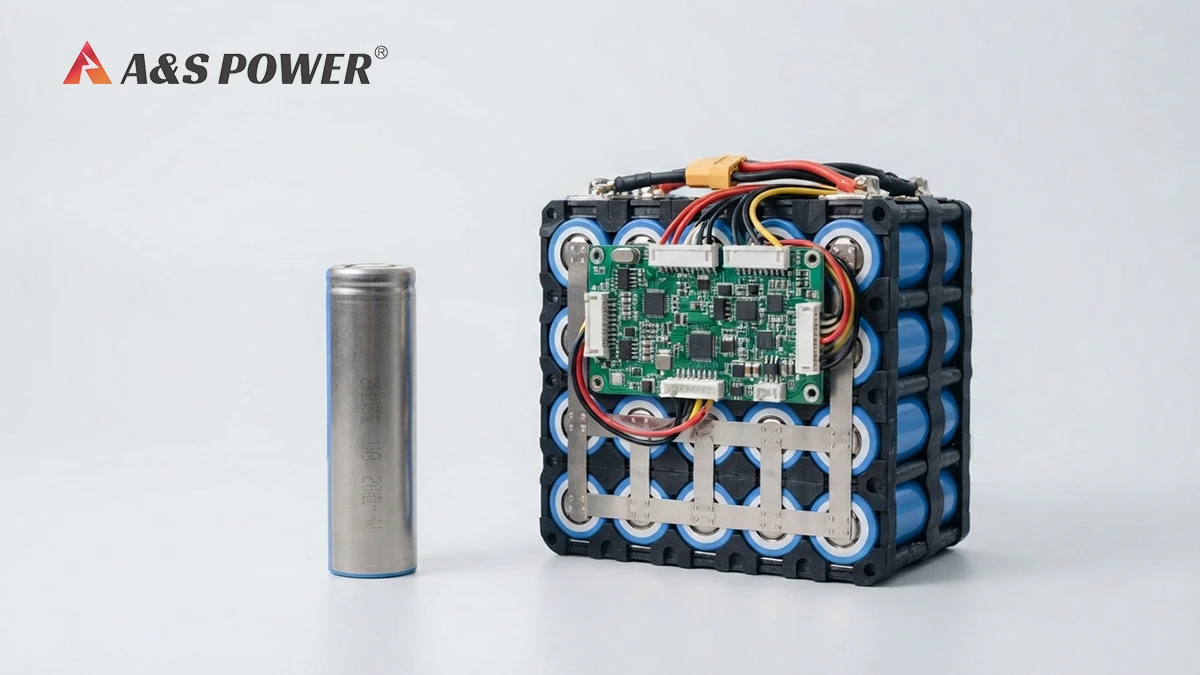
PCM Protection Board
Protects against:
- Overcharge
- Over-discharge
- Overcurrent
- Short circuit
NTC Temperature Sensor
Monitors battery temperature during charging and operation.
Smart Battery Management
Advanced beauty devices often include intelligent battery monitoring systems.
Benefits include:
- More accurate battery indication
- Longer lifespan
- Improved safety
OEM Customization Options for Beauty Equipment Battery Packs
Most beauty brands require custom battery solutions.
Custom Dimensions
LiPo batteries can be manufactured in thousands of size combinations.
Examples:
- 402030
- 503450
- 603040
- 804060
Custom Capacity
Manufacturers can optimize runtime based on product requirements.
Common capacities:
- 300mAh
- 500mAh
- 850mAh
- 1200mAh
- 2000mAh
- 3000mAh
Custom Connectors
Available connector types include:
- JST
- Molex
- Hirose
- Customized connectors
Custom Wire Length
Wire specifications can be tailored to fit device layouts.
Custom Certifications
Depending on the target market, manufacturers may require:
How Long Does a Beauty Equipment Rechargeable Battery Pack Last?
Battery lifespan depends on several factors.
Typical Lifespan
| Usage Pattern | Estimated Life |
|---|---|
| Light Usage | 3-5 Years |
| Moderate Usage | 2-4 Years |
| Heavy Usage | 1.5-3 Years |
Factors Affecting Lifespan
Charging Habits
Avoid keeping batteries at 100% charge continuously.
Temperature
High temperatures accelerate battery aging.
Charging Quality
Use certified chargers and charging circuits.
Depth of Discharge
Partial charging cycles often improve longevity.
How to Choose a Reliable Beauty Equipment Battery Manufacturer
Selecting the right battery supplier directly impacts product quality.
Manufacturing Experience
Look for manufacturers with:
- 10+ years of battery production experience
- Dedicated R&D teams
- Beauty device project experience
Certification Capabilities
Verify the availability of:
- IEC62133
- UL2054
- UN38.3
- CE
- RoHS
Engineering Support
A professional supplier should assist with:
- Battery selection
- Electrical integration
- Mechanical design
- Certification guidance
Production Capacity
Evaluate:
- Monthly output
- Lead times
- Quality control systems
Why Custom Lithium Polymer Batteries Dominate the Beauty Industry
The beauty industry increasingly favors lithium polymer technology because designers need flexibility.
Key reasons include:
- Thin profiles for elegant product design
- Lightweight construction
- Higher energy density
- Better aesthetics
- Custom shapes for innovative products
As beauty devices continue becoming smaller and smarter, custom LiPo battery packs are expected to remain the preferred solution.
Why Work with A&S Power for Beauty Equipment Battery Projects
At A&S Power, we support OEM and ODM beauty equipment manufacturers with customized rechargeable battery solutions.
Our capabilities include:
- Custom lithium polymer battery packs
- Custom lithium-ion battery packs
- UL, IEC62133, CB, KC, CE, RoHS support
- PCM/BMS design
- Connector customization
- Wire harness assembly
- Rapid prototyping
- Mass production support
Applications include:
- IPL beauty devices
- RF beauty instruments
- Facial cleansing brushes
- EMS devices
- LED beauty masks
- Portable skincare equipment
- Smart beauty products
Conclusion
A beauty equipment rechargeable battery pack is much more than a power source—it directly influences safety, runtime, charging performance, portability, and overall user satisfaction. As consumer demand for cordless beauty devices continues to grow, manufacturers must prioritize battery quality, safety certifications, and engineering expertise.
For most modern beauty equipment, custom lithium polymer battery packs offer the best combination of lightweight design, flexible dimensions, high energy density, and reliable performance. By partnering with an experienced battery manufacturer and selecting certified battery solutions, beauty brands can improve product competitiveness while ensuring long-term reliability and regulatory compliance.
Rechargeable Batteries Guide
- What Is the Best Type of Rechargeable Battery?
- Rechargeable Batteries: Complete Guide to Types, Uses and Selection
- Custom Rechargeable Battery Pack: The Complete Guide for OEM Projects
- Rechargeable Li Polymer Battery Pack for POS Terminal: The Complete OEM Battery Guide
- Custom Rechargeable Battery for Portable ECG Machines Guide
FAQ
What battery is used in beauty equipment?
Most portable beauty devices use lithium polymer (LiPo) batteries or lithium-ion battery packs due to their high energy density, lightweight construction, and rechargeable performance.
Are lithium polymer batteries safe for beauty devices?
Yes. When equipped with protection circuits and certified according to IEC62133, UL2054, and UN38.3 requirements, LiPo batteries are considered safe for beauty equipment applications.
How many charge cycles can a beauty device battery provide?
Most quality lithium batteries deliver between 300 and 1,000 charge cycles depending on battery chemistry and usage conditions.
Can I customize the battery size for my beauty product?
Yes. Custom LiPo batteries can be manufactured in various thicknesses, widths, lengths, capacities, and connector configurations.
What certifications are required for beauty equipment batteries?
Common certifications include IEC62133, UL2054, UN38.3, CE, RoHS, KC, PSE, BIS, and CB, depending on the target market.
-

 May.2026.08.0521700 Battery Pack with BMS: Design, Safety and Custom SolutionsLearn More
 -
 May.2026.08.04Smart Beauty Equipment Battery Pack ManufacturerLearn More
 -
 May.2026.08.04High Reliability Polymer Battery for Handheld Dental DevicesLearn More
 -
 May.2026.08.04Ultra Thin Lithium Polymer Battery 0.4mm 0.5mm Custom GuideLearn More
 -
 May.2026.07.30Smoke Detector Battery Guide: Choosing the Right Battery for Reliable Fire ProtectionLearn More