




Controlled Mug LiPo Battery: Custom Battery Solutions for Smart Mugs
Quick Answer:
What Battery Is Best for a Controlled Mug?
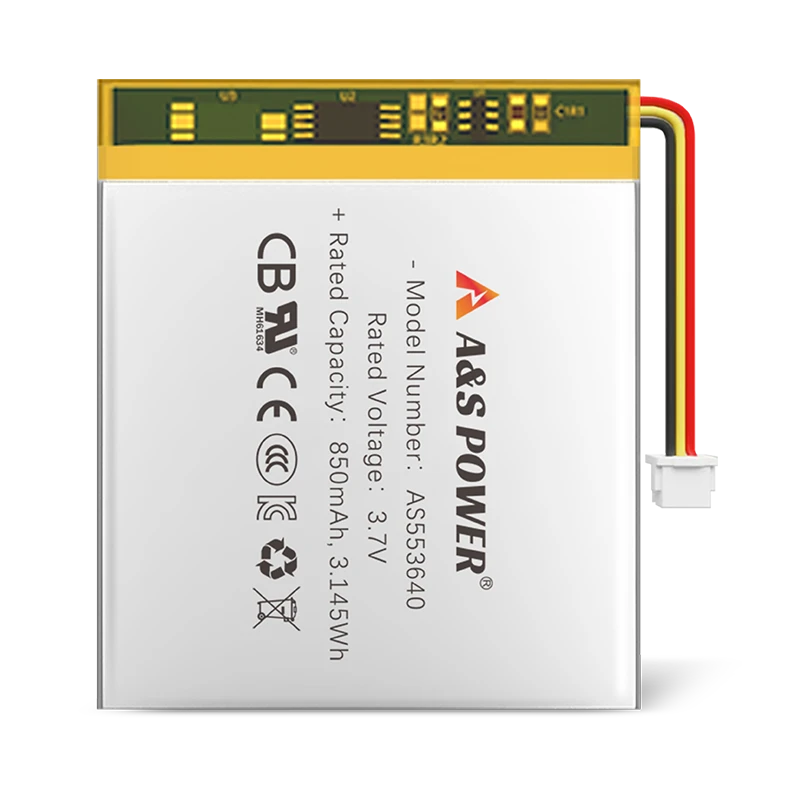
A customized lithium polymer battery is often a suitable battery solution for a portable controlled mug because it combines rechargeable operation, flexible dimensions, relatively high energy density, and customizable electrical configurations.
For an OEM controlled mug, I would not select the battery by capacity alone. I would first look at the heater power, target operating time, battery compartment, charging method, current requirements, thermal environment, and protection system. These parameters determine whether a particular LiPo cell or battery pack is appropriate for the final product.
Introduction
A temperature-controlled mug may look like a relatively simple consumer product, but the battery inside has to support much more than basic power delivery. It may supply energy to the heating system, temperature sensors, control electronics, LED indicators, and wireless communication while fitting into a very limited space.
From my perspective, the battery should be treated as part of the mug's overall electrical and thermal design rather than simply as a rechargeable power source. A custom controlled mug LiPo battery can be developed around the available space, required runtime, heater load, charging system, connector, and protection requirements. This flexibility makes lithium polymer technology particularly interesting for OEM manufacturers developing smart mugs and portable temperature-controlled drinkware.
The key question is therefore not simply how many mAh a battery provides. The more important question is how battery energy, heater power, thermal insulation, temperature control, and actual user behavior work together to determine operating time and overall product performance.
Why LiPo Batteries Work Well for Controlled Mugs
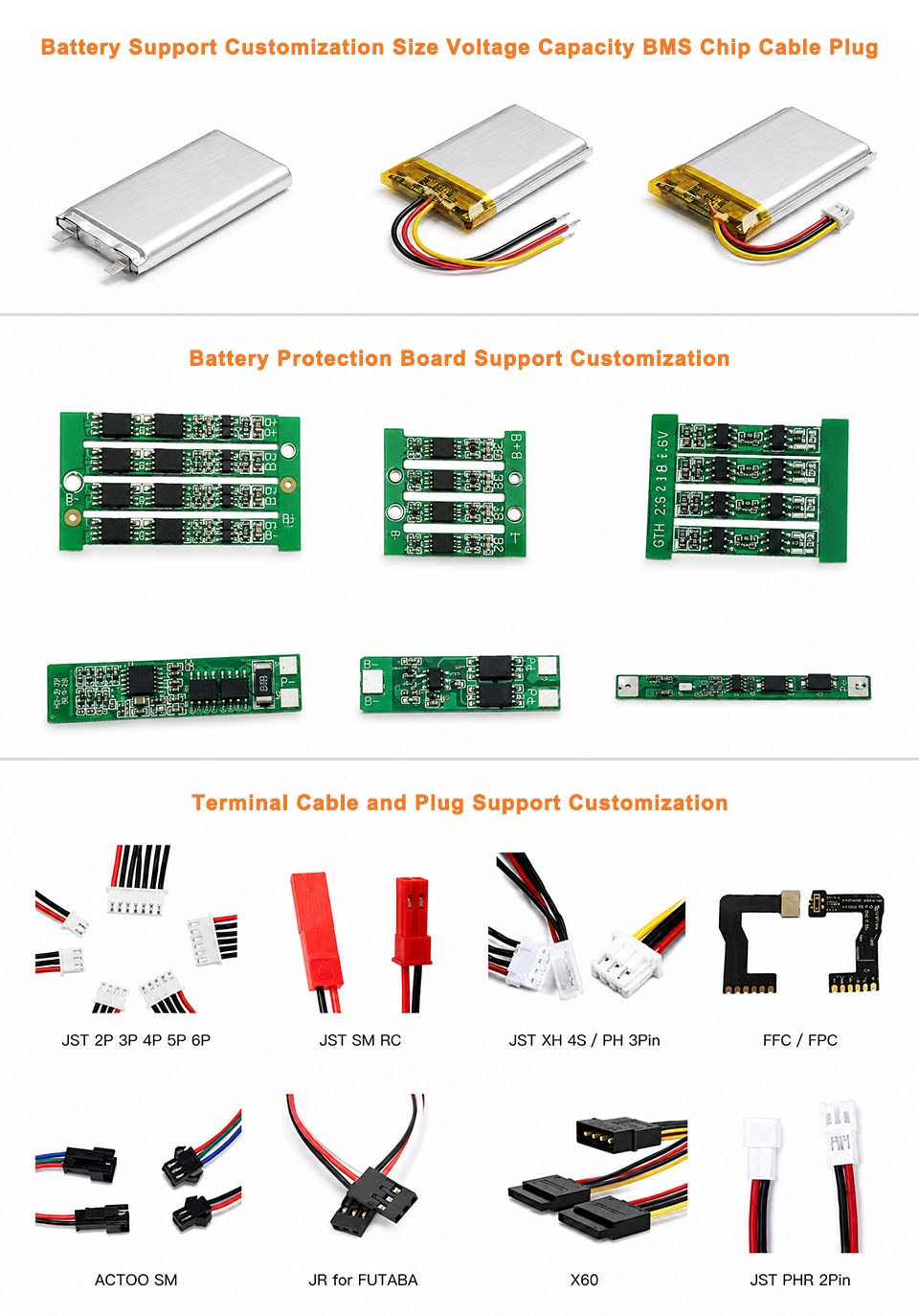
Flexible Battery Dimensions
One of the biggest advantages of lithium polymer batteries is their flexible pouch format.
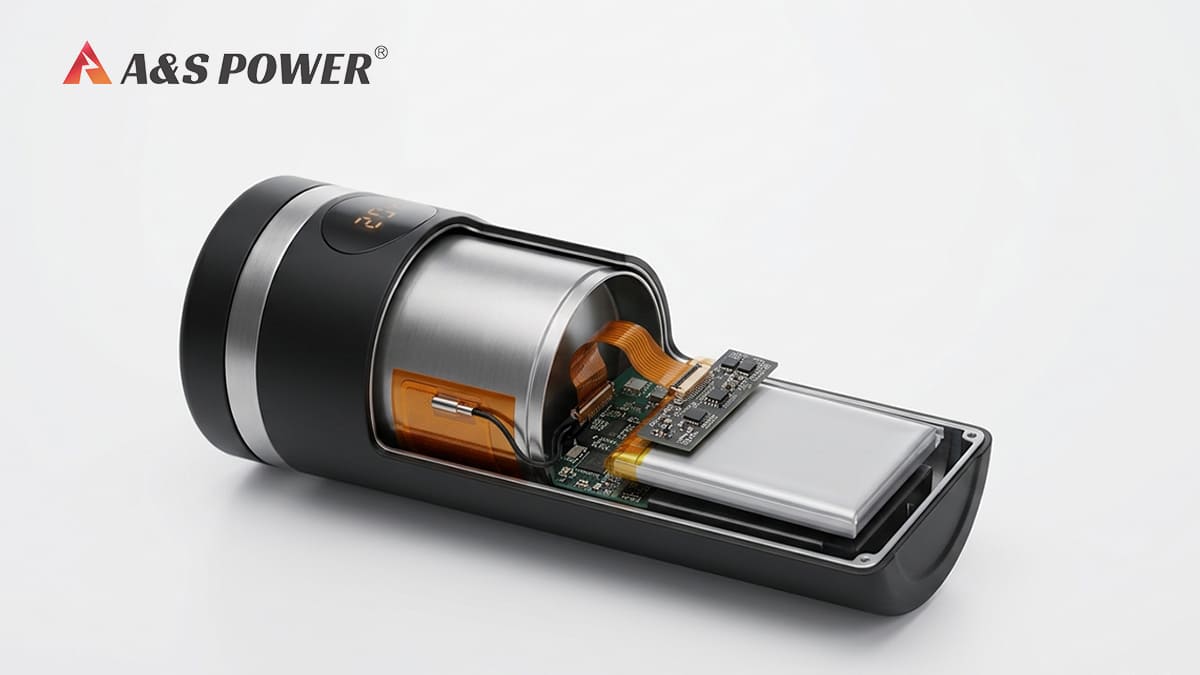
A smart mug may have only a small amount of usable space underneath the heating assembly or inside the base. A cylindrical battery can create unnecessary mechanical constraints, while a flat LiPo battery can be designed around the available length, width, and thickness.
This gives product designers more freedom when arranging the battery, heater, PCB, sensors, and charging components.
For example, an OEM manufacturer may need a thin battery that fits beneath a circular heating structure. Instead of redesigning the entire product around an existing cylindrical cell, the battery dimensions can be developed around the product's mechanical structure.
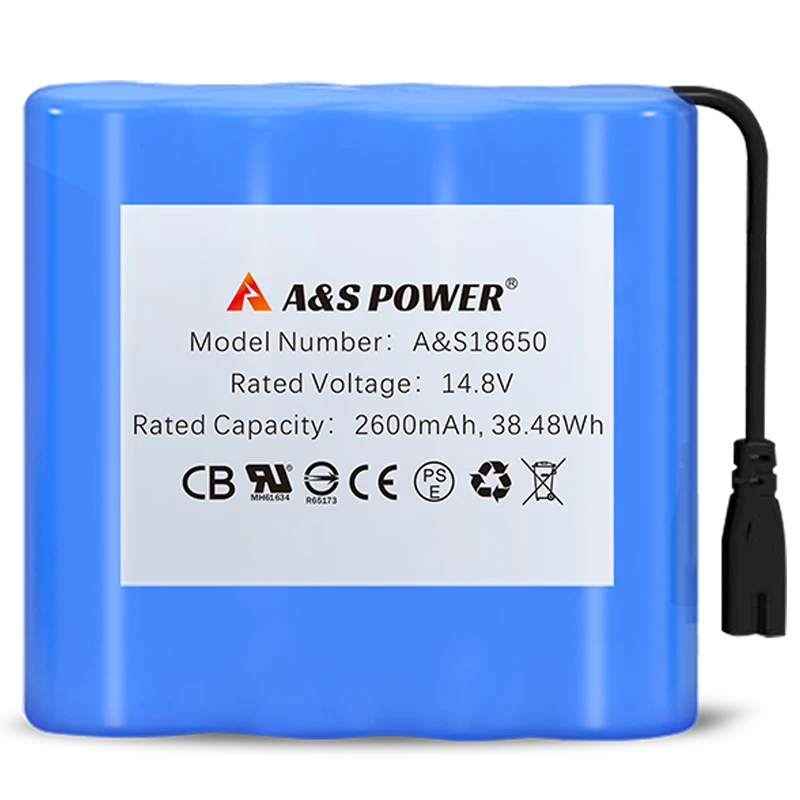
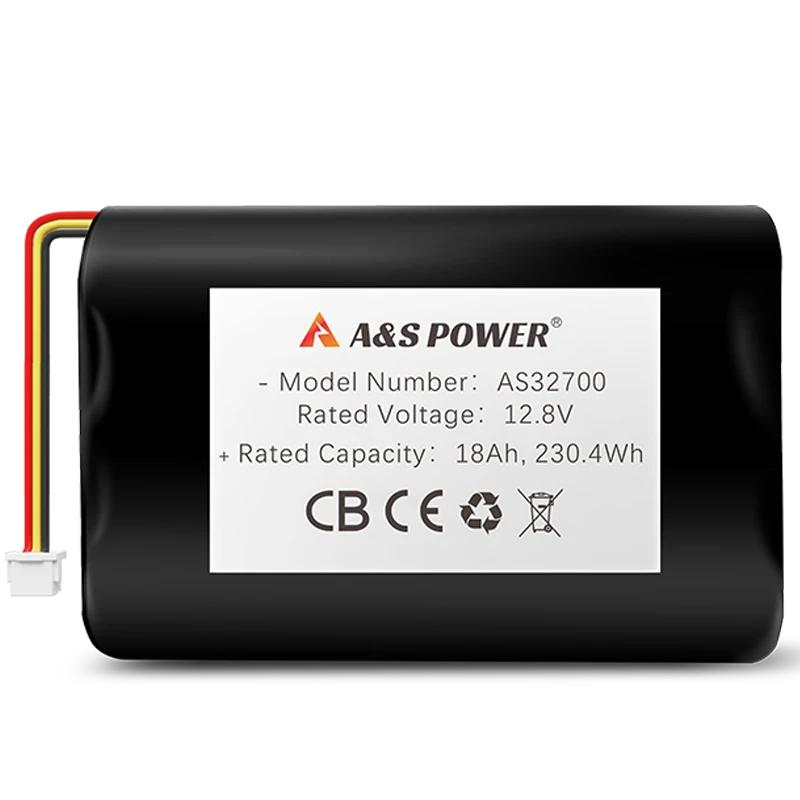
A&S Power's custom LiPo battery service supports customized shapes and sizes for OEM applications, including prototype development and mass production.
Good Balance Between Capacity and Weight
A controlled mug needs enough energy to maintain the desired beverage temperature, but adding too much battery capacity can increase product weight and affect the overall user experience.
For preliminary calculations, I use the relationship:
Energy (Wh) = Voltage (V) × Capacity (Ah)
For example, a nominal 3.7V, 2,000mAh battery contains approximately:
3.7V × 2.0Ah = 7.4Wh
However, this does not mean that a 7.4Wh battery will automatically provide a specific number of hours of heating.
Actual operating time depends on average system power, heater duty cycle, conversion efficiency, starting beverage temperature, ambient temperature, insulation, lid use, and other electronic loads.
This distinction is important when discussing a controlled mug battery because the heater does not necessarily operate at full power continuously.
Controlled Mug Battery Design Starts With the Heating System
Heater Power Determines the Basic Energy Requirement
The heating element is normally one of the most significant loads in a temperature-controlled mug.
If a heating system consumes more power, the battery needs to provide more energy or the product needs to operate for a shorter period.
A simplified calculation is:
Battery Runtime ≈ Battery Energy ÷ Average System Power
For example, if a battery provides 7.4Wh and the complete system consumes an average of 4W:
7.4Wh ÷ 4W = approximately 1.85 hours
This is only a theoretical estimate.
Real-world runtime will normally be different because the heater may cycle on and off rather than operate continuously. Sensors, Bluetooth communication, indicators, voltage conversion, battery protection, and other components also consume energy.
Temperature Control Changes Battery Consumption
A controlled mug is not necessarily trying to heat a beverage continuously.
Instead, the system may initially require more energy to reach the target temperature and then reduce heater activity once the desired temperature is reached.
This is one reason I recommend evaluating average power consumption instead of simply using the heater's maximum rated power when estimating battery life.
Thermal insulation also matters. A well-insulated mug loses heat more slowly, which can reduce the amount of energy required to maintain the beverage temperature.
Real-World Controlled Mug Battery Performance
Commercial smart mugs provide useful examples of how temperature control and battery runtime work together.
Ember's official specifications for the Mug 2 list a temperature range of 120°F to 145°F (50°C to 62.5°C). Its 10 oz version is specified for up to 1.5 hours, while the 14 oz version is specified for approximately 80 minutes of battery operation.
For the 14 oz model, Ember states that its 80-minute battery figure is based on a 135°F setting and that actual battery life can vary with factors such as ambient temperature, starting beverage temperature, drinking speed, and selected temperature. The company also states that using a lid can extend the untethered operating time under its specified conditions.
These figures are useful because they demonstrate an important engineering point: battery runtime is a system-level result, not simply a battery-capacity specification.
Example Data From a Commercial Temperature-Controlled Mug
| Parameter | Published Example |
|---|---|
| Temperature range | 120°F–145°F |
| 14 oz battery operation | Up to 80 minutes |
| 10 oz battery operation | Up to 1.5 hours |
| 14 oz temperature setting used for runtime example | 135°F |
| 14 oz runtime with lid | Up to 160 minutes under specified conditions |
| Temperature control accuracy | ±0.5°F on certain current Ember Mug 2 configurations |
These figures are manufacturer-published product data from Ember, not universal performance specifications for all controlled mugs. Actual performance varies according to product design, battery capacity, heater efficiency, insulation, starting beverage temperature, ambient conditions, and control strategy.
Thermal Management Is Critical for a Controlled Mug LiPo Battery
A controlled mug creates an unusual battery design challenge because the product intentionally generates heat.
The battery should therefore not simply be installed as close as possible to the heating element.
During development, I recommend evaluating the thermal relationship between:
- Heating element
- Battery cell
- Protection PCB
- Temperature sensors
- Charging circuit
- Internal insulation
- Mug wall
- Battery compartment
The battery's permitted operating and charging temperature must be considered separately from the beverage temperature.
A mug may maintain a beverage at a comfortable drinking temperature while the internal battery compartment experiences a different temperature due to heat conduction and enclosure design.
For this reason, thermal testing should be performed on the complete assembled product rather than relying only on the battery manufacturer's standalone specification.
Battery Protection Requirements
A rechargeable LiPo battery used in a controlled mug should be integrated with an appropriate protection and charging system.
Depending on the design, the protection system may address several conditions.
Overcharge Protection
The charging system needs to prevent the battery from exceeding its specified charging voltage.
Over-Discharge Protection
The protection circuit should prevent the cell from being discharged beyond its permitted limit.
Short-Circuit Protection
The battery pack should have appropriate protection against abnormal short-circuit conditions.
Overcurrent Protection
The protection system needs to be compatible with the current requirements of the heating system and electronics.
Temperature Monitoring
Temperature monitoring becomes particularly important when the battery is installed in a product that intentionally generates heat.
The battery temperature, heater temperature, and beverage temperature should not be treated as the same measurement.
What Should OEM Manufacturers Specify?
When I work through a custom controlled mug battery requirement, I prefer to start with the complete product specification rather than an existing battery model.
The following information is particularly useful:
| Design Requirement | Why It Matters |
| Battery compartment | Determines maximum battery dimensions |
| Heater voltage | Determines battery/system compatibility |
| Heater power | Determines current and energy requirements |
| Target runtime | Helps determine required capacity |
| Charging method | Determines charger architecture |
| Maximum charging time | Affects charging-current requirements |
| Connector | Must match the control PCB |
| Operating environment | Important for battery reliability |
| Product weight target | Influences battery capacity |
| Production quantity | Affects manufacturing strategy |
| Target market | Determines applicable compliance requirements |
This approach prevents a common OEM problem: selecting a battery first and discovering later that the battery does not fit the enclosure or provide the expected operating time.
Custom LiPo Battery Specifications for Smart Mug Applications
For a controlled mug, a customized LiPo battery may include several configurable elements.
Battery Dimensions
Length, width, and thickness can be optimized around the internal structure of the mug.
Capacity
Capacity can be selected according to the required operating time and available space.
Voltage
The battery voltage needs to match the electrical architecture of the product or the requirements of the power-management system.
Connector
The cable length, connector type, wire specification, and terminal configuration can be customized for the control board.
Protection Circuit
The protection configuration should be selected according to the cell, current requirements, charging system, and product architecture.
Battery Shape
A flat pouch battery can be designed to make better use of limited space than a standard cylindrical battery in some mug designs.
Why Custom Battery Design Can Be Better Than an Off-the-Shelf Battery
An off-the-shelf battery can be useful during early prototype testing, but it may not be the best option for a commercial smart mug.
A custom battery allows the product team to optimize the relationship between the battery and the rest of the device.
| Requirement | Standard Battery | Custom LiPo Battery |
| Physical dimensions | Limited | Customized |
| Capacity selection | Available models | Designed around requirements |
| Connector | Usually fixed | Customizable |
| Wire length | Limited options | Customizable |
| Mechanical integration | May require compromise | Designed around product |
| Weight optimization | Limited | More flexible |
| Protection configuration | Model dependent | Can be developed for application |
| OEM production | Depends on availability | Designed for project |
The objective is not necessarily to make the battery as large as possible. It is to find the right balance between runtime, size, weight, heat, current capability, charging, and product cost.
Controlled Mug Battery Development Process
I recommend treating the battery as part of the product development process from the beginning.
Step 1: Define the Product Requirements
Confirm the mug capacity, target temperature, heater power, required operating time, charging method, and physical battery space.
Step 2: Estimate Energy Requirements
Calculate the approximate energy required based on heater operation and other electrical loads.
Step 3: Select the Battery Configuration
Evaluate voltage, capacity, dimensions, current capability, connector, and protection requirements.
Step 4: Build Prototype Samples
Install the battery into the actual mug structure rather than testing only the cell independently.
Step 5: Perform Thermal Testing
Measure battery temperature, heater temperature, PCB temperature, and overall temperature distribution during charging and operation.
Step 6: Perform Runtime Testing
Test the complete product under realistic conditions, including different starting beverage temperatures and ambient environments.
Step 7: Finalize Compliance Requirements
Determine the applicable battery and transportation tests for the intended markets.
Step 8: Move to Mass Production
After the design has passed validation, finalize the battery specification, quality requirements, production process, and inspection standards.
Battery Safety and Compliance
For an OEM controlled mug, battery compliance should be considered during the design stage rather than added at the end of development.
Depending on the battery design, product configuration, and target market, manufacturers may need to evaluate requirements associated with standards and regulations such as:
- IEC 62133-2
- UN 38.3
- CE-related requirements
- RoHS
- UL requirements where applicable
- Transportation documentation
The exact certification requirements depend on the final battery and product configuration, so I would not recommend applying a certification claim to a battery simply because it belongs to the LiPo category.
Instead, the actual cell, battery pack, protection circuit, and test documentation should be reviewed.
A&S Power Custom LiPo Battery Solutions for Controlled Mugs
At A&S Power, I approach a controlled mug battery as an OEM engineering project rather than simply supplying a generic rechargeable battery.
Our custom lithium polymer battery solutions support different dimensions, capacities, shapes, connectors, and protection configurations. A&S Power states that it has more than 18 years of lithium battery manufacturing experience and provides customized LiPo battery solutions from engineering design and prototyping through testing and mass production.
A&S Power also lists certifications and compliance capabilities including CE, UL, IEC 62133, CCC, KC, and RoHS for applicable battery products. The specific certification available for a controlled mug project should be confirmed against the final battery design and target market.
For an OEM controlled mug project, the most useful information to provide at the beginning is:
- Available battery space
- Heater voltage
- Heater power
- Required runtime
- Charging method
- Connector requirements
- Target production quantity
- Target sales markets
With these parameters, the battery can be designed around the actual product rather than forcing the product to accommodate a standard battery.
Conclusion
A controlled mug LiPo battery is not simply a small rechargeable battery placed inside a coffee mug. It is part of a system that combines heating, temperature sensing, power management, charging, thermal management, and user control.
From my experience with custom battery development, the most reliable approach is to design the battery together with the rest of the product. Heater power, battery capacity, available space, thermal conditions, charging requirements, and protection should all be considered before the battery specification is finalized.
Real-world smart mug products also demonstrate why battery capacity alone does not determine runtime. Published specifications from Ember show that operating temperature, product size, lid use, starting beverage temperature, and operating conditions can all influence battery performance.
For OEM manufacturers developing smart mugs, heated coffee mugs, temperature-controlled cups, or similar portable heating products, a custom LiPo battery can provide the flexibility needed to balance size, weight, runtime, thermal performance, safety, and manufacturability.
FAQ
What battery is best for a temperature-controlled mug?
A customized lithium polymer battery is often a suitable solution for a portable temperature-controlled mug because it offers flexible dimensions, rechargeable operation, and a good balance between capacity and weight. The final battery should be selected according to heater power, runtime, space, charging, and thermal requirements.
How long can a LiPo battery power a controlled mug?
There is no universal runtime. Battery life depends on battery energy and the average power consumed by the complete system. Heater duty cycle, insulation, beverage temperature, ambient temperature, and the selected temperature can all affect runtime.
Can a LiPo battery be placed close to the mug heating element?
The battery should not simply be positioned next to the heating element without thermal analysis. The product should provide appropriate thermal separation, insulation, temperature monitoring, and mechanical protection based on the actual design.
Can the LiPo battery capacity be customized?
Yes. For OEM applications, battery capacity can generally be customized together with dimensions, connector configuration, wiring, and protection requirements, subject to cell and manufacturing limitations.
Does a controlled mug need a battery protection circuit?
A rechargeable lithium battery should use an appropriate charging and protection system. The protection design needs to be compatible with the selected cell, charging circuit, heater load, and complete electrical architecture.
What voltage is normally used for a controlled mug LiPo battery?
Many portable electronic products use single-cell lithium batteries with a nominal voltage around 3.7V, but the correct voltage depends on the mug's electrical architecture. The battery should be selected based on the actual heater, power-management circuit, and control electronics.
How can I increase controlled mug battery life?
Battery life can potentially be improved through a combination of higher usable battery energy, better thermal insulation, efficient heater control, lower standby consumption, optimized temperature settings, and appropriate power-management design. Increasing battery capacity alone is not always the best solution.
Can A&S Power customize a LiPo battery for a smart mug?
Yes. A&S Power provides custom LiPo battery solutions covering dimensions, capacity, shape, connector configuration, protection, prototyping, and OEM production. The actual battery design depends on the smart mug's electrical, mechanical, thermal, and production requirements.
-

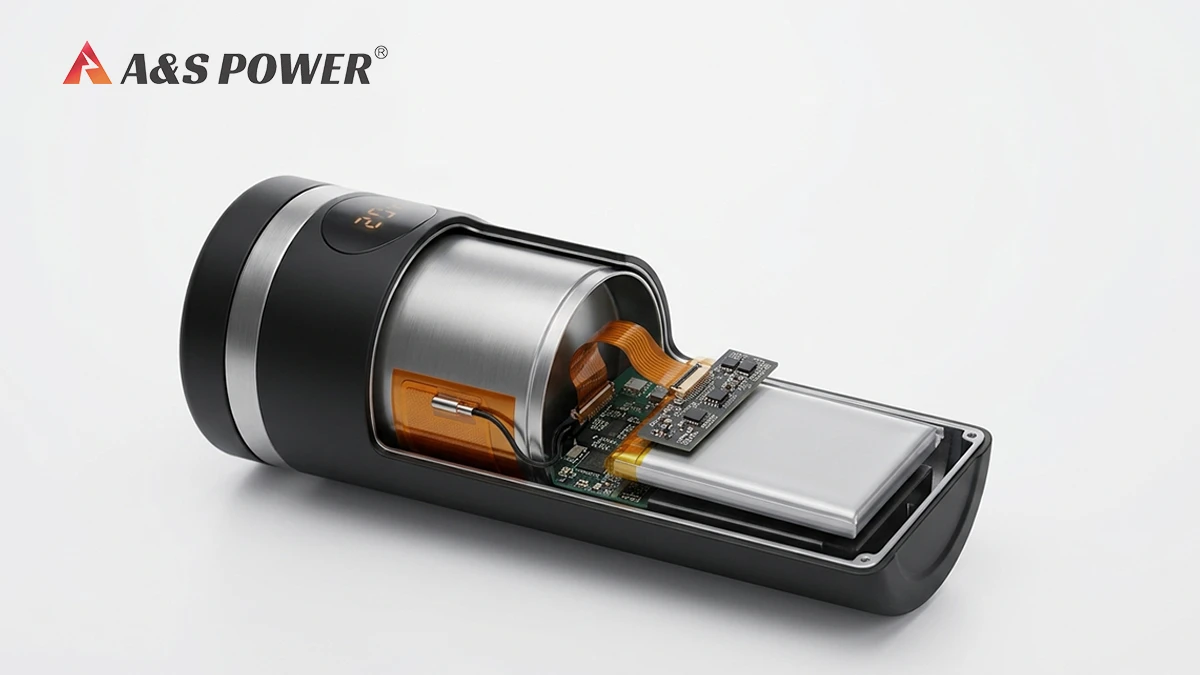 May.2026.08.12Controlled Mug LiPo Battery: Custom Battery Solutions for Smart MugsLearn More
 -
 May.2026.08.11Custom Medical Timer LiPo Battery: Reliable Power Solution for Compact Medical DevicesLearn More
 -
 May.2026.08.11Custom GPS Devices LiPo Battery: Compact 502030 3.7V 240mAh Power SolutionLearn More
 -
 May.2026.08.10Medical Data Monitoring Equipment Battery: Custom Lithium SolutionsLearn More
 -
 May.2026.08.07Custom Battery Services: Complete Lithium Battery Solutions for OEM ApplicationsLearn More