




Cost and Feasibility Limits for Custom-Shaped LiPo Batteries
Quick Answer:
Yes—custom-shaped LiPo batteries are technically feasible for many products, but they are not always economically practical. Their feasibility depends on factors such as battery dimensions, energy density, tooling complexity, certification requirements, production volume, and expected product lifecycle.
From my experience working with OEM battery projects, the most successful custom battery designs balance industrial design goals with proven cell manufacturing capabilities. In many cases, slightly modifying the product enclosure instead of forcing an unconventional battery shape can reduce costs significantly while improving production yield and long-term reliability.
Introduction
As electronic devices become smaller, thinner, and more specialized, manufacturers increasingly seek batteries that fit unique mechanical spaces rather than forcing products to accommodate standard battery sizes. This trend is especially common in wearable electronics, portable medical devices, smart helmets, IoT sensors, handheld terminals, and industrial equipment.
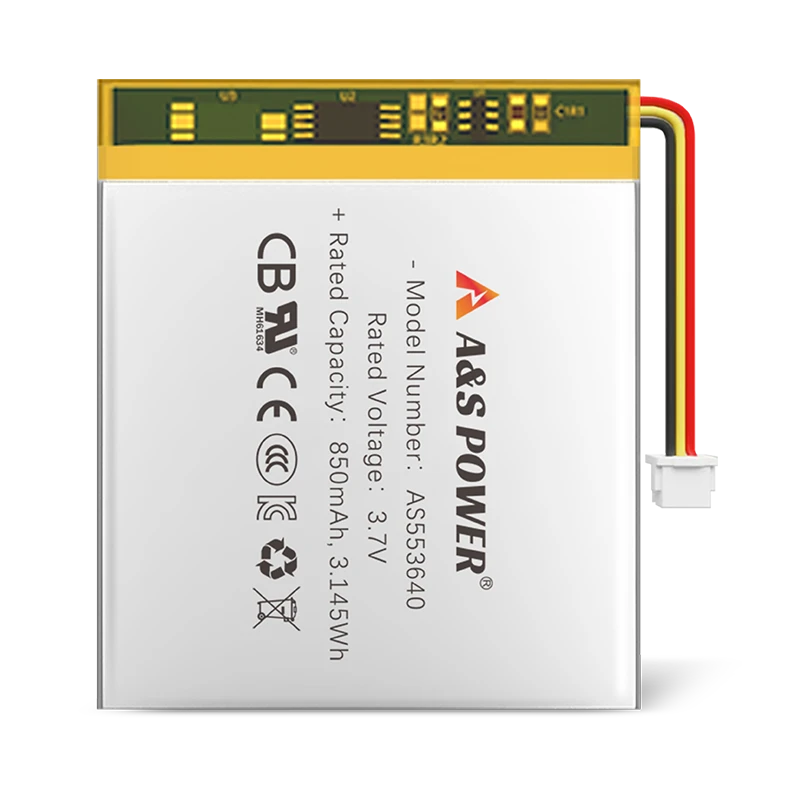
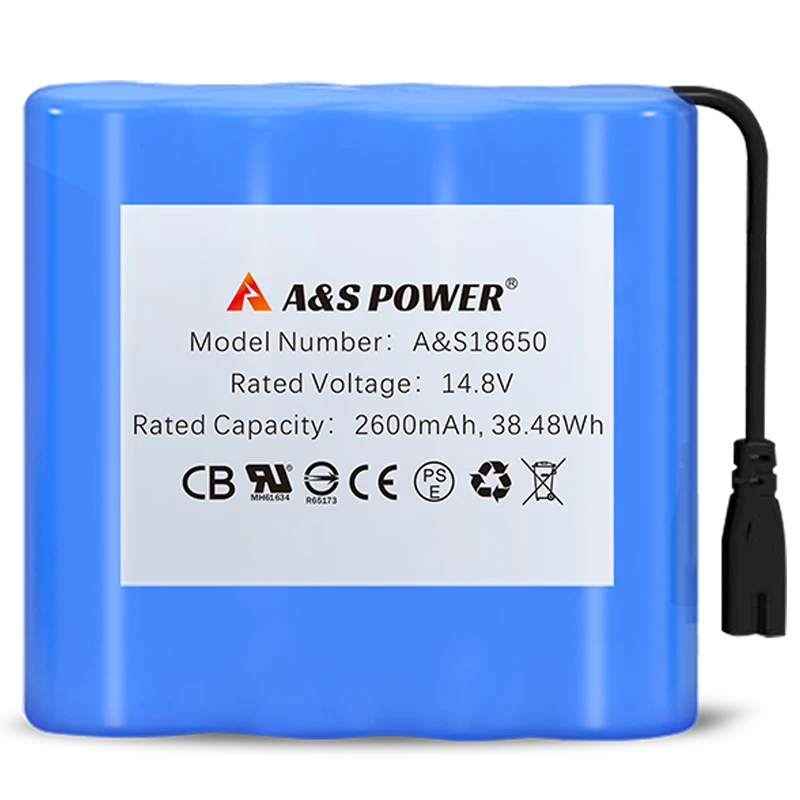
Unlike cylindrical lithium-ion cells such as the 18650 or 21700 formats, lithium polymer (LiPo) batteries use flexible laminated pouch packaging, allowing manufacturers to customize dimensions within certain engineering limits. This flexibility makes LiPo technology the preferred choice for products where space optimization is critical.
However, "custom-shaped" does not mean "unlimited design freedom."
Every customized battery introduces engineering challenges related to manufacturing consistency, electrochemical performance, safety certification, tooling investment, and supply chain management. Some designs are straightforward and economical, while others become prohibitively expensive or technically impossible.
In this article, I explain the real-world cost factors and feasibility limits behind custom-shaped LiPo batteries, helping OEM engineers and product managers make informed design decisions before entering development.
Why Companies Choose Custom-Shaped LiPo Batteries
The primary advantage of a custom LiPo battery is its ability to maximize internal product volume.
Instead of leaving unused spaces inside a product housing, designers can utilize nearly every available cubic millimeter, increasing runtime without enlarging the product.
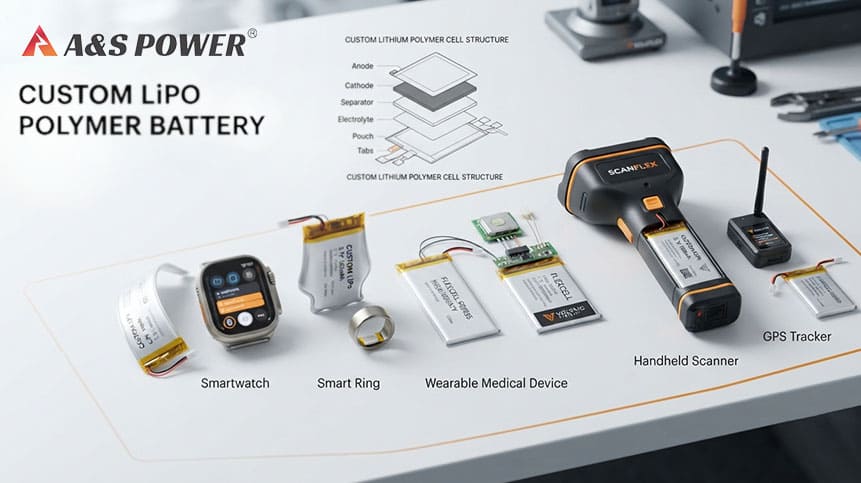
Typical applications include:
- Wearable medical monitors
- Smart rings
- Smart watches
- Portable ultrasound systems
- Breast pumps
- GPS trackers
- Barcode scanners
- POS terminals
- Smart helmets
- Hearing aids
- Industrial handheld devices
- IoT sensors
Compared with standard battery sizes, customized cells often improve:
- Product thickness
- Weight distribution
- Internal component layout
- Waterproof sealing
- Industrial design flexibility
- User ergonomics
However, every improvement comes with manufacturing trade-offs.
What Determines Whether a Custom Shape Is Feasible?
Many product designers assume that because LiPo batteries are flexible, manufacturers can produce virtually any shape. In reality, battery cell construction follows strict electrochemical and manufacturing constraints.
Several engineering factors determine whether a custom battery can be manufactured safely and consistently.
1. Electrode Stacking Limitations
Inside every LiPo battery are stacked layers of:
- Cathode
- Anode
- Separator
- Electrolyte
These layers must remain evenly compressed throughout the battery.
Extremely irregular shapes can create:
- Uneven pressure
- Localized current concentration
- Capacity imbalance
- Accelerated aging
- Internal resistance variation
For this reason, manufacturers generally recommend simple rectangular profiles with rounded corners rather than highly complex geometries.
2. Minimum Corner Radius
Sharp corners are rarely suitable for pouch batteries.
Rounded corners help:
- Reduce mechanical stress
- Improve pouch sealing
- Prevent electrode damage
- Increase manufacturing consistency
Very small corner radii usually require special tooling and lower production yields, increasing manufacturing costs.
3. Thickness Restrictions
Battery thickness significantly influences manufacturing feasibility.
Very thin cells (below approximately 3 mm) are more difficult to manufacture because they contain fewer electrode layers, making capacity more sensitive to production tolerances.
Conversely, extremely thick pouch cells may experience:
- Poor heat dissipation
- Increased swelling
- Uneven current distribution
- Reduced cycle consistency
Manufacturers therefore recommend optimizing both footprint and thickness together rather than maximizing only one dimension.
4. Energy Density Requirements
Every battery design must satisfy a basic physical relationship:
Available internal volume = Maximum achievable energy.
If a product requires:
- 4,000 mAh capacity
- Ultra-thin enclosure
- Lightweight construction
there may simply not be enough internal space to achieve all three objectives simultaneously.
This is one of the most common reasons OEM battery projects require redesign after the initial feasibility review.
Major Cost Drivers Behind Custom LiPo Batteries
The total project cost extends far beyond the battery cell itself.
From an OEM perspective, development expenses typically fall into several categories.
| Cost Factor | Cost Impact | Can It Be Optimized? |
|---|---|---|
| Cell tooling | High | Yes |
| Aluminum pouch tooling | Medium | Yes |
| Engineering design | Medium | Partially |
| Prototype production | High | Limited |
| Certification testing | High | No |
| Battery Management System (BMS) | Medium | Yes |
| Connector & cable customization | Low | Yes |
| Production yield | High | Yes |
| Order quantity | Very High | Yes |
| Supply chain complexity | Medium | Yes |
One important observation is that tooling costs are largely fixed regardless of production volume. Consequently, a project producing only several hundred batteries often has a much higher per-unit cost than one producing tens of thousands.
Standard vs. Custom-Shaped LiPo Batteries: Cost Comparison
Although custom-shaped LiPo batteries provide greater design flexibility, they typically cost more than standard pouch cells because of engineering, tooling, validation, and lower production efficiency. The exact premium depends on the complexity of the design and the production volume.
| Comparison Factor | Standard LiPo Battery | Custom-Shaped LiPo Battery |
|---|---|---|
| Initial tooling cost | None or very low | Moderate to high |
| Engineering time | Minimal | High |
| Prototype lead time | 1–2 weeks | 3–8 weeks (typical) |
| Unit cost at low volume | Lower | Significantly higher |
| Unit cost at high volume | Low | Becomes more competitive |
| Mechanical fit | Limited | Optimized for product design |
| Space utilization | Moderate | Excellent |
| Design flexibility | Low | High |
For many consumer electronics and medical OEM projects, a custom battery becomes economically attractive only when the improved product design creates measurable commercial value, such as longer operating time, reduced device thickness, or enhanced user experience.
How Production Volume Affects Cost
Production quantity is one of the biggest factors influencing the overall cost of a custom battery project.
A custom battery usually requires dedicated tooling, engineering drawings, prototype validation, and process optimization before mass production begins. These upfront costs remain relatively fixed regardless of whether the first production run contains 500 units or 100,000 units.
For this reason, larger production volumes significantly reduce the effective cost per battery.
Typical Cost Trend by Production Volume
| Annual Production Volume | Economic Feasibility |
|---|---|
| Prototype samples | High development cost |
| Less than 1,000 pcs | Usually expensive |
| 1,000–5,000 pcs | Depends on design complexity |
| 5,000–20,000 pcs | Generally cost-effective |
| More than 20,000 pcs | Best cost efficiency |
Rather than focusing solely on the battery's purchase price, I recommend evaluating the total product cost. A battery that perfectly fits the enclosure may reduce housing size, simplify assembly, decrease material usage, and improve customer satisfaction—benefits that can outweigh the higher battery cost.
Engineering Trade-Offs Between Cost and Performance
Every custom battery project requires balancing multiple engineering objectives. Optimizing one characteristic often affects another.
For example:
Higher Capacity vs. Thinner Design
A thinner battery generally contains fewer electrode layers, reducing available capacity. Increasing capacity usually requires either a larger footprint or greater thickness.
Complex Shape vs. Manufacturing Yield
Highly irregular battery outlines can reduce manufacturing consistency. Lower production yield increases scrap rates and raises the final unit cost.
Fast Development vs. Extensive Customization
Reusing an existing cell design can shorten development time. Creating a completely new battery geometry requires additional engineering reviews, tooling, prototype iterations, and validation testing.
The most successful OEM projects rarely pursue the absolute maximum performance in every category. Instead, they identify the optimal balance between electrical performance, mechanical integration, manufacturing stability, and cost.
Common Design Mistakes That Increase Project Costs
Many first-time battery projects encounter unnecessary delays because battery design is considered too late in product development.
Below are several common mistakes that increase both cost and technical risk.
Designing Around an Impossible Battery Size
Industrial designers sometimes allocate insufficient internal volume while expecting unrealistic capacity targets. Early feasibility discussions with a battery manufacturer help prevent expensive redesigns.
Prioritizing Appearance Over Manufacturability
Very narrow sections, sharp internal angles, or highly asymmetrical battery shapes can complicate electrode stacking and pouch sealing, reducing manufacturing yield.
Ignoring Certification Requirements
Custom batteries intended for medical, industrial, or consumer products may require compliance with standards such as IEC 62133, UL 2054, or UN38.3, depending on the target market and application. Certification planning should begin early rather than after the mechanical design is finalized.
Changing Specifications Repeatedly
Frequent modifications to battery dimensions, connectors, protection circuits, or cable routing after tooling has begun can increase both development cost and lead time.
A Practical Feasibility Assessment Process
Before approving a custom battery design, experienced manufacturers typically perform a structured feasibility review.
A simplified evaluation process includes:
- Review the available installation space.
- Confirm the required voltage, capacity, and discharge current.
- Evaluate achievable energy density.
- Check mechanical constraints such as thickness, corner radius, and cable exit direction.
- Assess safety and thermal considerations.
- Determine whether existing cell designs can be adapted.
- Estimate tooling, prototype, and production costs.
- Plan validation testing and certification.
This structured approach reduces development risk while improving the likelihood of a successful mass-production program.
Recommendations for OEM Product Designers
Based on industry best practices, several strategies consistently improve both technical feasibility and commercial success.
Whenever possible:
- Reserve battery space early during industrial design.
- Consider adapting an existing cell size before requesting a completely new geometry.
- Define realistic capacity targets based on available internal volume.
- Involve the battery supplier during the concept phase instead of after the enclosure has been finalized.
- Balance performance requirements with manufacturability rather than pursuing maximum specifications in every category.
- Plan certification, transportation testing, and production validation as part of the overall project schedule.
Early collaboration between product designers, mechanical engineers, and battery manufacturers often shortens development time while reducing unexpected costs.
Why Trust A&S Power for Custom LiPo Battery Projects?
At A&S Power, we have specialized in custom lithium battery manufacturing for more than 15 years, supporting OEM and ODM projects across medical devices, wearable electronics, industrial equipment, consumer electronics, and IoT applications.
Our engineering team works closely with customers from concept development through mass production, helping evaluate battery feasibility, optimize cell dimensions, select appropriate protection circuits, and support international certifications such as IEC 62133, UN38.3, CE, RoHS, KC, CB, and UL-related requirements where applicable.
By combining engineering expertise with flexible manufacturing capabilities, we help customers reduce development risks while delivering reliable battery solutions tailored to their products.
Conclusion
Custom-shaped LiPo batteries provide significant advantages for products with limited installation space, particularly in wearable electronics, portable medical devices, industrial handheld equipment, and advanced IoT systems. However, successful customization depends on more than simply requesting a unique shape.
Mechanical feasibility, electrode design, tooling investment, certification requirements, production volume, and long-term manufacturing consistency all influence whether a custom battery is technically practical and commercially viable.
From my perspective, the most cost-effective projects begin with realistic engineering constraints rather than ambitious mechanical designs. When OEMs involve an experienced battery manufacturer early in product development, they can often achieve an excellent balance between performance, reliability, cost, and time to market.
A well-designed custom LiPo battery should not only fit the available space—it should also support stable production, comply with applicable safety standards, and contribute to the long-term success of the final product.
FAQ
Is every LiPo battery shape technically possible?
No. Although LiPo batteries offer greater design flexibility than cylindrical cells, manufacturing limitations such as electrode stacking, sealing, corner radius, and current distribution restrict the range of practical shapes.
Why are custom-shaped LiPo batteries more expensive?
Additional engineering, custom tooling, prototype development, validation testing, and lower initial production volumes all contribute to higher project costs compared with standard battery sizes.
What production volume makes a custom battery cost-effective?
The answer depends on the design complexity and tooling requirements, but custom batteries generally become more economical as production volume increases because fixed development costs are distributed across more units.
Can a custom battery achieve the same energy density as a standard battery?
In many cases, yes. However, unusually thin or highly irregular designs may reduce the achievable energy density because of structural and manufacturing limitations.
When should an OEM involve a battery manufacturer?
Ideally during the early product design stage. Early feasibility reviews help optimize battery dimensions, reduce redesigns, improve manufacturability, and lower overall development costs.
-

 May.2026.08.19Custom Lithium Battery Pack Voltage & Capacity Selection GuideLearn More
 -
 May.2026.08.18How to Choose Custom Lithium Battery Specs for IoT DevicesLearn More
 -
 May.2026.08.17Custom Medical Battery Design: IEC 62133, BMS & Cost GuideLearn More
 -
 May.2026.08.1718650 Cell or LiPo Battery Cell: Choosing the Best BatteryLearn More
 -
 May.2026.08.14A Complete Guide to 3.7 Volt Battery SizesLearn More