




Custom Security System Battery Pack Manufacturer for OEM Solutions
Quick Answer:
A custom security system battery pack is a rechargeable lithium battery solution designed specifically for alarm systems, cameras, smart locks, and security equipment requiring reliable backup power.
Introduction
Why Custom Battery Packs Matter for Modern Security Systems
Security systems have become an essential part of residential, commercial, and industrial infrastructure. From alarm panels and access control systems to surveillance cameras, smart locks, and IoT security devices, reliable backup power is no longer optional — it is a critical requirement.
A security device may operate continuously for years, but the battery inside determines how well it performs during unexpected power interruptions. A poor-quality battery can cause system downtime, false alarms, communication failures, or even complete loss of security protection.
As a custom lithium battery manufacturer, I have worked with OEM customers developing battery solutions for security equipment where stable voltage output, long standby time, compact design, and safety certification are key requirements. In these applications, a standard off-the-shelf battery is often not enough. Custom security system battery packs allow manufacturers to optimize capacity, size, connector design, protection circuits, and operating performance according to the final product requirements.
This article explains how to select and design custom battery packs for security systems, including battery chemistry comparison, design considerations, safety standards, and OEM manufacturing requirements.
Custom Security System Battery Pack Solutions for OEM Manufacturers
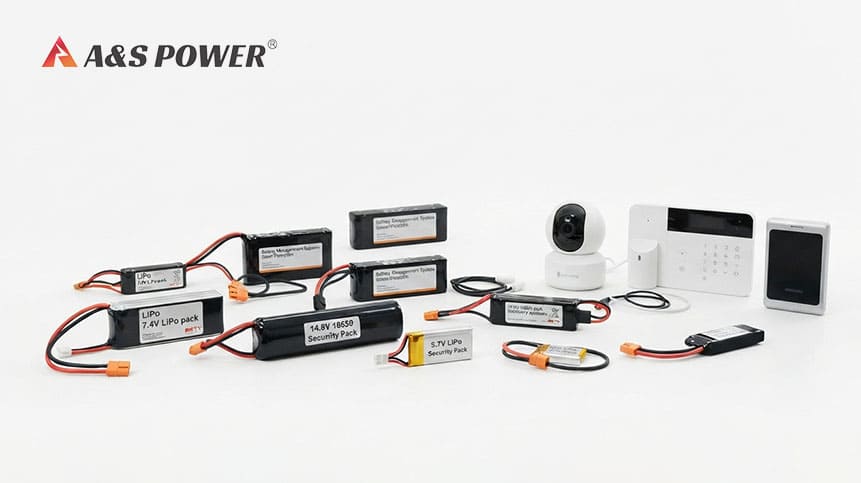
A custom security system battery pack is a rechargeable or backup lithium battery solution specifically designed for security-related equipment, including:
- Alarm control panels
- Wireless security sensors
- CCTV and surveillance systems
- Smart locks
- Access control systems
- Emergency communication devices
- IoT security terminals
- Remote monitoring equipment
Unlike general-purpose batteries, security system batteries must provide reliable standby power for extended periods while maintaining stable performance under different environmental conditions.
For many security applications, the battery is expected to remain in standby mode for months or years and immediately provide power when the main electricity supply fails.
This makes battery reliability one of the most important design factors.
Why Security Systems Require Specialized Battery Packs
Continuous Backup Power Reliability
Most security systems are connected to external power sources. However, power interruptions caused by electrical failures, storms, maintenance, or infrastructure problems can disable security equipment.
A backup battery ensures that:
- Alarm systems continue monitoring
- Communication modules remain connected
- Cameras continue recording
- Access control systems remain operational
According to industry research, modern security systems increasingly rely on wireless connectivity and IoT technologies, increasing the demand for compact rechargeable lithium batteries with higher energy density.
Lithium battery technology has become popular because it provides:
- Higher energy density compared with traditional lead-acid batteries
- Longer cycle life
- Lower self-discharge rate
- Smaller physical size
- Flexible customization options
Choosing the Right Battery Chemistry for Security Systems
Different security applications require different battery characteristics. The selection usually depends on standby duration, power requirements, size limitations, and environmental conditions.
Lithium Polymer Battery (LiPo)
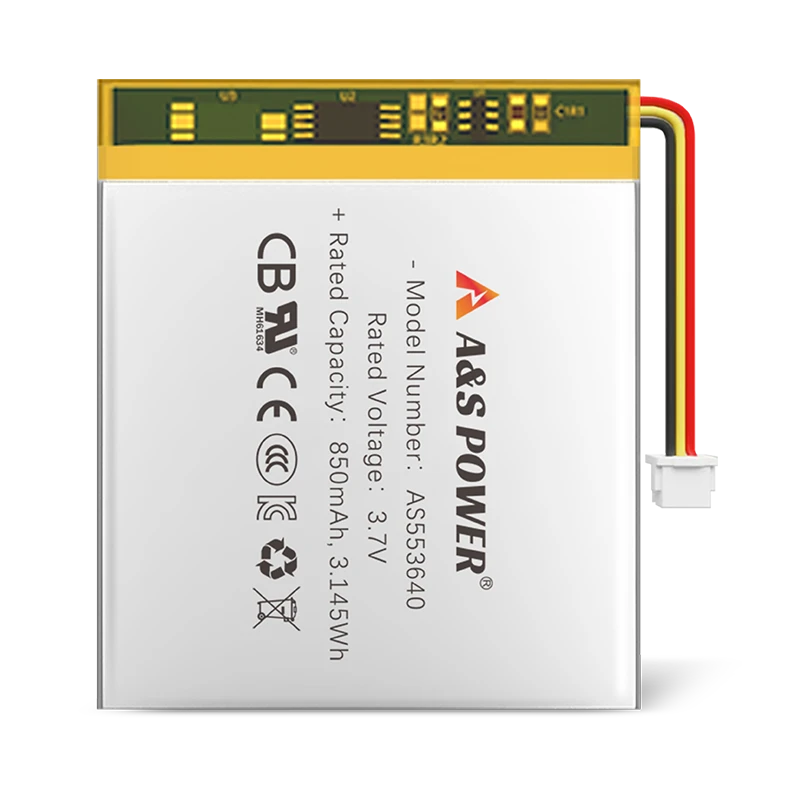
Lithium polymer batteries are widely used in compact security devices because of their flexible shape and lightweight design.
Advantages:
| Feature | LiPo Battery Performance |
|---|---|
| Energy Density | High |
| Shape Flexibility | Excellent |
| Weight | Lightweight |
| Thickness Options | Ultra-thin designs available |
| Application | Smart locks, wireless sensors, portable security devices |
LiPo batteries are particularly suitable when the security device has limited internal space.
Examples:
- Wireless alarm sensors
- Smart door locks
- Wearable security devices
- Compact monitoring equipment
For OEM projects, LiPo batteries can be customized with:
- Specific dimensions
- Different voltage levels
- Custom connectors
- Protection circuit modules (PCM/BMS)
18650 Lithium-Ion Battery Pack
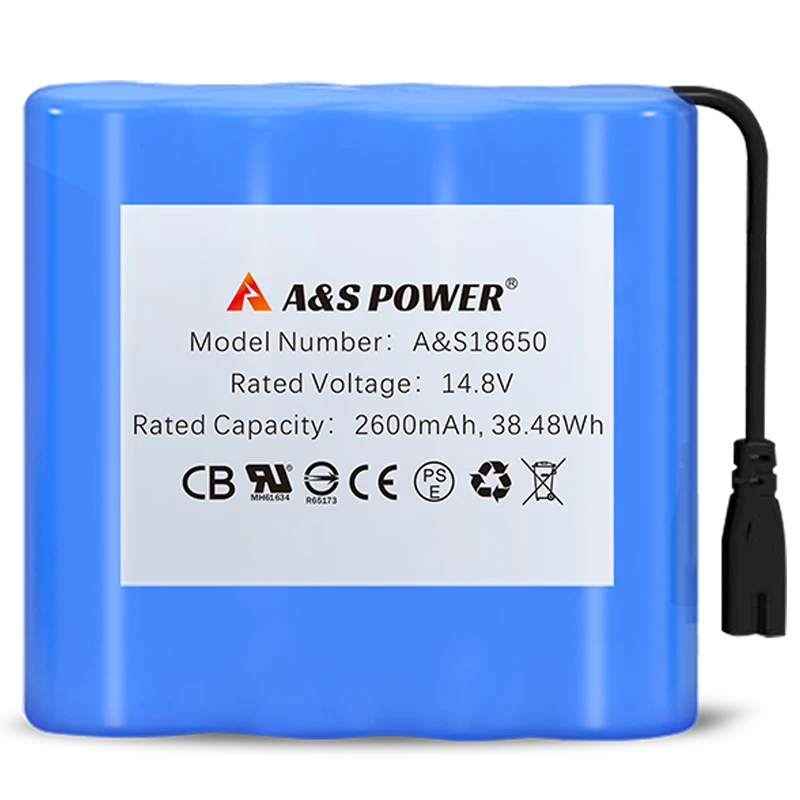
18650 battery packs are another common choice for security systems requiring higher capacity and longer runtime.
Typical configurations include:
- 1S1P (3.7V)
- 2S1P (7.4V)
- 3S1P (11.1V)
- Multi-cell parallel configurations for higher capacity
Advantages:
| Feature | 18650 Battery Pack |
|---|---|
| Cycle Life | High |
| Mechanical Strength | Excellent |
| Capacity Range | Wide |
| Thermal Stability | Good |
| Application | CCTV backup, industrial security equipment |
18650 battery packs are commonly used in larger security devices where space is less restrictive.
LiFePO4 Battery Pack
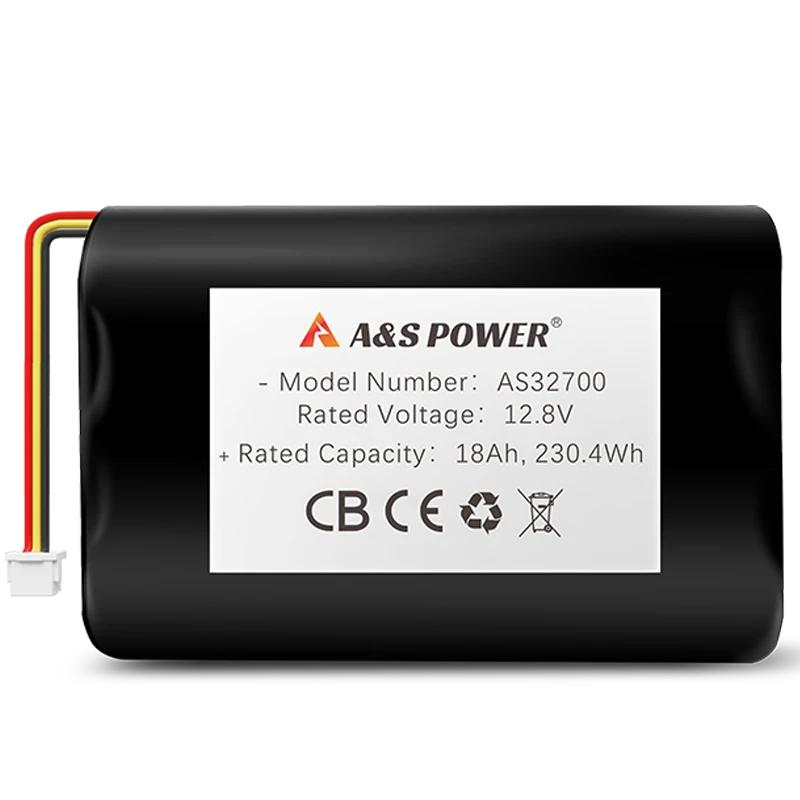
For security systems requiring extremely long service life and enhanced safety, LiFePO4 chemistry can be considered.
Advantages include:
- Excellent thermal stability
- Long cycle lifespan
- Lower risk of thermal runaway
- Suitable for harsh environments
However, LiFePO4 batteries have lower energy density compared with conventional lithium-ion solutions.
They are commonly used in:
- Industrial security systems
- Outdoor monitoring stations
- Remote communication equipment
Key Design Considerations for Custom Security System Battery Packs
Developing a reliable battery solution requires more than selecting battery cells.
As an OEM battery manufacturer, I normally evaluate several important factors before designing a custom pack.
1. Voltage and Capacity Requirements
The first step is understanding the device power requirements.
Battery capacity directly affects operating time.
The basic relationship is:
Runtime = Battery Capacity (Wh) ÷ Device Power Consumption (W)
For example:
A security device consuming 5W with a 50Wh battery theoretically provides:
10 hours of backup operation.
However, real-world performance depends on:
- Temperature
- Battery aging
- Conversion efficiency
- Load changes
2. Battery Size and Mechanical Design
Security equipment manufacturers often face strict space limitations.
Custom battery packs allow engineers to optimize:
- Length
- Width
- Thickness
- Cell arrangement
- Cable position
- Connector type
For example:
A smart lock manufacturer may require a thin LiPo battery that fits inside a narrow door handle, while a surveillance manufacturer may require a higher-capacity cylindrical battery pack.
3. Protection Circuit Design
Safety protection is essential for lithium batteries.
A custom security battery pack normally includes:
- Overcharge protection
- Over-discharge protection
- Over-current protection
- Short-circuit protection
- Temperature monitoring
The protection circuit must match both the battery chemistry and application requirements.
Incorrect protection design may reduce battery lifespan or create safety risks.
Battery Performance Data for Security Applications
The following comparison shows typical characteristics of commonly used battery technologies.
| Battery Type | Energy Density | Cycle Life | Size Flexibility | Typical Security Applications |
|---|---|---|---|---|
| LiPo | 150-250 Wh/kg | 300-800 cycles | Excellent | Smart sensors, smart locks |
| 18650 Li-ion | 180-260 Wh/kg | 500-1000 cycles | Medium | CCTV, alarm backup |
| LiFePO4 | 90-160 Wh/kg | 2000+ cycles | Low | Industrial security systems |
Note: Actual performance depends on cell manufacturer, design structure, operating conditions, and battery management system.
Custom Security System Battery Pack Manufacturing Process
Designing a reliable battery pack for security applications requires a structured engineering process. Unlike consumer electronics batteries, security system batteries must often operate continuously for several years with minimal maintenance.
At A&S Power, I approach custom battery projects by evaluating the complete application environment, not only the battery specifications. A successful security battery solution must balance capacity, safety, physical design, charging requirements, and production reliability.
Step 1 — Understanding the Security Device Requirements
Before selecting battery cells, the first step is analyzing the equipment requirements.
Important parameters include:
- Operating voltage
- Continuous power consumption
- Peak current demand
- Backup runtime target
- Charging method
- Installation environment
- Available internal space
For example, a wireless alarm sensor may require a small 3.7V LiPo battery with low discharge current, while a security camera system may require a higher-capacity 18650 battery pack capable of supporting longer operation.
A professional battery supplier should work together with the device manufacturer during the early design stage to avoid problems after mass production.
Step 2 — Selecting Suitable Battery Cells
The choice of battery cell directly affects reliability and service life.
For security system applications, manufacturers usually consider:
Lithium Polymer Battery Cells
LiPo batteries are ideal when space optimization is important.
Common advantages:
- Flexible packaging design
- Thin profile
- Lightweight structure
- Custom dimensions
- Good energy density
Typical applications:
- Smart door locks
- Wireless security sensors
- Portable surveillance devices
- Access control terminals
Cylindrical Lithium-Ion Cells
18650 and 21700 cells are frequently used when higher capacity and mechanical durability are required.
Advantages:
- Mature manufacturing technology
- Stable performance
- Wide capacity range
- Better structural strength
Typical applications:
- CCTV backup systems
- Industrial security equipment
- Remote monitoring systems
Step 3 — Battery Pack Assembly and Protection System Integration
A custom battery pack is more than a group of cells connected together.
The assembly process usually includes:
- Cell matching and inspection
- Cell welding
- PCM/BMS installation
- Cable and connector customization
- Insulation protection
- Battery enclosure integration
- Performance testing
A properly designed protection circuit helps prevent:
- Overcharging
- Excessive discharge
- Short circuits
- Abnormal temperature conditions
For security applications, reliability is especially important because battery failure may happen during emergency situations.
Security Camera Battery Pack Design Considerations
Security cameras are one of the fastest-growing applications requiring customized battery solutions.
Modern surveillance systems increasingly include:
- Wireless connectivity
- AI-based monitoring
- Cloud recording
- Motion detection
- Remote access
These functions increase energy consumption and create higher requirements for battery performance.
Battery Requirements for Wireless Security Cameras
A typical wireless security camera battery pack needs:
| Requirement | Importance |
|---|---|
| High capacity | Longer standby operation |
| Stable discharge | Reliable video transmission |
| Low temperature performance | Outdoor operation |
| Safety protection | Prevent battery failure |
| Compact size | Easy installation |
Outdoor security cameras may face:
- Low temperatures
- High humidity
- Dust exposure
- Continuous standby operation
Therefore, battery selection should consider environmental conditions, not only capacity.
Alarm System Battery Pack Requirements
Alarm systems are usually designed to remain inactive for long periods and activate only when necessary.
This creates unique battery requirements:
Long Standby Capability
A security alarm battery must maintain charge during extended standby periods.
Important characteristics include:
- Low self-discharge rate
- Stable voltage output
- Long calendar life
Reliable Emergency Performance
When power failure occurs, the battery must immediately provide energy.
The battery pack should support:
- Instant current delivery
- Stable communication
- Continuous monitoring
For these applications, lithium batteries provide advantages compared with traditional battery technologies because of their higher energy efficiency and compact size.
Safety Certifications Required for Security System Battery Packs
Security products are often sold globally, which means battery packs must comply with international safety regulations.
The most common certifications include:
IEC 62133
IEC 62133 is one of the most recognized international standards for rechargeable lithium battery safety.
It evaluates:
- Electrical safety
- Mechanical stress resistance
- Abuse testing
- Charging safety
Many electronic device manufacturers require IEC 62133 compliance before integrating lithium batteries into commercial products.
Reference:
UN38.3 Transportation Testing
Lithium batteries shipped internationally must pass UN38.3 transportation testing.
Tests include:
- Altitude simulation
- Thermal testing
- Vibration
- Shock
- External short circuit
- Overcharge testing
This certification is essential for global battery transportation.
Reference:
UL2054 Battery Pack Safety
UL2054 is widely recognized in North America for household and commercial battery pack safety.
It evaluates:
- Battery construction
- Abuse conditions
- Electrical performance
- Fire safety characteristics
Reference:
RoHS and CE Compliance
For European markets, battery products commonly require:
- RoHS compliance
- CE marking
These requirements help ensure products meet environmental and safety regulations.
Reference:
https://environment.ec.europa.eu/topics/waste-and-recycling/rohs-directive_en
Why OEM Security Manufacturers Choose Custom Battery Pack Suppliers
Working with an experienced battery manufacturer provides several advantages compared with purchasing standard batteries.
Customized Mechanical Design
Security equipment designs are often compact and unique.
OEM battery suppliers can customize:
- Battery shape
- Thickness
- Connector position
- Wire length
- Mounting structure
This allows engineers to maximize internal product space.
Better Product Reliability
A professional battery manufacturer can provide:
- Cell quality control
- Battery testing
- Protection circuit design
- Production consistency
This reduces failures during field operation.
Support for Global Certification Requirements
Experienced suppliers understand international requirements including:
- IEC62133
- UL standards
- UN38.3
- CE
- RoHS
- MSDS
This helps OEM customers shorten product development cycles.
Market Trends: Growing Demand for Lithium Battery Solutions in Security Devices
The security industry is shifting toward wireless and intelligent solutions.
Major trends include:
- Smart home security
- IoT-connected monitoring devices
- Battery-powered cameras
- Remote access systems
- AI-powered surveillance
According to industry reports, the global video surveillance market continues expanding as businesses and consumers adopt smart security solutions. This growth directly increases demand for compact rechargeable battery systems.
Battery manufacturers are therefore focusing on:
- Higher energy density
- Safer lithium chemistry
- Longer service life
- Smaller customized designs
Why Choose A&S Power for Custom Security System Battery Packs?
With more than 15 years of lithium battery manufacturing experience, A&S Power focuses on providing customized battery solutions for OEM customers worldwide.
Our capabilities include:
- Custom LiPo battery packs
- 18650 lithium-ion battery packs
- LiFePO4 battery solutions
- Custom voltage and capacity designs
- Connector and cable customization
- Battery protection circuit integration
We support applications including:
- Security systems
- Medical devices
- Smart wearable products
- Industrial equipment
- IoT devices
Our battery solutions can be customized according to customer requirements and supported with certifications including CE, RoHS, UN38.3, IEC62133, and UL-related standards depending on product design.
Conclusion
A reliable custom security system battery pack is an important component in modern security infrastructure. Whether used in alarm systems, wireless cameras, smart locks, or industrial monitoring equipment, the battery must deliver stable performance, long standby time, and strong safety protection.
Choosing the right battery chemistry, protection design, certification strategy, and manufacturing partner can significantly improve product reliability.
For OEM manufacturers developing next-generation security products, customized lithium battery solutions provide the flexibility needed to create smaller, smarter, and more dependable security devices.
FAQ
Q1: What is a custom security system battery pack?
A custom security system battery pack is a rechargeable battery solution designed specifically for security devices such as alarm panels, surveillance cameras, smart locks, access control systems, and wireless monitoring equipment. Unlike standard batteries, custom packs can be designed with specific voltage, capacity, dimensions, connectors, and protection circuits to match the requirements of different security products.
Q2: Which battery type is best for security systems?
The best battery type depends on the security device requirements. Lithium Polymer (LiPo) batteries are suitable for compact devices because they offer flexible shapes and high energy density. 18650 lithium-ion battery packs are commonly used for security cameras and systems requiring longer backup time. LiFePO4 batteries are preferred for applications that require extremely long cycle life and enhanced thermal stability.
Q3: How long does a security system battery pack last?
The service life of a security system battery pack depends on battery chemistry, operating conditions, charging cycles, and usage patterns.
Typical expectations: LiPo battery packs: approximately 300–800 cycles, 18650 lithium-ion packs: approximately 500–1000 cycles, LiFePO4 battery packs: often more than 2000 cycles. Actual lifetime may vary depending on temperature, charging management, and battery design.
Q4: Can a security system battery pack be customized in size and shape?
Yes. Custom battery manufacturers can develop battery packs with different shapes, thicknesses, and dimensions. This is especially important for compact security devices such as smart locks, wireless sensors, and portable monitoring equipment where internal space is limited. Customization options may include: Battery size, Voltage, Capacity, Connector type, Cable length, Protection circuit design.
Q5: What certifications are required for security system lithium batteries?
The required certifications depend on the target market and application. Common standards include: IEC 62133 for rechargeable lithium battery safety, UN38.3 for international transportation, UL2054 for battery pack safety in North America, CE and RoHS for European markets, OEM manufacturers should confirm certification requirements before starting mass production.
Q6: Are lithium batteries safe for security systems?
Yes, lithium batteries are widely used in security equipment when they are properly designed with suitable protection circuits and quality-controlled cells. A professional battery pack normally includes: Overcharge protection, Over-discharge protection, Short-circuit protection, Temperature monitoring. Safety depends not only on the battery chemistry but also on engineering design, manufacturing processes, and testing procedures.
Q7: Can A&S Power manufacture custom battery packs for security products?
Yes. A&S Power provides OEM/ODM lithium battery solutions for different industries, including security equipment, IoT devices, medical electronics, and industrial products. The company supports: Custom LiPo battery packs, 18650 lithium-ion battery packs, LiFePO4 battery solutions, Custom connectors and wiring, Protection circuit integration, Battery testing and certification support.
-

 May.2026.08.19Custom Lithium Battery Pack Voltage & Capacity Selection GuideLearn More
 -
 May.2026.08.18How to Choose Custom Lithium Battery Specs for IoT DevicesLearn More
 -
 May.2026.08.17Custom Medical Battery Design: IEC 62133, BMS & Cost GuideLearn More
 -
 May.2026.08.1718650 Cell or LiPo Battery Cell: Choosing the Best BatteryLearn More
 -
 May.2026.08.14A Complete Guide to 3.7 Volt Battery SizesLearn More