




Does Battery Cell Brand Affect Low Temperature Power Loss?
Quick Answer:
Yes, battery cell brand can influence power loss in portable devices at low temperatures, but it is not the only deciding factor. Battery chemistry, internal resistance, cell design, electrolyte formulation, battery management system (BMS), and overall pack engineering usually have a greater impact on cold-weather performance. High-quality battery cells from reputable manufacturers often provide better consistency and lower impedance, but a properly designed custom battery pack can outperform a standard battery using the same cell brand.
For OEM portable devices operating in cold environments, the most important factors are not only the battery brand, but also verified low-temperature discharge performance, voltage stability, charging capability, and complete battery system design.
Introduction
Why Portable Devices Lose Power in Cold Environments
When users operate portable electronic devices in cold environments, one common complaint is sudden battery depletion, reduced runtime, or unexpected shutdown. This issue appears in many applications, including medical equipment, GPS trackers, industrial handheld devices, smart wearables, and consumer electronics.
A frequent question from OEM engineers is:
"Is power loss at low temperatures caused by the battery cell brand itself?"
From my experience working with customized lithium battery solutions, the answer is more complex than simply choosing a premium or well-known cell brand.
The battery cell brand can influence low-temperature performance, but it is only one part of the equation. Battery chemistry, cell design, internal resistance, electrode materials, protection circuit design, and thermal management all play important roles.
A high-quality battery cell from a reputable manufacturer usually provides more consistent performance, but even the best cell will experience reduced capacity and power output in freezing conditions.
How Low Temperatures Affect Lithium Battery Performance
Lithium-ion batteries rely on chemical reactions to move lithium ions between the cathode and anode. When temperatures decrease, these chemical processes slow down.
The main effects include:
- Increased internal resistance
- Reduced ion mobility
- Lower discharge capability
- Reduced available capacity
- Voltage drop under load
For example, a typical lithium-ion battery may deliver close to its rated capacity at room temperature (around 20–25°C), but performance can decrease significantly below 0°C.
According to battery research data, many standard lithium-ion cells experience:
| Temperature Condition | Typical Available Capacity | Performance Impact |
|---|---|---|
| 25°C | 100% | Normal operation |
| 0°C | 80–90% | Slight runtime reduction |
| -10°C | 60–80% | Noticeable power loss |
| -20°C | 40–60% | Significant voltage drop |
| Below -30°C | Limited operation | Requires special low-temperature design |
The actual results depend heavily on cell chemistry and battery construction.
Does Battery Cell Brand Really Influence Cold Temperature Performance?
Yes, the battery cell brand can affect low-temperature performance, but not because the brand name itself improves cold resistance.
The difference comes from the technology and manufacturing quality behind the cell.
1. Cell Material Selection Affects Low Temperature Behavior
Different manufacturers use different electrode formulations, separators, and electrolyte compositions.
For example:
- Advanced electrolyte formulations can maintain better ion conductivity in cold conditions.
- Lower impedance electrode designs reduce voltage drops.
- High-quality separators improve safety and stability.
A premium cell manufacturer typically invests more in material research and production control, resulting in more consistent low-temperature behavior.
However, a cheaper cell with acceptable room-temperature performance may show larger capacity losses when exposed to cold environments.
2. Internal Resistance Is One of the Biggest Factors
From an engineering perspective, internal resistance is often more important than the brand name.
When temperature decreases, internal resistance increases.
Higher resistance causes:
- Faster voltage sag
- Reduced peak current output
- Earlier battery protection shutdown
The relationship can be summarized as:
Cold temperature + high internal resistance = faster power loss
For portable devices requiring high current, such as:
- Portable ultrasound equipment
- Medical monitoring devices
- POS terminals
- Industrial scanners
- Wireless communication devices
low internal resistance cells usually provide better cold-weather reliability.
Comparing Battery Chemistry for Cold Temperature Applications
Battery chemistry has a significant impact on cold performance.
| Battery Chemistry | Low Temperature Performance | Typical Applications |
|---|---|---|
| Standard Li-ion (NMC) | Moderate | Consumer electronics, industrial devices |
| Lithium Polymer (LiPo) | Moderate to good depending on design | Wearables, medical devices, portable electronics |
| LiFePO4 | Good safety but lower energy density | Energy storage, industrial equipment |
| Low-temperature lithium cells | Excellent | Military, outdoor, extreme environments |
For example, lithium polymer batteries are widely used in compact portable devices because they offer flexible shapes and high energy density. However, standard LiPo cells are not automatically optimized for extreme cold.
A custom LiPo battery pack designed with suitable electrolyte, separator technology, and protection settings can outperform a generic battery using the same chemistry.
Why Two Batteries With the Same Brand Can Perform Differently
Many engineers assume that selecting a famous battery manufacturer guarantees identical performance.
In reality, battery performance depends on:
Battery Model Selection
The same manufacturer may produce different cell series:
- High energy density cells
- High discharge cells
- Long cycle-life cells
- Low-temperature optimized cells
Each design targets different requirements.
Battery Pack Design
The battery cell is only one component.
A complete battery pack includes:
- Battery cells
- Protection circuit module (PCM)
- Battery management system (BMS)
- Connectors
- Wiring
- Thermal design
- Mechanical structure
Poor pack design can reduce cold-temperature performance even when using premium cells.
Real-World Example: Portable Medical Devices in Cold Conditions
Medical portable devices often require stable operation because unexpected shutdowns can affect user safety.
For example, portable diagnostic equipment used outdoors may experience:
- Cold storage environments
- Winter transportation
- Outdoor emergency operations
In these situations, engineers should evaluate:
- Battery discharge curve at low temperature
- Voltage stability under load
- Internal resistance changes
- Charging limitations below 0°C
- Protection circuit behavior
A battery supplier with experience in medical applications should provide test data rather than only claiming a specific cell brand.
How OEM Engineers Should Select Battery Cells for Cold Environments
When selecting batteries for portable devices used in cold environments, I recommend OEM engineers avoid choosing cells based only on brand reputation or price.
A better approach is to evaluate the complete battery performance profile.
The most important factors include:
1. Review Low-Temperature Discharge Data
A reliable battery supplier should provide discharge curves at different temperatures.
For example:
- 25°C standard discharge performance
- 0°C performance verification
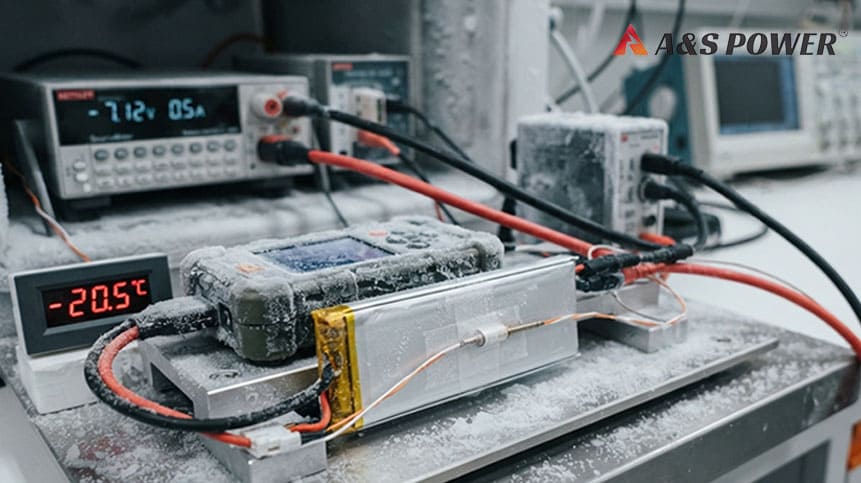
- -10°C or -20°C discharge capability
- High-current pulse discharge behavior
A battery that performs well at room temperature may not maintain stable voltage in cold conditions.
For applications such as medical equipment, industrial terminals, and outdoor IoT devices, low-temperature test data is often more valuable than a simple battery capacity rating.
2. Evaluate Internal Resistance Rather Than Capacity Alone
Many buyers focus on mAh capacity when comparing battery cells.
However, cold-weather performance depends strongly on impedance characteristics.
A 5000mAh battery with high internal resistance may shut down earlier than a 4000mAh battery with better low-temperature discharge capability.
A practical evaluation should include:
| Battery Parameter | Why It Matters |
|---|---|
| Rated Capacity (mAh) | Determines theoretical runtime |
| Internal Resistance (mΩ) | Affects voltage stability |
| Discharge Rate (C-rate) | Determines current output capability |
| Operating Temperature Range | Defines usable environment |
| Cycle Life | Determines long-term reliability |
For portable devices, the best battery is not always the one with the highest capacity. It is the one that maintains stable performance under actual operating conditions.
Battery Cell Brand vs Battery Pack Manufacturer: Who Determines Cold Performance?
A common misunderstanding in OEM battery procurement is that the cell manufacturer completely determines battery performance.
In reality, cold-weather reliability is the result of cooperation between the cell and battery pack design.
The battery cell supplier controls:
- Electrode chemistry
- Material selection
- Manufacturing consistency
- Cell structure
The battery pack manufacturer controls:
- Battery configuration
- Protection circuit design
- Charging parameters
- Thermal protection
- Mechanical integration
- Quality testing
For example, a high-quality lithium polymer cell can still fail in cold conditions if:
- The protection circuit has incorrect voltage thresholds
- The charger does not support cold charging conditions
- The battery enclosure creates poor thermal behavior
- The discharge current exceeds the cell capability
Therefore, OEM customers should evaluate the battery solution provider, not only the cell brand.
Charging Lithium Batteries in Cold Temperatures
Cold temperature affects not only discharge performance but also charging safety.
Lithium-ion batteries generally should not be charged below freezing temperatures unless they are specifically designed for low-temperature charging.
Charging at low temperatures can cause:
- Lithium plating on the anode
- Permanent capacity loss
- Reduced cycle life
- Increased safety risks
For products used outdoors, engineers may consider:
- Self-heating battery systems
- Temperature sensors
- Smart BMS solutions
- Low-temperature charging protection
This is particularly important for:
- GPS tracking devices
- Outdoor monitoring equipment
- Emergency communication devices
- Industrial instruments
How Custom Battery Design Improves Cold Weather Reliability
In many professional applications, standard commercial batteries cannot meet environmental requirements.
A custom lithium battery pack allows engineers to optimize:
Cell Selection
The battery manufacturer can select:
- High-rate discharge cells
- Low-impedance cells
- Wide-temperature cells
based on application requirements.
Battery Management System (BMS)
A customized BMS can control:
- Over-discharge protection
- Over-current protection
- Temperature monitoring
- Charging restrictions
Mechanical Design
Battery packaging can improve:
- Heat retention
- Vibration resistance
- Space utilization
For compact devices such as smart wearables and medical equipment, customized LiPo batteries are often preferred because they can match unique product shapes and power requirements.
Practical Recommendations for OEM Product Designers
Based on my experience supporting customized lithium battery projects, I suggest OEM engineers follow these steps:
Step 1: Define the Operating Environment
Before selecting a battery, identify:
- Minimum operating temperature
- Maximum discharge current
- Required runtime
- Charging environment
A device operating at -5°C requires a different solution from one operating at -30°C.
Step 2: Request Real Test Data
Do not rely only on:
- Battery brand reputation
- Datasheet capacity
- Marketing claims
Ask suppliers for:
- Temperature discharge tests
- Cycle testing results
- Safety certifications
- Battery characterization reports
Step 3: Test the Complete Battery Pack
The final product should be tested under realistic conditions.
Recommended tests include:
| Test Type | Purpose |
|---|---|
| Low-temperature discharge test | Verify runtime in cold environments |
| Temperature cycling test | Evaluate durability |
| High-current discharge test | Confirm power stability |
| Charging safety test | Prevent cold charging damage |
| Battery aging test | Verify long-term reliability |
Why OEMs Work With A&S Power for Custom Lithium Battery Solutions
At A&S Power, we understand that battery performance depends on more than selecting a cell manufacturer.
Our approach focuses on complete battery system engineering, including:
- Lithium polymer battery customization
- Lithium-ion battery pack design
- Protection circuit integration
- Connector and cable customization
- Performance testing
- Safety certification support
With more than 15 years of experience in lithium battery manufacturing, we support OEM customers in industries including medical devices, smart electronics, IoT equipment, industrial tools, and portable consumer products.
For cold-environment applications, we help customers evaluate:
- Cell chemistry selection
- Discharge requirements
- Battery structure
- Temperature performance
- Certification requirements
A reliable battery solution should be designed around the device, not simply selected from a catalog.
Conclusion
Is Power Loss at Low Temperature Caused by the Battery Cell Brand?
The battery cell brand can influence low-temperature performance, but it is not the only determining factor.
A reputable cell manufacturer usually provides better consistency, lower resistance, and more reliable materials. However, real-world performance depends on the entire battery system, including chemistry, cell model, BMS design, charging strategy, and environmental testing.
For OEM portable devices operating in cold conditions, the best solution is not simply choosing a famous battery brand. It is selecting the right battery technology and designing a complete power system optimized for the application.
FAQ
Q1: Does battery cell brand affect cold temperature performance?
Yes, battery cell brands can influence performance because different manufacturers use different materials, production processes, and cell designs. However, battery chemistry and pack design often have an equally important impact.
Q2: Why does my device lose power faster in cold weather?
Cold temperatures increase battery internal resistance and slow lithium-ion movement. This reduces available capacity and causes voltage drops under load.
Q3: Are lithium polymer batteries better in cold temperatures?
Lithium polymer batteries can perform well in cold environments when properly designed. Their performance depends on cell materials, electrolyte formulation, discharge capability, and battery management system design.
Q4: Can lithium batteries be charged below 0°C?
Standard lithium batteries should generally not be charged below freezing temperatures. Low-temperature charging may cause lithium plating and permanent battery damage.
Q5: Should OEMs choose famous battery brands for portable devices?
A well-known battery brand can provide quality consistency, but OEMs should evaluate complete battery performance, including discharge tests, internal resistance, safety certifications, and application requirements.
-

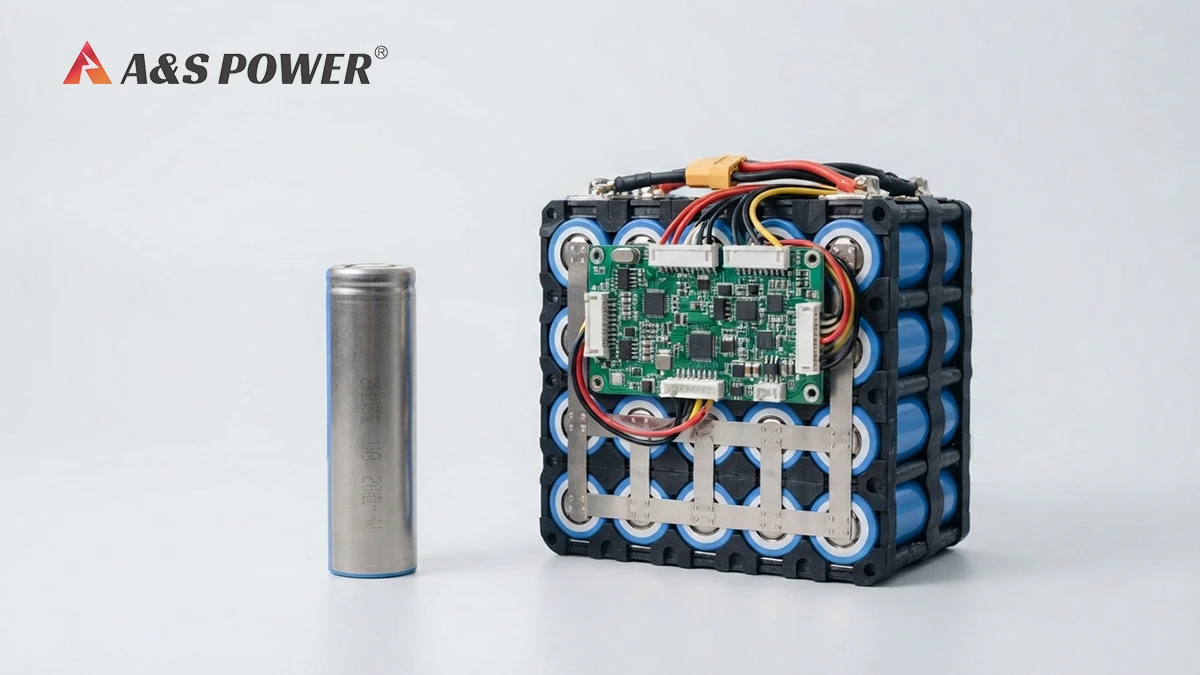 May.2026.08.0521700 Battery Pack with BMS: Design, Safety and Custom SolutionsLearn More
 -
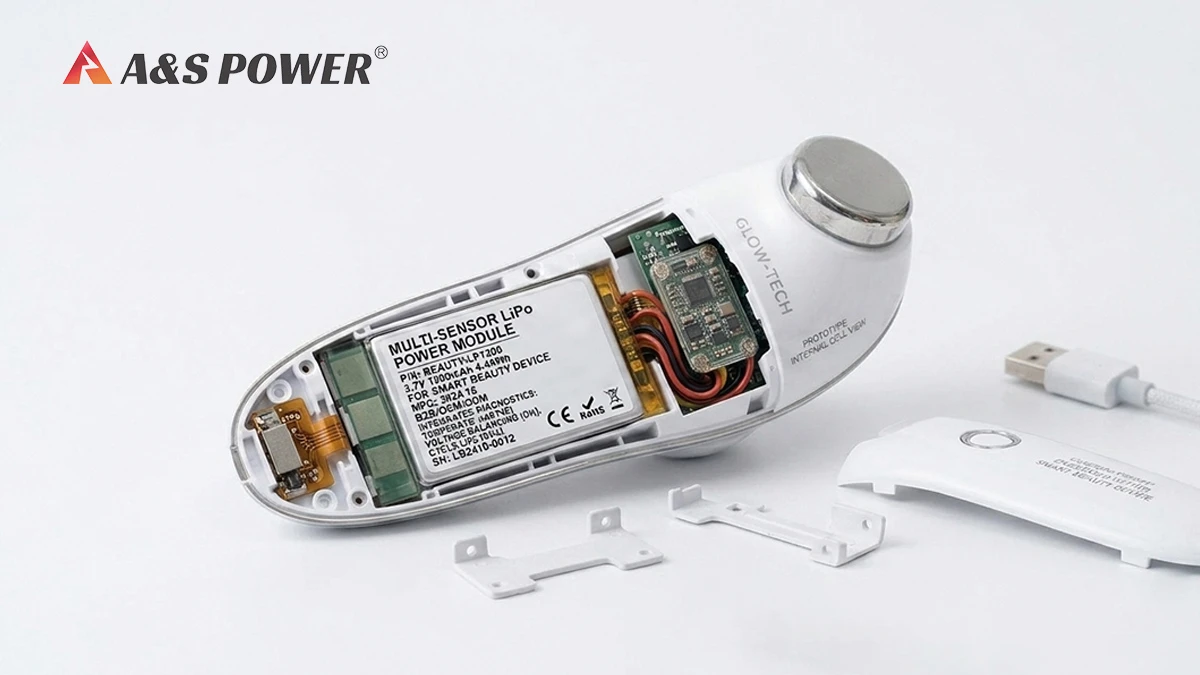 May.2026.08.04Smart Beauty Equipment Battery Pack ManufacturerLearn More
 -
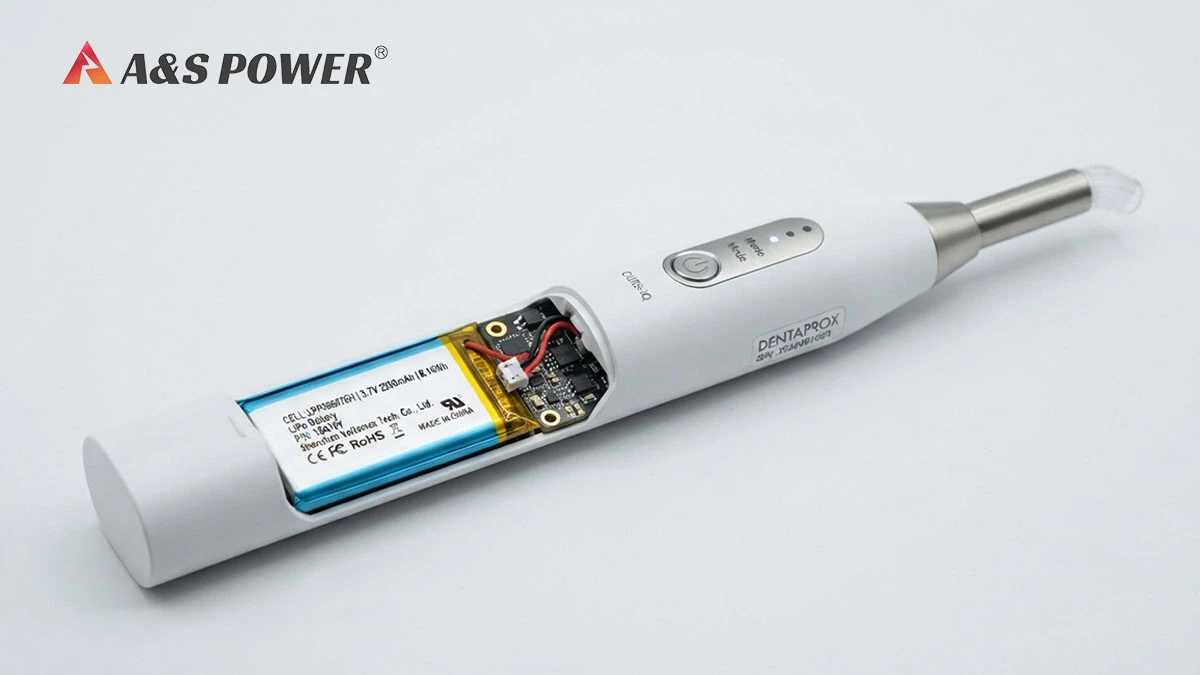 May.2026.08.04High Reliability Polymer Battery for Handheld Dental DevicesLearn More
 -
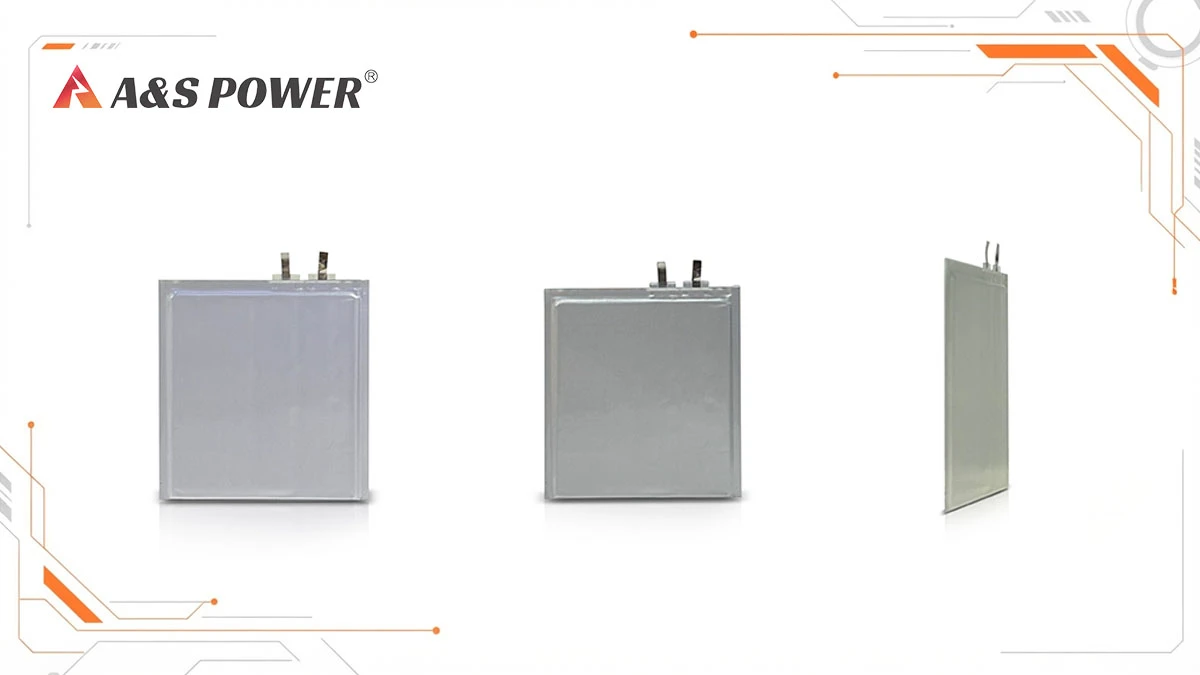 May.2026.08.04Ultra Thin Lithium Polymer Battery 0.4mm 0.5mm Custom GuideLearn More
 -
 May.2026.07.30Smoke Detector Battery Guide: Choosing the Right Battery for Reliable Fire ProtectionLearn More