




Feasibility of Custom-Shaped Batteries in Wearable Medical Devices
Quick Answer:
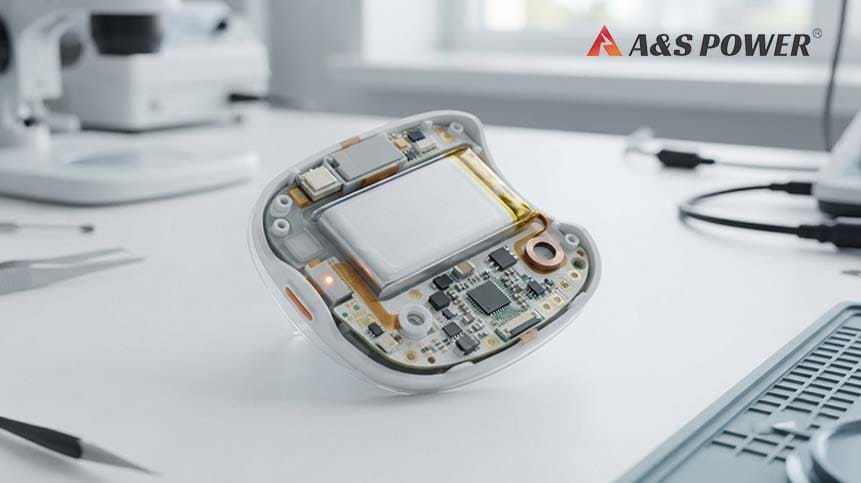
Yes—custom-shaped batteries are technically feasible and increasingly preferred in wearable medical devices, provided they are designed within the limits of electrochemical safety, mechanical reliability, and regulatory compliance. Compared with standard cylindrical or prismatic cells, custom lithium polymer (LiPo) batteries enable designers to maximize available space, improve wearing comfort, reduce product thickness, and increase battery capacity without enlarging the device. However, successful implementation requires careful consideration of cell chemistry, enclosure design, battery management systems (BMS), certification requirements, and long-term reliability testing.
As a manufacturer of custom rechargeable battery solutions, we have found that the success of a wearable medical battery project depends less on creating an unusual shape and more on balancing performance, manufacturability, safety, and regulatory requirements from the beginning of the design process.
Introduction
Wearable medical devices are becoming smaller, lighter, and more sophisticated. From continuous glucose monitors (CGMs) and wearable ECG monitors to smart rehabilitation equipment and portable infusion pumps, today's medical technologies require compact power sources that deliver reliable performance without compromising patient comfort.
As device miniaturization continues, standard cylindrical and prismatic batteries often struggle to make efficient use of limited internal space. This has led many OEM manufacturers to explore custom-shaped lithium polymer (LiPo) batteries, which can be engineered to fit unique product geometries while maintaining high energy density and dependable electrical performance.
However, designing a custom-shaped battery involves more than simply changing its dimensions. Engineers must carefully balance energy capacity, thermal management, mechanical durability, manufacturability, and compliance with international safety standards such as IEC 62133, UN38.3, UL 2054, and the medical risk management principles outlined in ISO 14971. A successful design must support not only product innovation but also long-term reliability and regulatory approval.
In this article, we examine the technical feasibility of custom-shaped batteries for wearable medical devices, discuss their key advantages and engineering limitations, review applicable safety standards, and share practical recommendations for OEM manufacturers developing next-generation healthcare products. Whether you are designing a disposable medical patch or a rechargeable patient monitoring system, understanding these considerations will help you make more informed battery design decisions while reducing development risks.
Why Battery Shape Matters in Wearable Medical Devices
Wearable healthcare technology has expanded rapidly over the past decade. Products such as:
- Continuous Glucose Monitors (CGM)
- ECG patches
- Portable ECG monitors
- Smart rehabilitation devices
- Wearable infusion pumps
- Patient monitoring patches
- Remote health monitoring wearables
all share one common challenge:
Limited internal space.
Unlike smartphones, wearable medical devices must prioritize patient comfort while maintaining long operating time. Every millimeter of internal volume influences battery capacity, PCB layout, sensors, wireless modules, and enclosure thickness.
This is why many OEM manufacturers are replacing standard battery formats with custom-shaped lithium polymer batteries specifically engineered around product dimensions.
How Custom-Shaped Batteries Improve Product Design
Traditional lithium-ion cells are generally available in standardized formats such as:
| Battery Type | Shape | Design Flexibility | Typical Applications |
|---|---|---|---|
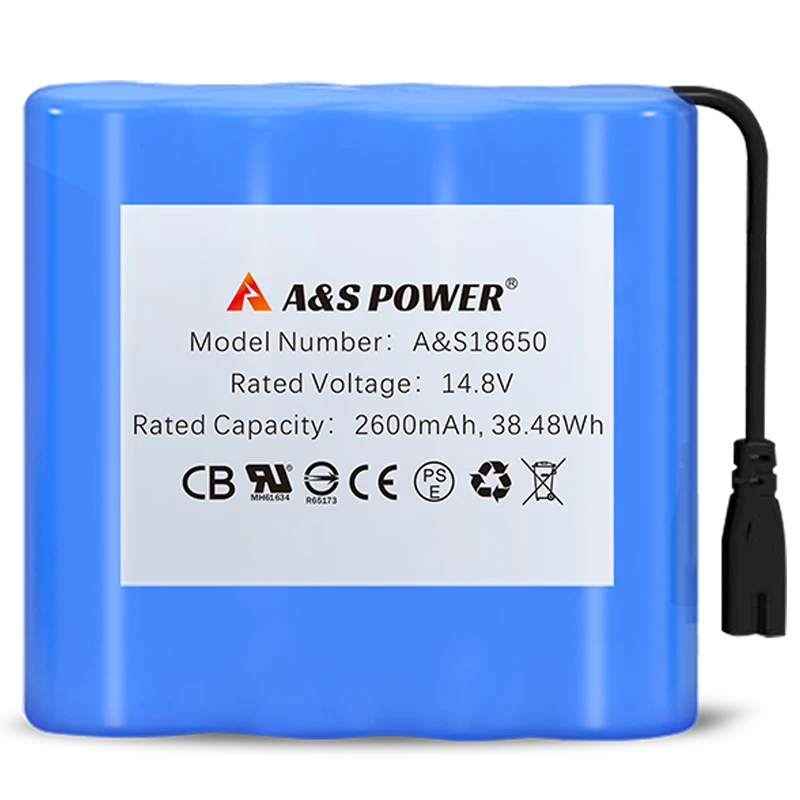
| Cylindrical (18650/21700) | Round | Low | Medical carts, portable equipment |
| Prismatic | Rectangle | Medium | Tablets, handheld medical devices |
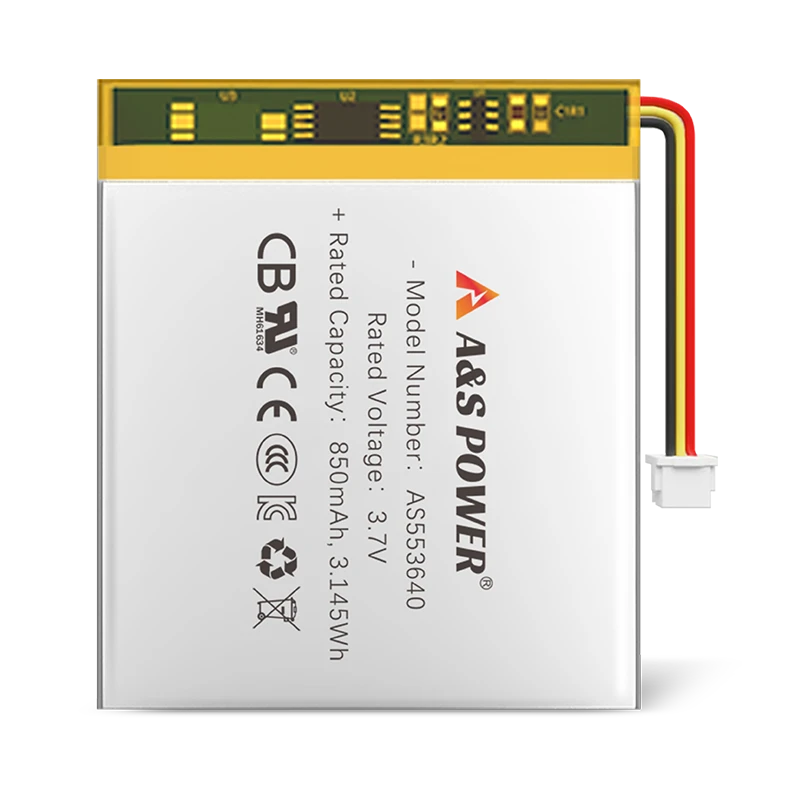
| Lithium Polymer (LiPo) | Customizable | High | Wearable medical devices |
Lithium polymer pouch cells use laminated aluminum-plastic packaging instead of rigid metal cans. This construction allows manufacturers to customize:
- Length
- Width
- Thickness
- Corner radius
- Tab position
- Cable orientation
- Connector type
Rather than forcing product engineers to design around a battery, custom LiPo batteries allow the battery to fit naturally within the product's mechanical structure.
This design flexibility is particularly valuable in compact wearable devices where available battery space is often irregular rather than rectangular.
Engineering Feasibility of Custom Battery Shapes
From an engineering perspective, custom-shaped batteries are highly feasible—but only within specific manufacturing limits.
Battery performance depends primarily on electrode design rather than external appearance.
Manufacturers can modify:
Battery Dimensions
Thin batteries as slim as a few millimeters can be produced for medical patches, while thicker cells may provide greater capacity for portable monitoring equipment.
Electrode Layout
Electrode alignment must maintain uniform current distribution. Extremely narrow or highly irregular geometries can reduce manufacturing yield and cycle life.
Tab Placement
Positive and negative terminals may be positioned according to PCB layout, reducing cable routing complexity inside compact medical products.
Mechanical Integration
Battery corners can often be rounded to improve enclosure utilization while minimizing internal stress concentration.
Although many shapes are achievable, batteries cannot simply be cut into arbitrary forms without affecting safety and manufacturing consistency.
Successful customization always begins with collaboration between industrial designers, mechanical engineers, and battery manufacturers during the earliest development stages.
Benefits for Wearable Medical Devices
Custom-shaped batteries provide several practical advantages beyond appearance.
Improved Space Utilization
Medical wearables often contain sensors, antennas, microcontrollers, and wireless communication modules.
A battery designed around these components typically occupies a greater percentage of available volume than a standard rectangular cell, allowing higher energy storage without increasing overall device size.
Better Wearing Comfort
Reducing battery thickness enables:
- lighter products
- improved flexibility
- lower skin pressure
- enhanced patient compliance
These characteristics are especially important for wearable devices intended to operate continuously for several days.
Longer Runtime
By utilizing previously unused internal space, custom batteries frequently deliver higher capacity than standard cells of similar external dimensions.
For battery-powered medical monitoring devices, this can reduce charging frequency and improve patient experience.
Enhanced Product Differentiation
OEM manufacturers increasingly view battery customization as a competitive advantage.
Instead of redesigning products around standard battery sizes, engineers can optimize industrial design without compromising battery performance.
Design Challenges and Manufacturing Limitations
Although custom-shaped batteries offer significant design advantages, they also introduce engineering challenges that should be evaluated early in product development.
Energy Density vs. Shape Complexity
The more unconventional a battery shape becomes, the more difficult it is to maintain uniform electrode stacking and efficient use of internal space. In practice, moderate customization—such as rounded corners, tapered edges, or asymmetric dimensions—is often more manufacturable than highly irregular geometries.
Battery engineers typically aim to maximize active material utilization while maintaining structural integrity. An overly complex design may reduce volumetric energy density or increase production costs without providing meaningful ergonomic benefits.
Mechanical Durability
Wearable medical devices experience daily mechanical stress from movement, vibration, and accidental impacts. Custom batteries must therefore withstand:
- Repeated bending forces on cables and tabs
- Compression from wearable straps or housings
- Temperature cycling during charging and use
- Long-term dimensional stability
Finite Element Analysis (FEA) and mechanical reliability testing are commonly used during product development to verify that the battery and enclosure remain stable throughout the product's service life.
Thermal Management
Unlike larger medical equipment, wearable devices have limited space for heat dissipation.
Battery designers should evaluate:
- Maximum continuous discharge current
- Peak current during wireless transmission
- Charging temperature
- Internal thermal resistance
- Heat generated by adjacent electronic components
A well-designed battery layout helps distribute heat more evenly and supports consistent electrochemical performance.
Manufacturing Tolerances
Custom batteries generally require tighter dimensional control than standard cells because they must fit precisely into dedicated enclosures.
Typical considerations include:
- Cell thickness tolerance
- Connector positioning
- Cable length consistency
- Adhesive placement
- Protective circuit integration
Close collaboration between the battery supplier and the device manufacturer helps minimize assembly issues during mass production.
Safety and Regulatory Considerations
For wearable medical devices, battery safety is never determined by shape alone. Compliance with internationally recognized standards is far more important than whether a cell is rectangular, curved, or custom-profiled.
Manufacturers should ensure that the battery design aligns with both transportation requirements and medical device risk management processes.
IEC 62133
IEC 62133 is one of the most widely recognized international safety standards for portable rechargeable batteries. It evaluates protection against:
- External short circuits
- Overcharging
- Mechanical abuse
- Thermal stress
- Electrical misuse
For wearable medical electronics intended for international markets, IEC 62133 compliance is often an expected baseline.
UN38.3
All lithium batteries shipped internationally by air, sea, or land must successfully complete UN38.3 transportation testing.
These tests include:
- Altitude simulation
- Thermal cycling
- Vibration
- Shock
- External short circuit
- Impact
- Overcharge
- Forced discharge
Passing UN38.3 confirms transport safety rather than product certification.
UL 2054
For products entering the North American market, UL 2054 provides additional evaluation of household and commercial battery pack safety, particularly for rechargeable battery assemblies.
ISO 14971
Medical device manufacturers typically follow ISO 14971 for risk management throughout product development.
Battery-related hazards considered under ISO 14971 include:
- Thermal runaway
- Leakage
- Capacity degradation
- Unexpected shutdown
- Charging failures
- Mechanical damage
Battery selection should therefore be integrated into the overall device risk analysis rather than treated as an isolated component decision.
Industry Data Supporting Custom Battery Adoption
The growing popularity of wearable healthcare products continues to increase demand for customized battery solutions.
Several industry analyses indicate:
| Industry Trend | Market Observation | Engineering Impact |
|---|---|---|
| Wearable medical devices continue to expand globally | Higher demand for compact power solutions | Greater adoption of custom LiPo batteries |
| Devices are becoming thinner and lighter | Internal space becomes increasingly constrained | Customized cell dimensions improve space utilization |
| Remote patient monitoring is growing | Longer battery runtime is expected | Higher-capacity custom batteries reduce charging frequency |
| Miniaturized sensors require efficient packaging | Mechanical integration becomes more complex | Early battery co-design improves overall product performance |
Rather than treating the battery as a standard purchased component, many OEMs now involve battery manufacturers during the industrial design phase. This collaborative approach often reduces redesign cycles and improves manufacturability.
How We Approach Custom Battery Development
From our experience supporting OEM and ODM medical device projects, successful battery customization begins with understanding the complete product architecture rather than simply matching dimensions.
Our engineering process typically includes:
- Reviewing the mechanical enclosure and available installation space.
- Evaluating operating voltage, current profile, and runtime requirements.
- Selecting the appropriate lithium chemistry based on performance and safety goals.
- Optimizing cell dimensions to maximize usable capacity.
- Designing protection circuits, connectors, and cable routing.
- Supporting validation testing before mass production.
This engineering-first approach helps reduce design iterations while improving overall product reliability and user experience.
Best Practices for OEM Medical Device Manufacturers
When evaluating a custom-shaped battery supplier, consider the following factors:
| Evaluation Criteria | Why It Matters |
|---|---|
| Engineering support | Ensures battery and device are co-designed efficiently |
| Medical project experience | Reduces development risks and validation time |
| Certification capability | Supports compliance with global regulatory requirements |
| Customization flexibility | Enables optimized dimensions, connectors, and protection circuits |
| Quality management | Improves long-term consistency and traceability |
| Prototype responsiveness | Accelerates product development schedules |
Choosing a supplier with both battery manufacturing expertise and experience in regulated medical applications can significantly shorten development timelines while improving reliability.
Conclusion
Custom-shaped batteries have become a practical and increasingly important solution for wearable medical devices. By adapting battery geometry to the product instead of forcing the product to fit a standard cell, manufacturers can improve ergonomics, increase energy utilization, and extend operating time without enlarging the device.
However, successful implementation depends on more than mechanical customization. Battery performance, safety, manufacturability, and regulatory compliance must all be considered simultaneously. Early collaboration between OEM engineers and experienced battery manufacturers helps ensure that the final design balances capacity, reliability, and certification requirements.
As wearable healthcare technology continues to evolve toward smaller, lighter, and more connected devices, custom lithium polymer batteries are expected to remain a key enabling technology for next-generation medical products.
FAQ
Are custom-shaped batteries safe for wearable medical devices?
Yes. When designed and manufactured according to international standards such as IEC 62133 and integrated into a properly engineered battery management system (BMS), custom-shaped lithium polymer batteries can provide a high level of safety. Extensive electrical, mechanical, environmental, and transportation testing is typically required before commercialization.
Why are lithium polymer batteries commonly used in wearable medical devices?
Lithium polymer batteries offer excellent design flexibility. Their pouch-cell construction allows manufacturers to customize dimensions, thickness, connector locations, and cable orientation, making them well suited for compact medical wearables with limited internal space.
Does a custom-shaped battery reduce battery life?
Not necessarily. Battery cycle life depends primarily on cell chemistry, operating temperature, charging strategy, and depth of discharge rather than the external shape. A well-designed custom battery can achieve cycle performance comparable to a standard lithium polymer cell.
Can custom batteries achieve the same energy density as standard batteries?
In many cases, yes. Slightly customized rectangular or rounded batteries can maintain similar energy density while improving space utilization. Extremely complex geometries, however, may reduce usable electrode area and slightly affect volumetric energy density.
Which medical devices benefit most from custom-shaped batteries?
Custom-shaped batteries are widely used in:
- Continuous glucose monitors (CGMs)
- Wearable ECG monitors
- Portable infusion pumps
- Rehabilitation devices
- Smart medical patches
- Remote patient monitoring equipment
- Hearing assistance devices
- Wearable diagnostic sensors
What information should OEM manufacturers provide when requesting a custom battery?
Providing complete design information helps accelerate development. Typical requirements include:
- Product dimensions
- Available battery installation space
- Operating voltage
- Capacity target
- Maximum discharge current
- Charging method
- Connector specification
- Expected service life
- Regulatory market (US, EU, Japan, etc.)
-

 May.2026.08.19Custom Lithium Battery Pack Voltage & Capacity Selection GuideLearn More
 -
 May.2026.08.18How to Choose Custom Lithium Battery Specs for IoT DevicesLearn More
 -
 May.2026.08.17Custom Medical Battery Design: IEC 62133, BMS & Cost GuideLearn More
 -
 May.2026.08.1718650 Cell or LiPo Battery Cell: Choosing the Best BatteryLearn More
 -
 May.2026.08.14A Complete Guide to 3.7 Volt Battery SizesLearn More