




How to Choose an OEM Lighting Application Battery Pack Supplier
Quick Answer:
If you're searching for a reliable lighting application battery pack supplier, the best partner should provide more than standard batteries. They should offer customized lithium battery packs designed around your product's voltage, capacity, operating temperature, safety requirements, charging method, and expected service life. Whether your application involves emergency lighting, portable work lights, solar lighting, medical lamps, mining lamps, or smart LED devices, selecting an experienced manufacturer helps improve product reliability, regulatory compliance, and long-term performance while reducing development risks.
Introduction
Lighting products have evolved dramatically over the past decade. Traditional disposable batteries and sealed lead-acid batteries are increasingly being replaced by rechargeable lithium-ion and lithium polymer battery packs because of their higher energy density, lighter weight, longer cycle life, and improved charging efficiency.
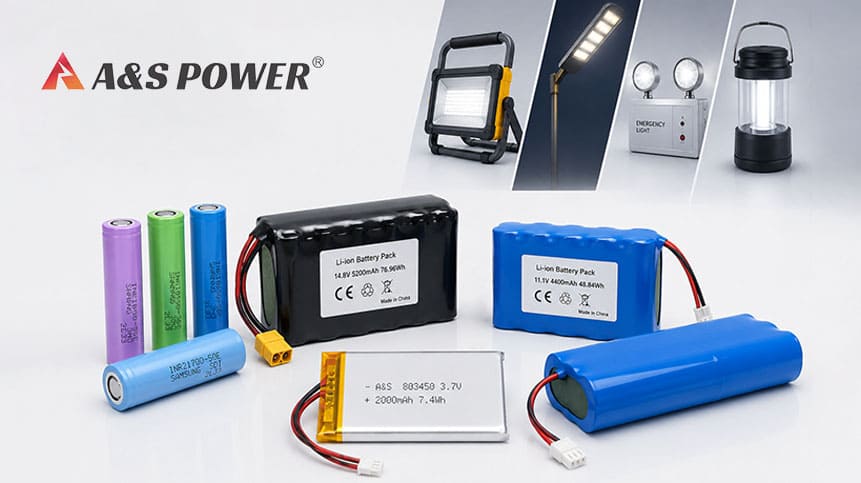
As a custom lithium battery pack manufacturer, we've worked with OEM customers developing battery solutions for numerous lighting applications, including emergency lighting systems, portable inspection lamps, construction lighting, mining lamps, solar-powered street lights, camping lanterns, and intelligent LED lighting products.
However, choosing a lighting battery supplier isn't simply about comparing prices. Battery performance directly affects runtime, charging safety, product certification, maintenance costs, and customer satisfaction.
In this guide, we'll explain how lighting battery packs work, compare battery technologies, discuss supplier selection criteria, review industry certifications, and share practical considerations when developing a custom rechargeable battery solution for modern lighting equipment.
What Is a Lighting Application Battery Pack?
A lighting application battery pack is a rechargeable power system specifically engineered to provide stable, safe, and efficient energy for lighting equipment. Unlike consumer batteries, these battery packs are designed according to the electrical, mechanical, and environmental requirements of the final lighting product.
A complete battery pack typically includes:
- Lithium-ion or lithium polymer battery cells
- Battery Management System (BMS)
- Protection circuitry
- Temperature monitoring
- Charging interface
- Output connector
- Protective enclosure or shrink wrapping
- Wiring harness customized for the lighting device
Depending on the application, battery packs may also include communication protocols, fuel gauges, waterproof protection, or smart monitoring functions.
Today's lighting industry covers a broad range of products, each with different battery requirements:
| Lighting Application | Typical Battery Voltage | Key Requirement |
|---|---|---|
| Emergency Lighting | 3.7V–12V | Long standby time |
| Portable LED Work Lights | 7.4V–14.8V | High discharge capability |
| Solar Street Lights | 12V–48V | Deep cycle performance |
| Medical Examination Lamps | 7.4V–14.8V | Stable voltage output |
| Mining Headlamps | 3.7V–7.4V | Safety and durability |
| Camping Lanterns | 3.7V–11.1V | Lightweight and long runtime |
| Industrial Inspection Lights | 7.4V–24V | Continuous operation |
Each application demands a unique balance between capacity, weight, charging speed, operating temperature, and safety.
Why Battery Quality Matters in Lighting Applications
Many lighting manufacturers initially focus on LEDs, optics, or housing design, but the battery system often determines the overall user experience.
A poorly designed battery pack can lead to:
- Reduced operating time
- Excessive heat generation
- Premature battery degradation
- Charging failures
- Safety incidents
- Increased warranty claims
- Regulatory compliance issues
High-quality lithium battery packs deliver benefits far beyond longer runtime.
Longer Operating Time
High-energy-density lithium cells store significantly more energy than older battery technologies while occupying less space. This enables compact lighting products to operate for several hours without increasing weight.
For portable work lights or emergency equipment, extended runtime directly improves usability and reduces charging frequency.
Stable Brightness Throughout Discharge
Professional lighting products require consistent illumination.
Advanced Battery Management Systems (BMS) help maintain stable voltage output during discharge, minimizing brightness fluctuations and protecting sensitive LED drivers.
This is particularly important for:
- Medical lighting
- Photography lighting
- Industrial inspection lamps
- Emergency evacuation systems
Enhanced Safety Protection
Modern lighting battery packs integrate multiple protection mechanisms, including:
- Overcharge protection
- Over-discharge protection
- Over-current protection
- Short-circuit protection
- Temperature monitoring
- Cell balancing
These functions reduce operational risks while extending battery lifespan.
Longer Service Life
Battery cycle life varies depending on cell chemistry and operating conditions.
Premium lithium-ion battery packs commonly support 500–1,000+ charge cycles, while high-quality lithium iron phosphate (LiFePO₄) batteries can exceed 2,000 cycles in suitable applications.
For commercial lighting systems, a longer cycle life translates into lower replacement costs and improved total cost of ownership.
Types of Lighting Equipment That Use Rechargeable Battery Packs
Rechargeable lithium battery packs are now widely used across both consumer and industrial lighting sectors.
Emergency Lighting Systems
Emergency lighting must remain in standby mode for extended periods while delivering reliable backup power during outages.
Key battery priorities include:
- High reliability
- Long calendar life
- Excellent standby performance
- Compliance with safety regulations
Portable LED Work Lights
Construction sites, workshops, and maintenance teams rely on portable lighting for daily operations.
Battery requirements typically include:
- High discharge current
- Fast charging
- Rugged construction
- Wide operating temperature range
Solar Lighting
Solar-powered street lights and landscape lighting require battery packs capable of handling daily charge and discharge cycles under varying environmental conditions.
Important design considerations include:
- Deep cycle capability
- Weather resistance
- Efficient charge acceptance
- Long outdoor service life
Medical Lighting Equipment
Portable examination lamps, surgical headlights, and diagnostic lighting systems demand stable power delivery to ensure consistent illumination during clinical use.
Battery packs for medical lighting often prioritize:
- Stable voltage output
- Lightweight construction
- Low self-discharge
- High reliability
Mining and Industrial Safety Lamps
Lighting used in hazardous or demanding environments must withstand vibration, impact, dust, and temperature fluctuations while maintaining dependable performance.
Critical requirements include:
- Robust battery protection
- Durable enclosure design
- Consistent power delivery
- Enhanced safety features
Camping and Outdoor Lighting
Outdoor lighting products benefit from battery packs that combine portability with extended runtime, enabling users to operate lanterns, flashlights, and portable lighting equipment for prolonged periods away from mains power.
Why OEMs Prefer Custom Battery Packs Over Standard Batteries
Many lighting manufacturers choose custom battery packs because standardized batteries rarely meet every design requirement.
A custom solution allows optimization of:
- Battery dimensions
- Capacity
- Output voltage
- Connector type
- Charging interface
- Waterproof rating
- Communication protocol
- Battery management system
- Enclosure design
- Cable length
- Mounting method
This flexibility helps reduce product size, improve performance, simplify assembly, and enhance overall product competitiveness.
Lithium Battery Chemistry Options for Lighting Application Battery Packs
Choosing the right battery chemistry is one of the most important decisions when developing a lighting product. Different lithium technologies provide different advantages in terms of energy density, safety, cycle life, cost, and operating conditions.
As an experienced lighting application battery pack supplier, we normally evaluate the application environment first instead of recommending one battery type for every project.
The most common rechargeable battery technologies used in lighting applications include lithium-ion (Li-ion), lithium polymer (LiPo), and lithium iron phosphate (LiFePO₄).
Lithium-Ion Battery Packs for Lighting Applications
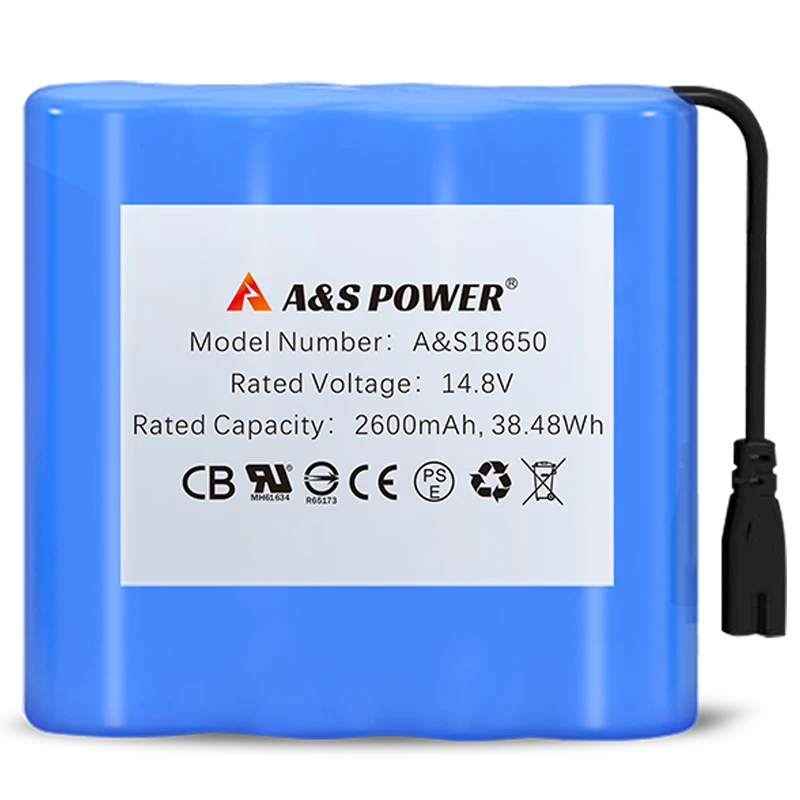
Lithium-ion battery packs are widely used in portable lighting because they offer an excellent balance between energy density, cost, and performance.
Advantages include:
- High energy density
- Compact size
- Lightweight design
- Good discharge performance
- Mature supply chain
- Competitive cost
Common applications:
- LED work lights
- Portable searchlights
- Camping lamps
- Inspection lights
- Industrial lighting equipment
Popular lithium-ion cell formats include:
- 18650 battery cells
- 21700 battery cells
- Prismatic lithium cells
For example, an OEM portable lighting manufacturer may choose a 3.7V lithium-ion battery pack for compact products, while larger industrial lighting systems may require multiple cells connected in series and parallel to achieve higher voltage and capacity.
Lithium Polymer (LiPo) Battery Packs for Lighting Applications
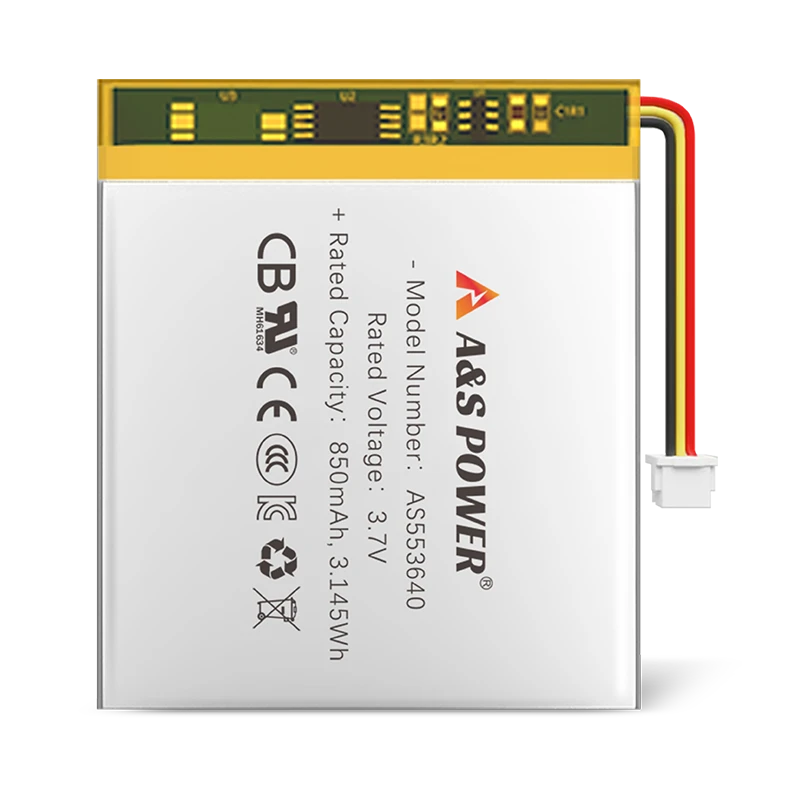
Lithium polymer batteries are increasingly popular in applications where product design requires flexible shapes or extremely thin battery structures.
Compared with traditional cylindrical cells, LiPo batteries offer:
- Flexible shape customization
- Ultra-thin designs
- High packaging efficiency
- Lightweight construction
- Better space utilization
Typical applications include:
- Smart lighting devices
- Wearable lighting products
- Portable medical lamps
- Compact LED equipment
- Consumer lighting products
For manufacturers developing slim or uniquely shaped lighting products, a custom LiPo battery pack can provide significant design advantages.
LiFePO₄ Battery Packs for Long-Life Lighting Systems
Lithium iron phosphate batteries are often selected for applications requiring exceptional safety and long service life.
Compared with traditional lithium-ion batteries, LiFePO₄ offers:
- Higher thermal stability
- Longer cycle life
- Better safety characteristics
- Lower risk of thermal runaway
Typical applications include:
- Solar street lighting
- Outdoor lighting systems
- Emergency backup lighting
- Industrial lighting installations
Although LiFePO₄ generally has lower energy density than NMC lithium-ion batteries, its durability makes it suitable for stationary lighting systems where lifespan is more important than compact size.
Battery Chemistry Comparison for Lighting Applications
| Battery Type | Energy Density | Cycle Life | Main Advantages | Common Lighting Uses |
|---|---|---|---|---|
| Lithium-ion (NMC) | High | 500–1000 cycles | Balanced performance and cost | Portable LED lights, work lights |
| Lithium Polymer (LiPo) | High | 500–800 cycles | Flexible shape, lightweight | Slim lighting devices, smart products |
| LiFePO₄ | Medium | 2000+ cycles | Safety and durability | Solar lighting, backup systems |
| NiMH | Medium-low | 500+ cycles | Stable chemistry | Legacy lighting products |
| Lead Acid | Low | 300–500 cycles | Low initial cost | Traditional backup lighting |
Note: Actual cycle life depends on cell quality, charging method, operating temperature, depth of discharge, and battery management system design.
Key Factors When Choosing a Lighting Application Battery Pack Supplier
Selecting the right battery supplier directly affects your product quality, production stability, and long-term business reputation.
A reliable supplier should provide not only battery cells but also engineering support, quality control, certification assistance, and customized manufacturing capabilities.
Below are the most important factors OEM buyers should evaluate.
1. Battery Design and Engineering Capability
A professional battery supplier should understand that every lighting product has different power requirements.
Before manufacturing, engineers should evaluate:
- Required operating time
- LED power consumption
- Voltage requirements
- Maximum discharge current
- Charging method
- Working environment
- Product dimensions
- Safety requirements
For example, a handheld emergency lamp and a solar street light may both use lithium batteries, but their battery design requirements are completely different.
A capable supplier should help optimize:
- Cell selection
- Battery configuration
- Protection circuit design
- Mechanical structure
- Thermal management
2. Custom Battery Pack Manufacturing Capability
Lighting manufacturers often require customized battery solutions because product designs vary significantly.
A qualified OEM battery partner should support customization such as:
Voltage Customization
Common lighting battery voltages include:
- 3.7V
- 7.4V
- 11.1V
- 12V
- 24V
- 48V
Capacity Customization
Battery capacity depends on required runtime.
For example:
A portable LED lamp requiring 8 hours of operation may require a different battery capacity compared with a compact emergency indicator light designed for short backup operation.
Structural Customization
Professional manufacturers can customize:
- Battery size
- Shape
- Connector
- Cable length
- Protective housing
- Mounting design
This is especially important for OEM lighting companies with limited internal battery engineering resources.
3. Battery Safety Standards and Certifications
Safety certification is a critical consideration when purchasing rechargeable battery packs.
A professional lighting battery pack supplier should understand international requirements and provide appropriate testing documents.
Common certifications include:
| Certification | Purpose | Application Importance |
|---|---|---|
| UN38.3 | Lithium battery transportation safety testing | Required for global shipping |
| IEC 62133 | Rechargeable battery safety standard | International battery safety compliance |
| UL1642 | Lithium battery cell safety | North American market |
| UL2054 | Household and commercial battery pack safety | Battery pack applications |
| CE | European market compliance | EU product sales |
| RoHS | Restriction of hazardous substances | Environmental compliance |
| MSDS | Material safety information | Transportation and documentation |
For companies selling lighting products globally, selecting a supplier familiar with these standards can significantly reduce certification risks.
Manufacturing Process of Professional Lighting Battery Packs
A reliable lighting battery pack manufacturer follows a structured production process to ensure consistency and safety.
Step 1: Battery Requirement Analysis
Engineers review: Product specifications, Electrical requirements, Operating environment, Certification requirements.
Step 2: Cell Selection
Battery cells are selected based on: Capacity, Voltage, Discharge rate, Size limitation, Expected lifespan.
Only qualified cells from reliable suppliers should be used.
Step 3: Battery Pack Assembly
The manufacturing process usually includes: Cell matching, Welding, Protection circuit installation, Wiring assembly, Insulation protection, Structural assembly.
Step 4: Battery Testing
Before shipment, battery packs undergo multiple tests: Voltage testing, Capacity testing, Internal resistance testing, Charge/discharge testing, Protection function testing, Appearance inspection.
Step 5: Quality Control
Professional manufacturers implement quality systems to ensure stable production.
Quality control may include: Incoming material inspection, Production monitoring, Finished product testing, Batch traceability.
Data Reference: Typical Lighting Battery Pack Specifications
| Application | Battery Type | Voltage Range | Capacity Range | Key Requirement |
|---|---|---|---|---|
| Portable LED Lamp | Li-ion / LiPo | 3.7V–14.8V | 1000mAh–10000mAh | Lightweight and long runtime |
| Emergency Light | Li-ion / LiFePO₄ | 3.7V–24V | 2000mAh–20000mAh | Reliable standby power |
| Solar Street Light | LiFePO₄ | 12V–48V | 10Ah–100Ah+ | Long cycle life |
| Industrial Lamp | Li-ion | 7.4V–36V | 5000mAh+ | High discharge capability |
| Medical Lighting | LiPo / Li-ion | 7.4V–14.8V | Customized | Stable output |
How to Choose the Right Lighting Application Battery Pack Supplier
Choosing a battery supplier is a strategic decision for lighting manufacturers. The battery is not only a power source; it directly affects product reliability, customer experience, warranty costs, and brand reputation.
When evaluating a lighting application battery pack supplier, OEM companies should look beyond unit price and focus on engineering capability, manufacturing reliability, certification experience, and long-term cooperation potential.
Below are the key factors we recommend considering.
1. Evaluate Battery Manufacturing Experience
Battery manufacturing requires specialized knowledge in cell chemistry, electrical design, protection systems, and production control.
An experienced supplier should understand different lighting environments, including:
- Outdoor temperature fluctuations
- Continuous operation requirements
- High-power LED loads
- Emergency backup conditions
- Portable product limitations
For example, a battery pack designed for an outdoor solar lighting system must prioritize cycle life and environmental durability, while a handheld inspection lamp requires higher energy density and discharge performance.
A supplier with years of OEM battery manufacturing experience can usually identify potential design issues before mass production begins.
2. Check OEM and ODM Customization Capability
Lighting products are becoming increasingly customized. Many manufacturers require battery packs that fit specific mechanical designs rather than standard off-the-shelf solutions.
A capable lighting battery pack supplier should provide:
- Battery specification analysis
- Prototype development
- Custom battery dimensions
- Cell configuration design
- BMS customization
- Connector selection
- Small-batch testing
- Mass production support
For example, an OEM LED lighting manufacturer may require a thin lithium polymer battery that fits inside a compact housing, while an industrial lighting company may need a high-capacity lithium-ion battery pack with enhanced protection.
The ability to customize batteries allows lighting companies to create differentiated products instead of competing only on price.
3. Confirm Production Capacity and Quality Management
A professional battery supplier should have a reliable manufacturing system capable of maintaining consistent quality during mass production.
Important evaluation points include:
- Automated production equipment
- Skilled engineering team
- Quality inspection procedures
- Traceability systems
- Production capacity
- Stable supply chain management
A supplier's production capability becomes especially important when customers move from prototype development to large-volume orders.
Poor production control can result in:
- Capacity inconsistency
- Voltage imbalance
- Higher defect rates
- Delivery delays
4. Consider Global Certification Support
Lighting products are often sold internationally, meaning battery compliance requirements vary between markets.
An experienced supplier should understand certification requirements for different regions.
Common markets include:
North America
Important requirements may include:
- UL standards
- UN38.3 transportation testing
- Safety documentation
European Union
Common requirements include:
- CE compliance
- RoHS compliance
- Battery regulation requirements
Asia-Pacific Markets
Depending on the country, products may require:
- KC certification (Korea)
- PSE certification (Japan)
- CCC certification (China)
- BIS certification (India)
Working with a supplier familiar with global compliance can simplify product approval and reduce development time.
Why Choose A&S Power as Your Lighting Application Battery Pack Supplier?
At A&S Power, we focus on providing customized lithium battery solutions for global OEM customers.
With more than 15 years of experience in lithium battery manufacturing, we support companies developing battery-powered products across medical devices, consumer electronics, industrial equipment, IoT devices, and lighting applications.
Our battery solutions include:
- Lithium polymer battery packs
- Lithium-ion battery packs
- LiFePO₄ battery packs
- Custom rechargeable battery packs
Engineering Support From Concept to Production
We work with customers during the complete product development process:
- Requirement analysis
- Battery solution recommendation
- Prototype development
- Sample testing
- Certification assistance
- Mass production
- Quality monitoring
This approach helps customers reduce development risks and accelerate product launches.
Customized Battery Design Capability
Every lighting product has different requirements.
Our engineering team can customize:
- Battery voltage
- Battery capacity
- Battery dimensions
- Connector types
- Protection circuits
- Wiring solutions
- Packaging structures
Whether a customer needs a compact LiPo battery for portable lighting or a high-capacity lithium battery pack for industrial lighting, the solution can be optimized according to the application.
Quality and Certification Support
A&S Power battery solutions can support international compliance requirements, including:
- UN38.3
- IEC62133
- CE
- RoHS
- UL-related requirements
- MSDS documentation
Certification requirements depend on the final product application and target market.
Conclusion
The battery pack is one of the most important components in modern lighting products. A reliable battery solution determines operating time, safety, product reliability, and customer satisfaction.
When choosing a lighting application battery pack supplier, manufacturers should consider:
- Battery technology expertise
- Custom design capability
- Manufacturing quality
- Certification experience
- Long-term technical support
The right supplier does more than provide batteries. They become a development partner that helps transform lighting concepts into reliable commercial products.
As lighting technology continues evolving toward portable, intelligent, and energy-efficient solutions, partnering with an experienced lithium battery manufacturer will remain essential for companies seeking competitive advantages in global markets.
FAQ
Q1: What type of battery is best for lighting applications?
The best battery depends on the lighting product requirements. Lithium-ion batteries are widely used because they provide high energy density and good overall performance. Lithium polymer batteries are suitable for compact designs, while LiFePO₄ batteries are preferred for applications requiring long cycle life and enhanced safety.
Q2: How long does a rechargeable lighting battery pack last?
The lifespan depends on battery chemistry, usage conditions, charging method, and temperature. Many lithium battery packs can provide hundreds of charge cycles, while LiFePO₄ battery systems designed for solar lighting can achieve significantly longer cycle life.
Q3: Can a battery pack be customized for my lighting product?
Yes. Professional battery manufacturers can customize voltage, capacity, dimensions, connectors, protection circuits, and packaging according to the lighting product design.
Q4: What certifications are required for lighting battery packs?
Common certifications and documents include UN38.3 for transportation safety, IEC62133 for rechargeable battery safety, CE and RoHS for European markets, and UL-related standards for North American applications.
Q5: How do I choose a reliable lighting battery pack supplier?
Look for suppliers with proven manufacturing experience, engineering support, certification knowledge, quality control systems, and OEM customization capability rather than selecting only based on price.
-

 May.2026.08.0521700 Battery Pack with BMS: Design, Safety and Custom SolutionsLearn More
 -
 May.2026.08.04Smart Beauty Equipment Battery Pack ManufacturerLearn More
 -
 May.2026.08.04High Reliability Polymer Battery for Handheld Dental DevicesLearn More
 -
 May.2026.08.04Ultra Thin Lithium Polymer Battery 0.4mm 0.5mm Custom GuideLearn More
 -
 May.2026.07.30Smoke Detector Battery Guide: Choosing the Right Battery for Reliable Fire ProtectionLearn More