




LiPo vs Li-ion: Which Is Truly Better for Long-Term Medical Portable Devices?
Quick Answer:
LiPo batteries and Li-ion batteries are both excellent power solutions for portable medical devices, but neither is universally better. The right choice depends on device size, operating profile, safety requirements, expected service life, and customization needs. LiPo batteries excel in compact, lightweight, and custom-shaped medical products, while cylindrical Li-ion batteries generally provide longer cycle life, lower cost, and easier replacement for high-capacity equipment. For OEM medical manufacturers, selecting the optimal battery chemistry requires balancing performance, regulatory compliance, and total lifecycle cost rather than focusing on a single specification.
Introduction
LiPo vs Li-ion: Which Is Truly Better for Long-Term Medical Portable Devices?
Portable medical devices have transformed modern healthcare by enabling continuous patient monitoring, home treatment, telemedicine, and emergency care. Whether we're designing a portable ultrasound scanner, ECG monitor, infusion pump, pulse oximeter, wearable health tracker, or diagnostic analyzer, battery performance directly influences reliability, patient safety, and user experience.
One question we frequently receive from OEM customers is:
Should we choose a Lithium Polymer (LiPo) battery or a Lithium-ion (Li-ion) battery for a long-term medical device?
The answer isn't as simple as selecting the battery with the highest energy density or the lowest price. Medical equipment demands far more than capacity alone. Regulatory compliance, thermal stability, service life, charging characteristics, mechanical design flexibility, and long-term reliability all play equally important roles.
In this guide, we compare LiPo battery and Li-ion battery from an engineering and procurement perspective, helping medical device manufacturers make informed decisions based on practical application requirements rather than marketing claims.
Understanding LiPo and Li-ion Batteries
Although both technologies belong to the lithium rechargeable battery family, they differ significantly in mechanical construction, packaging, and application flexibility.
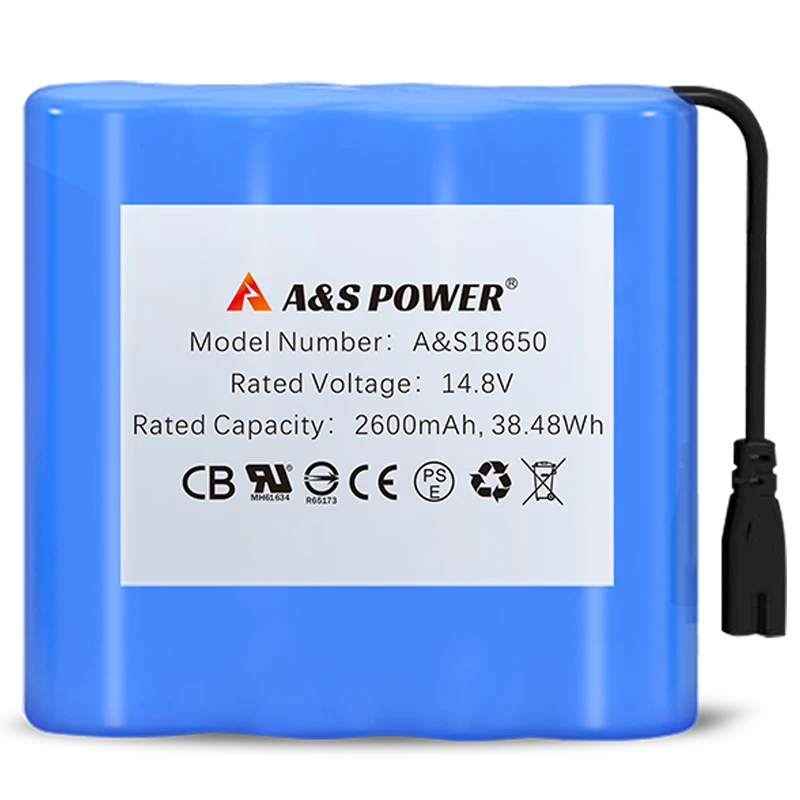
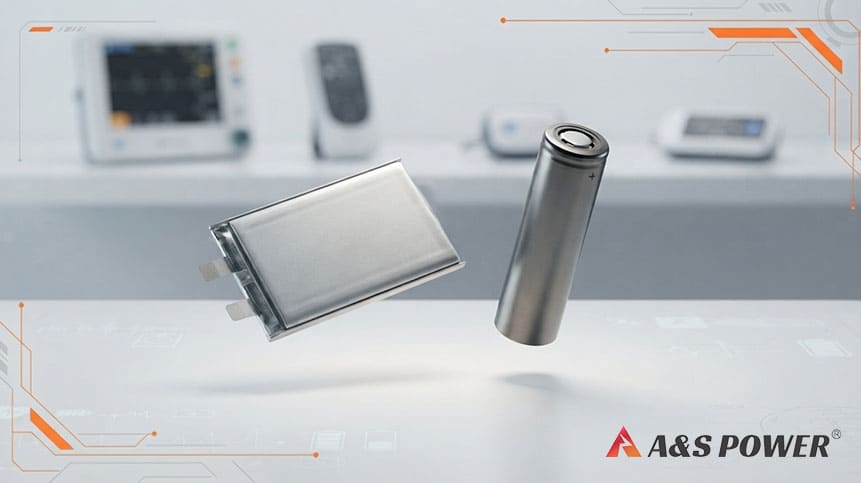
A Li-ion battery generally uses a rigid metal can—commonly cylindrical (such as 18650 or 21700 cells) or prismatic aluminum cases. These batteries have been widely adopted in industrial electronics, laptops, power tools, and larger medical equipment due to their mature manufacturing process and long service life.
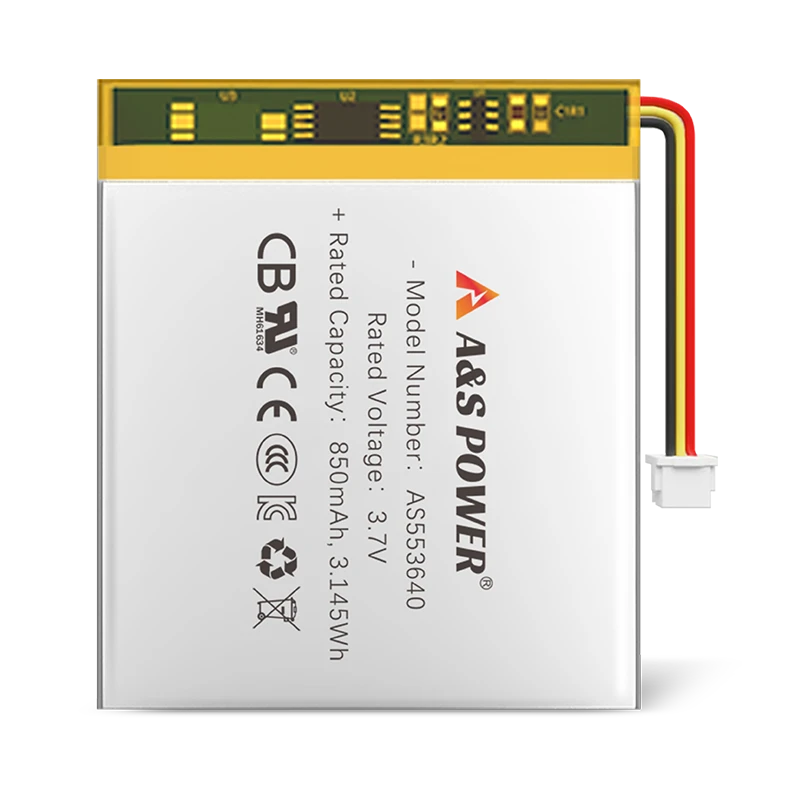
A LiPo battery, on the other hand, replaces the rigid metal enclosure with a laminated aluminum-polymer pouch. This design enables thinner profiles, lighter weight, and highly customized dimensions, making LiPo batteries particularly suitable for compact and ergonomically designed medical devices.
Importantly, both battery types often use similar lithium-ion electrochemical systems. The primary distinction lies in cell packaging and mechanical design, not in the fundamental chemistry itself.
At a Glance Comparison
| Feature | LiPo Battery | Li-ion Battery |
|---|---|---|
| Cell Packaging | Flexible pouch | Cylindrical or prismatic metal case |
| Weight | Lighter | Slightly heavier |
| Shape Flexibility | Excellent | Limited |
| Energy Density | High | High to very high |
| Mechanical Strength | Moderate | Excellent |
| Typical Applications | Wearables, handheld devices, portable diagnostics | Imaging systems, portable monitors, larger medical equipment |
| Customization | Excellent | Moderate |
What Long-Term Portable Medical Devices Really Need
When evaluating battery technology for healthcare applications, we rarely focus on a single specification. Instead, engineers typically consider several performance factors simultaneously.
Long Service Life
Portable medical devices are expected to remain operational for years with minimal maintenance. Hospitals and healthcare providers prioritize batteries that maintain stable capacity after hundreds or even thousands of charging cycles.
A battery that degrades quickly increases maintenance costs, device downtime, and replacement frequency.
High Safety Standards
Unlike consumer electronics, medical devices often operate close to patients for extended periods. Batteries must withstand charging, transportation, accidental impacts, and varying environmental conditions without compromising safety.
Manufacturers typically evaluate compliance with standards such as:
- IEC 62133
- UL 2054
- UN38.3
- IEC 60601 (device-level electrical safety)
- RoHS
- REACH (where applicable)
Battery packs also commonly integrate:
- Battery Management Systems (BMS)
- Overcharge protection
- Over-discharge protection
- Short-circuit protection
- Temperature monitoring
- Cell balancing (multi-cell packs)
Compact Product Design
Medical device designers increasingly prioritize portability.
Examples include:
- Handheld ultrasound scanners
- Portable ECG monitors
- Wireless infusion pumps
- Smart wearable health monitors
- Portable oxygen analyzers
- Home diagnostic equipment
Many of these products require batteries that fit irregular or ultra-thin enclosures, making packaging flexibility a critical design factor.
Stable Power Delivery
Medical equipment often operates continuously for several hours without interruption. Battery voltage stability affects:
- Sensor accuracy
- Wireless communication
- Processor performance
- Display brightness
- Data integrity
Consistent discharge behavior is therefore just as important as maximum battery capacity.
LiPo vs Li-ion Performance Comparison for Medical Applications
Rather than asking which battery is universally "better," it's more useful to compare how each technology performs across the criteria that matter most to medical OEMs.
| Evaluation Factor | LiPo | Li-ion | Importance for Medical Devices |
|---|---|---|---|
| Custom Shapes | ★★★★★ | ★★☆☆☆ | Critical for compact handheld devices |
| Lightweight Design | ★★★★★ | ★★★★☆ | Improves portability |
| Energy Density | ★★★★☆ | ★★★★★ | Extends operating time |
| Cycle Life | ★★★★☆ | ★★★★★ | Reduces replacement costs |
| Mechanical Protection | ★★★☆☆ | ★★★★★ | Important in rugged equipment |
| Manufacturing Cost | Higher | Lower | Influences large-volume production |
| Design Flexibility | Excellent | Moderate | Supports industrial design innovation |
| Mature Supply Chain | High | Very High | Benefits procurement stability |
Key Takeaways
- Choose LiPo when product size, weight, or custom form factor is a top priority.
- Choose Li-ion when maximizing cycle life, structural durability, and cost efficiency is more important.
- In many medical projects, the optimal solution depends on the complete battery pack design—including cell selection, protection circuitry, thermal management, and charging strategy—rather than cell format alone.
Why Battery Pack Design Matters More Than Cell Chemistry
One of the biggest misconceptions we encounter is that battery chemistry alone determines device reliability.
In reality, long-term performance is heavily influenced by the quality of the battery pack engineering. A well-designed pack using either LiPo or Li-ion cells can outperform a poorly integrated alternative.
Key design considerations include:
- Cell matching and grading for consistent performance.
- Intelligent Battery Management System (BMS) integration.
- Thermal management to reduce heat buildup during charging and discharge.
- Proper connector selection and cable routing for dependable electrical connections.
- Robust enclosure design to withstand vibration, drops, and daily handling.
- Compliance testing to ensure the finished battery pack meets transportation and medical safety requirements.
For OEM medical manufacturers, working with an experienced battery pack supplier often has a greater impact on long-term reliability than choosing LiPo or Li-ion based on specifications alone.
Real-World Medical Applications: Where LiPo and Li-ion Perform Best
There is no single battery chemistry that fits every medical device. In our experience working with OEM and ODM manufacturers, the battery selection process starts with the device's operating profile rather than the battery itself.
Applications Where LiPo Batteries Offer Clear Advantages
LiPo batteries are typically preferred when industrial design, portability, and custom dimensions are essential.
Common examples include:
- Wearable ECG monitors
- Continuous glucose monitoring (CGM) devices
- Portable pulse oximeters
- Smart health patches
- Digital hearing devices
- Handheld diagnostic instruments
- Wireless patient monitoring systems
- Portable ultrasound probes
The flexible pouch structure allows engineers to maximize internal space, reduce overall weight, and create thinner products that improve user comfort.
Applications Where Li-ion Batteries Are Often Preferred
Li-ion batteries are frequently selected for devices requiring longer runtime, higher capacity, or greater mechanical durability.
Typical examples include:
- Portable ultrasound systems
- Infusion pumps
- Defibrillators
- Mobile medical workstations
- Portable ventilators
- Emergency medical equipment
- Laboratory analyzers
- Mobile imaging systems
Because cylindrical and prismatic cells are manufactured at very large scale, they often provide lower cost per watt-hour and excellent long-term consistency.
How OEMs Should Choose Between LiPo and Li-ion
Choosing the right battery should be a structured engineering decision rather than a simple comparison of specifications.
Step 1 — Define the Product's Operating Environment
Ask questions such as:
- Will the device be used indoors, outdoors, or in ambulances?
- Will it operate continuously for several hours?
- Is the battery user-replaceable?
- Will charging occur daily or occasionally?
- Does the product require fast charging?
These factors directly influence battery selection.
Step 2 — Consider Space Constraints
If industrial designers have limited internal space, a custom LiPo battery may provide the best solution.
If the enclosure easily accommodates cylindrical cells, Li-ion may offer a more economical option.
Step 3 — Evaluate Expected Service Life
Battery lifespan should be evaluated using multiple criteria rather than cycle count alone.
Important considerations include:
| Evaluation Item | Why It Matters |
|---|---|
| Cycle life | Determines replacement frequency |
| Calendar life | Indicates aging over time, even when unused |
| Capacity retention | Affects runtime after years of operation |
| Self-discharge | Important for emergency backup equipment |
| Temperature tolerance | Supports stable operation in different environments |
A battery that retains 80% of its original capacity after hundreds of charge cycles generally offers a practical balance between longevity and performance, although actual results depend on cell chemistry, charging conditions, and operating temperature.
Step 4 — Prioritize Regulatory Compliance
Medical OEMs should work with battery suppliers capable of supporting internationally recognized standards and documentation.
Typical certifications and reports include:
Keep in mind that certification requirements vary depending on the target market and the finished medical device.
Common Misconceptions About LiPo and Li-ion Batteries
Many procurement teams encounter conflicting information online. Here are several common misconceptions.
Myth 1: LiPo Batteries Are Always Safer
Not necessarily.
Safety depends on the complete battery pack design, including cell quality, protection circuitry, charging algorithms, thermal management, and manufacturing consistency—not simply whether the battery is LiPo or Li-ion.
Myth 2: Li-ion Batteries Always Last Longer
Generally, many cylindrical Li-ion cells achieve higher cycle life under comparable conditions. However, a high-quality LiPo battery operated within its recommended voltage and temperature range can also provide excellent long-term performance.
Usage conditions often influence battery lifespan more than chemistry alone.
Myth 3: Higher Capacity Means Better Performance
A larger battery increases runtime, but it also adds weight, occupies more space, and may generate additional heat during charging and discharge.
Medical device designers typically optimize battery capacity based on the product's actual power requirements rather than selecting the highest available capacity.
Why OEM Medical Manufacturers Partner with A&S Power
At A&S Power, we understand that medical battery projects require more than standard off-the-shelf cells.
We work closely with OEM customers to develop customized rechargeable battery packs that balance safety, performance, reliability, and manufacturability throughout the product lifecycle.
Our engineering capabilities include:
- Custom LiPo and Li-ion battery pack design
- High and low-temperature battery solutions
- Battery Management System (BMS) integration
- Customized connectors and cable assemblies
- Rapid prototyping for product development
- Support for international transportation documentation
- Manufacturing under strict quality control procedures
Whether you're developing a wearable medical sensor or a portable diagnostic instrument, selecting the right battery partner can significantly reduce development risks and accelerate product commercialization.
Best Practices for Maximizing Battery Lifespan
Regardless of battery chemistry, following good engineering and maintenance practices can extend service life.
- Avoid frequent deep discharges whenever possible.
- Use chargers designed for the specific battery chemistry and configuration.
- Store batteries in a cool, dry environment when not in use for extended periods.
- Prevent prolonged exposure to excessive heat.
- Monitor battery health through the device's Battery Management System (BMS).
- Select cells from reputable manufacturers with consistent quality control.
These practices help improve capacity retention, reduce premature aging, and enhance overall device reliability.
Conclusion
When comparing LiPo vs Li-ion for long-term portable medical devices, the most accurate answer is that the best choice depends on your application's priorities rather than one battery chemistry being universally superior.
LiPo batteries excel in lightweight, ultra-thin, and custom-shaped medical products where design flexibility is critical. Li-ion batteries often provide longer cycle life, greater mechanical durability, and lower cost for larger or higher-capacity medical equipment.
For OEM medical manufacturers, the decision should be based on the complete battery system—including cell quality, Battery Management System design, thermal performance, certification requirements, and long-term reliability. By evaluating these factors together and partnering with an experienced battery manufacturer, you can develop safer, more dependable, and more competitive portable medical devices.
FAQ
1. Which battery is better for portable medical devices, LiPo or Li-ion?
Neither battery is universally better. LiPo batteries are ideal for lightweight, compact, and custom-shaped medical devices, while Li-ion batteries are often preferred for applications requiring higher capacity, longer cycle life, and lower cost. The best choice depends on the device's design, runtime requirements, safety goals, and regulatory standards.
2. Why are LiPo batteries commonly used in wearable medical devices?
LiPo batteries use a flexible pouch design that allows manufacturers to create ultra-thin, lightweight, and customized battery packs. This makes them well suited for wearable ECG monitors, glucose monitoring systems, smart patches, portable ultrasound probes, and other space-constrained medical products.
3. Do Li-ion batteries last longer than LiPo batteries?
In many applications, cylindrical Li-ion batteries can achieve a longer cycle life than LiPo batteries. However, battery lifespan also depends on factors such as charging habits, operating temperature, depth of discharge, and battery management. A properly designed LiPo battery pack can also provide years of reliable service in medical devices.
4. Are LiPo batteries safe enough for medical equipment?
Yes. High-quality LiPo batteries are widely used in medical devices when they are designed with appropriate protection circuits, Battery Management Systems (BMS), thermal protection, and are manufactured to meet applicable safety standards such as IEC 62133 and UN38.3. Safety depends on the complete battery pack design rather than the battery type alone.
5. What certifications should a medical battery pack have?
Certification requirements vary by product and target market, but commonly requested documentation includes IEC 62133, UN38.3, UL 2054 (where applicable), CE, RoHS, REACH, MSDS, and transportation reports. Medical device manufacturers should also ensure that the complete device complies with relevant healthcare regulations, such as IEC 60601 where applicable.
6. Can LiPo batteries be customized for medical OEM projects?
Yes. One of the biggest advantages of LiPo batteries is their high level of customization. Manufacturers can tailor the battery's dimensions, thickness, capacity, voltage, connectors, cables, protection circuitry, and enclosure to fit the unique requirements of portable medical devices.
7. What factors should OEMs consider when selecting a battery for a medical device?
OEMs should evaluate the battery's energy density, cycle life, safety features, available installation space, charging method, operating temperature range, certification requirements, and long-term supply stability. Working with an experienced battery manufacturer can help ensure the battery pack meets both technical and regulatory requirements.
8. How can medical device manufacturers extend battery service life?
Battery lifespan can be improved by using an appropriate charging strategy, avoiding frequent deep discharges, maintaining moderate operating temperatures, integrating an effective Battery Management System, and selecting high-quality battery cells from reliable manufacturers. Proper battery pack design is equally important for achieving long-term performance.
-

 May.2026.08.0521700 Battery Pack with BMS: Design, Safety and Custom SolutionsLearn More
 -
 May.2026.08.04Smart Beauty Equipment Battery Pack ManufacturerLearn More
 -
 May.2026.08.04High Reliability Polymer Battery for Handheld Dental DevicesLearn More
 -
 May.2026.08.04Ultra Thin Lithium Polymer Battery 0.4mm 0.5mm Custom GuideLearn More
 -
 May.2026.07.30Smoke Detector Battery Guide: Choosing the Right Battery for Reliable Fire ProtectionLearn More