




LiPo vs LiFePO4: Best Battery Chemistry for Long-Term Medical Devices
Quick Answer:
Choosing between LiPo and LiFePO4 depends on the priorities of your medical device rather than a single "better" battery chemistry. LiPo batteries provide higher energy density, lighter weight, and flexible shapes, making them ideal for portable and wearable medical devices. LiFePO4 batteries offer exceptional cycle life, thermal stability, and long-term safety, making them well suited for stationary or high-duty-cycle medical equipment. Understanding the trade-offs between energy density, lifespan, charging behavior, regulatory compliance, and application requirements is essential when designing reliable medical devices.
Introduction
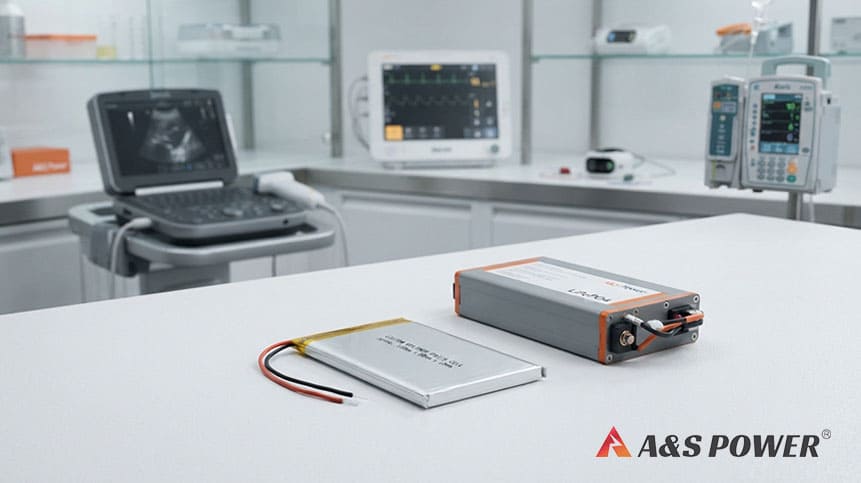
Medical devices demand far more from batteries than ordinary consumer electronics. A battery failure inside an infusion pump, portable ultrasound scanner, patient monitor, or wearable medical sensor is not simply an inconvenience—it may interrupt critical healthcare services or compromise patient safety.
Over the past decade, we have worked with OEM customers developing rechargeable battery packs for various medical applications. One question appears repeatedly during product development:
Should we choose Lithium Polymer (LiPo) or Lithium Iron Phosphate (LiFePO4)?
The answer depends on the intended application rather than marketing claims. Both chemistries are lithium-based rechargeable batteries, but their electrochemical characteristics, mechanical design flexibility, operating behavior, and service life differ significantly.
This guide compares both technologies from the perspective of long-term medical device stability, helping engineers and purchasing teams make informed decisions based on technical requirements instead of assumptions.
Why Battery Chemistry Matters in Medical Devices
Selecting the correct battery chemistry influences far more than runtime. It affects product certification, maintenance schedules, charging strategies, enclosure design, transportation compliance, and overall lifecycle cost.
Medical equipment manufacturers typically evaluate batteries using several key criteria:
- Patient safety
- Long-term reliability
- Capacity retention
- Cycle life
- Operating temperature
- Weight and portability
- Device size
- Charging efficiency
- Regulatory compliance
- Total ownership cost
Different devices prioritize these factors differently.
For example, a wearable ECG monitor values lightweight construction and compact dimensions, while a mobile medical cart may prioritize long service life and safety over size.
This is why battery chemistry selection should always begin with application requirements rather than battery specifications alone.
Understanding Lithium Polymer (LiPo) Batteries
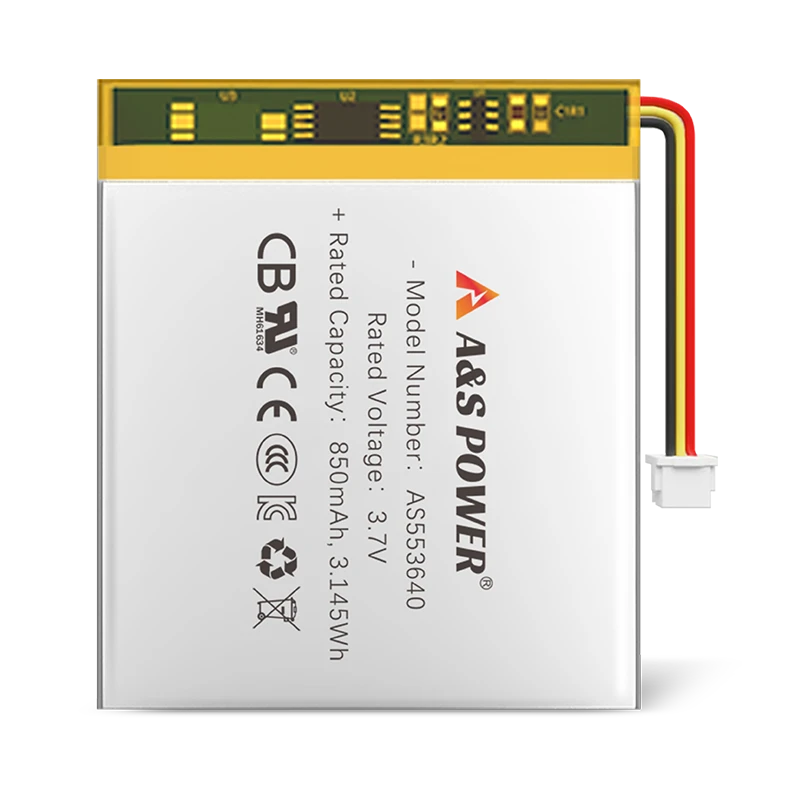
Lithium Polymer batteries are a variation of lithium-ion technology that replaces the traditional rigid cylindrical or prismatic metal enclosure with a laminated aluminum-polymer pouch.
Instead of focusing on one standard size, LiPo batteries can be manufactured in thousands of custom dimensions, making them highly attractive for medical device designers seeking compact, ergonomic products.
Key Advantages of LiPo Batteries
High Energy Density
LiPo batteries generally provide one of the highest energy densities available among commercially mature rechargeable battery technologies.
Higher energy density allows designers to:
- extend operating time
- reduce battery size
- decrease product weight
- improve portability
These characteristics are particularly valuable for:
- Portable ultrasound scanners
- Wearable ECG monitors
- Wireless patient monitoring systems
- Hearing aids
- Portable infusion pumps
- Smart rehabilitation equipment
- Handheld diagnostic devices
For many portable medical products, reducing even a few millimeters of battery thickness can significantly improve user comfort and industrial design.
Flexible Mechanical Design
One of LiPo's biggest advantages is design flexibility.
Unlike cylindrical cells, pouch cells can be customized into:
- ultra-thin batteries
- curved batteries
- L-shaped batteries
- irregular-shaped batteries
- high-capacity flat batteries
This flexibility enables engineers to maximize internal space utilization without redesigning the device around standard battery dimensions.
As medical devices continue becoming smaller and more ergonomic, this flexibility becomes increasingly valuable.
Lightweight Construction
The pouch packaging used in LiPo batteries contains less inactive material than metal can designs.
As a result, LiPo batteries typically achieve lower overall weight for the same usable capacity.
For portable healthcare products carried by clinicians or patients throughout the day, every gram matters.
Lower battery weight contributes to:
- improved portability
- reduced operator fatigue
- better patient comfort
- easier wearable integration
Fast Product Customization
Medical OEM projects often require battery packs incorporating:
- Protection Circuit Modules (PCM/BMS)
- NTC temperature sensors
- fuel gauges
- customized cables
- medical-grade connectors
- molded housings
- communication protocols
LiPo battery packs can be customized extensively, making them particularly suitable for OEM and ODM medical equipment development.
Limitations of LiPo Batteries
Although LiPo batteries provide outstanding energy density and compact packaging, they also present several engineering considerations.
First, their cycle life is generally lower than that of LiFePO4 batteries under comparable operating conditions. Capacity gradually declines with repeated charge and discharge cycles, especially when batteries are frequently charged to 100% or exposed to elevated temperatures.
Second, LiPo cells require carefully designed battery management systems (BMS) to prevent overcharging, over-discharging, overcurrent, and thermal stress. Proper protection circuitry is essential for maintaining safety and extending service life in medical applications.
Finally, while modern LiPo batteries can achieve excellent safety performance when designed and manufactured to standards such as IEC 62133 and UL 2054, they typically have a narrower thermal safety margin than LiFePO4 chemistry. For this reason, thermal management, charging control, and quality manufacturing become especially important in long-term medical device applications.
Understanding LiFePO4 Batteries
Lithium Iron Phosphate (LiFePO4 or LFP) is a lithium-ion chemistry that uses lithium iron phosphate as the cathode material. Since its commercialization, LiFePO4 has earned a strong reputation for excellent thermal stability, long service life, and high operational safety.
Although its energy density is lower than that of Lithium Polymer batteries, LiFePO4 has become the preferred choice for applications where reliability over many years outweighs compact size.
In the medical industry, LiFePO4 is increasingly used in larger portable equipment, emergency backup systems, medical carts, laboratory instruments, and stationary healthcare devices that require frequent charging and long operational life.
Exceptional Cycle Life
The most significant advantage of LiFePO4 is its long cycle life.
Compared with conventional LiPo batteries, LiFePO4 cells generally maintain usable capacity through substantially more charge-discharge cycles when operated within recommended voltage and temperature ranges.
For medical equipment that is charged daily, this translates into:
- Lower replacement frequency
- Reduced maintenance costs
- More predictable long-term performance
- Less electronic waste
- Lower total cost of ownership
For hospitals managing hundreds of battery-powered devices, extending battery replacement intervals can significantly reduce maintenance workload.
Outstanding Thermal Stability
Medical devices are often expected to operate continuously for extended periods.
LiFePO4 chemistry offers excellent thermal stability because the phosphate cathode material is inherently more resistant to thermal decomposition than many higher-energy lithium chemistries.
This provides several operational benefits:
- Better resistance to overheating
- Lower thermal runaway risk
- Improved tolerance to elevated operating temperatures
- Enhanced safety during charging
While no rechargeable lithium battery is completely immune to failure, LiFePO4 is widely recognized as one of the safest commercially available lithium-ion chemistries when paired with a properly designed Battery Management System (BMS).
Stable Voltage Output
Another advantage of LiFePO4 is its relatively flat discharge curve.
Instead of experiencing a rapid voltage drop during discharge, LiFePO4 maintains a more stable operating voltage over much of its usable capacity.
For medical electronics, this can help:
- Maintain consistent device performance
- Improve measurement accuracy
- Simplify power management design
- Reduce unexpected shutdowns
Devices requiring stable electrical output over long operating periods may benefit from this characteristic.
Longer Calendar Life
In addition to cycle life, LiFePO4 generally exhibits good calendar life when stored under recommended conditions.
Many medical devices spend extended periods in standby mode before deployment. Lower long-term degradation during storage can help preserve battery capacity over time, provided batteries are stored at appropriate state of charge and temperature.
Limitations of LiFePO4 Batteries
Despite its safety advantages, LiFePO4 is not suitable for every medical application.
Its lower energy density means that achieving the same runtime as a LiPo battery typically requires a larger and heavier battery pack. This can be a disadvantage for handheld, wearable, or space-constrained medical products.
In addition, LiFePO4 cells usually have a nominal voltage of approximately 3.2 V per cell, compared with about 3.6–3.7 V for many LiPo cells. Designers may need to adjust pack configurations or power management circuits to meet system voltage requirements.
For highly compact medical devices where size, weight, and industrial design are critical, these trade-offs should be evaluated carefully.
LiPo vs LiFePO4 – A Technical Comparison
The following comparison summarizes the key characteristics most relevant to long-term medical device stability.
| Parameter | LiPo (Lithium Polymer) | LiFePO4 (Lithium Iron Phosphate) |
|---|---|---|
| Energy Density | High | Moderate |
| Weight | Lighter | Heavier |
| Size Flexibility | Excellent (custom shapes) | Limited |
| Typical Cycle Life* | Moderate | Very High |
| Thermal Stability | Good with proper BMS | Excellent |
| Safety Margin | High with quality design | Very High |
| Voltage Stability | Good | Excellent |
| Fast Charging Capability | Good | Good |
| Calendar Life | Good | Very Good |
| Maintenance Frequency | Moderate | Lower |
| Suitable for Wearables | Excellent | Less suitable |
| Suitable for Backup Systems | Good | Excellent |
| Initial Cost | Moderate | Slightly Higher in Some Designs |
| Total Ownership Cost | Application-dependent | Often Lower Over Long Service Life |
*Actual cycle life depends on depth of discharge, charging strategy, operating temperature, and overall battery pack design.
Which Chemistry Performs Better in Medical Applications?
Rather than asking which battery chemistry is "better," engineers should ask which chemistry best aligns with the device's design priorities.
The table below illustrates common application recommendations.
| Medical Device | Recommended Chemistry | Why |
|---|---|---|
| Wearable ECG Monitor | LiPo | Lightweight and ultra-thin design |
| Portable Ultrasound | LiPo | High energy density and portability |
| Infusion Pump | LiPo or LiFePO4 | Depends on runtime and enclosure size |
| Patient Monitoring Device | LiPo | Compact battery compartment |
| Medical Tablet | LiPo | Slim profile and long runtime |
| Hospital Medical Cart | LiFePO4 | Daily charging and long cycle life |
| Laboratory Analyzer | LiFePO4 | Stable operation over many years |
| Emergency Backup Power | LiFePO4 | Excellent safety and long service life |
| Mobile Diagnostic Station | LiFePO4 | High reliability and low maintenance |
| Portable Defibrillator* | Application-specific | Must satisfy device-specific regulatory, power, and safety requirements |
*Battery selection for life-support or emergency medical devices should always follow applicable regulatory standards, risk management processes, and manufacturer validation.
Key Selection Factors for Engineers
When we support OEM medical projects, we encourage engineering teams to evaluate battery chemistry using a structured approach rather than focusing on a single specification.
Consider the following questions:
- Does the product need to be as small and lightweight as possible?
- Will the battery be charged every day?
- Is long cycle life more valuable than maximum runtime?
- Will the device remain on standby for extended periods?
- What operating temperature range is expected?
- How much internal space is available?
- Which regulatory standards must the battery comply with?
- What is the target product lifespan?
- What is the acceptable maintenance interval?
Answering these questions early in the design process often leads to a more balanced and cost-effective battery solution.
Long-Term Stability Considerations for Medical Device Batteries
Long-term stability is one of the most important performance indicators for medical device batteries. Unlike consumer electronics that are often replaced within a few years, many medical devices are expected to remain in service for five to ten years—or even longer. During this time, the battery must continue to deliver reliable power while maintaining safety and compliance.
Achieving long-term stability requires more than selecting the right cell chemistry. It involves optimizing the entire battery system, including charging methods, thermal management, mechanical design, and battery management electronics.
The following factors have the greatest impact on battery longevity in medical applications.
Temperature Is the Biggest Aging Factor
Heat is one of the primary causes of lithium battery degradation.
Whether using LiPo or LiFePO4 cells, prolonged exposure to elevated temperatures accelerates chemical aging, increases internal resistance, and reduces available capacity.
Medical devices commonly generate heat from processors, displays, motors, wireless modules, or charging circuits. If the battery is positioned close to these heat sources without sufficient thermal management, its service life can be significantly shortened.
To improve long-term stability, engineers should:
- Keep batteries away from high-temperature components.
- Incorporate adequate ventilation or heat-dissipation paths where feasible.
- Monitor battery temperature using NTC sensors.
- Reduce charging current when high temperatures are detected.
Maintaining an appropriate operating temperature helps preserve both capacity retention and overall battery health.
Avoid Deep Discharge Whenever Possible
Repeatedly discharging lithium batteries to very low voltage increases stress on the cells and accelerates aging.
Instead, medical equipment should maintain a reasonable reserve capacity before initiating automatic shutdown.
Modern Battery Management Systems (BMS) typically include low-voltage protection that disconnects the battery before harmful over-discharge occurs.
For equipment used continuously in hospitals, intelligent power management can significantly extend battery lifespan while reducing unexpected downtime.
Storage Conditions Matter
Some medical equipment may remain unused for weeks or even months before deployment.
Long-term storage under inappropriate conditions can reduce battery performance regardless of chemistry.
Best practices include:
- Store batteries in a cool, dry environment.
- Avoid prolonged storage at full charge.
- Periodically inspect battery voltage during long-term storage.
- Follow manufacturer recommendations for storage state of charge.
Proper storage procedures help preserve capacity and reduce calendar aging.
Charging Strategy and Battery Management System (BMS) Design
Battery chemistry determines the electrochemical characteristics of a cell, but the Battery Management System determines how safely and efficiently those cells operate.
For medical devices, the BMS is a critical safety component rather than an optional feature.
A well-designed BMS continuously monitors battery conditions and helps prevent operating conditions that could shorten battery life or compromise safety.
Essential BMS Protection Functions
A medical-grade battery pack typically includes protection against:
- Overcharge
- Over-discharge
- Overcurrent
- Short circuit
- Cell imbalance (for multi-cell packs)
- Over-temperature
- Under-temperature
Advanced battery packs may also incorporate:
- State-of-Charge (SOC) estimation
- State-of-Health (SOH) monitoring
- SMBus or I²C communication
- Fuel gauge ICs
- Event logging for maintenance diagnostics
These functions improve operational reliability and support preventive maintenance throughout the product lifecycle.
Intelligent Charging Improves Battery Life
Charging strategy has a direct impact on long-term battery performance.
A properly designed charger should:
- Follow the charging profile recommended by the cell manufacturer.
- Adjust charging current according to battery temperature.
- Prevent prolonged overcharging after full capacity is reached.
- Balance individual cells in multi-cell battery packs.
For medical devices that remain connected to external power for extended periods, adaptive charging algorithms can reduce unnecessary stress and help maximize battery longevity.
Cell Matching Is Often Overlooked
In multi-cell battery packs, cell consistency plays an important role in long-term stability.
Cells should be carefully matched based on characteristics such as:
- Capacity
- Internal resistance
- Open-circuit voltage
Poorly matched cells may age at different rates, reducing pack performance and increasing balancing requirements over time.
Selecting high-quality, consistent cells from reputable manufacturers contributes to predictable long-term operation.
Regulatory and Certification Requirements
Battery performance alone is not sufficient for medical applications. Compliance with internationally recognized standards is equally important to ensure safety, transportation, and regulatory acceptance.
Below are several key standards commonly considered during medical battery development.
| Standard | Scope | Why It Matters |
|---|---|---|
| IEC 62133 | Safety requirements for portable rechargeable cells and battery packs | Widely recognized safety standard for lithium batteries used in portable equipment |
| UL 2054 | Safety standard for battery packs | Demonstrates electrical and mechanical safety under abnormal conditions |
| UN38.3 | Transportation testing | Required for the international shipment of lithium batteries by air, sea, and land |
| ISO 14971 | Risk management for medical devices | Guides manufacturers in identifying, evaluating, and mitigating risks throughout the device lifecycle |
| IEC 60601-1 | Medical electrical equipment safety | Addresses electrical safety requirements for many categories of medical equipment |
Compliance with these standards supports product certification, facilitates market access, and helps reduce regulatory risks during commercialization.
Documentation Is Just as Important as Testing
Medical device manufacturers are often required to maintain comprehensive technical documentation related to battery safety and compliance.
Typical documentation may include:
- Battery specifications
- Safety test reports
- Transportation test reports (UN38.3)
- Material declarations
- MSDS/SDS documentation
- Cell traceability records
- Quality inspection reports
- Manufacturing process records
Maintaining complete documentation simplifies audits and supports regulatory submissions.
Common Design Mistakes That Reduce Battery Stability
Even when high-quality battery cells are used, poor system design can shorten battery life or increase reliability risks.
The following issues are frequently encountered during product development.
Selecting Battery Chemistry Based Only on Price
A lower initial battery cost does not always result in lower lifetime ownership costs.
For devices charged daily over many years, factors such as maintenance frequency, replacement intervals, and service downtime often have a greater impact on overall cost than the purchase price of the battery itself.
Ignoring Thermal Design
Installing batteries adjacent to processors, motors, or power supplies without sufficient thermal isolation can accelerate capacity degradation and reduce service life.
Thermal management should be considered early in the mechanical design process rather than after prototype validation.
Underestimating Battery Space Requirements
Designing the enclosure before confirming battery specifications may leave insufficient space for the optimal battery solution.
Battery selection and mechanical design should progress together to avoid unnecessary redesigns.
Choosing Cells Without Long-Term Supply Stability
Medical devices often remain in production for many years.
Selecting battery cells with uncertain long-term availability may require expensive redesigns if those cells become obsolete.
Working with manufacturers that provide long-term supply support can help minimize this risk.
Overlooking Compliance Planning
Waiting until the end of product development to consider battery certifications may delay commercialization.
Certification planning should begin during the initial design stage so that battery selection, testing, and documentation align with the regulatory requirements of the target markets.
Practical Recommendations for OEM Medical Device Manufacturers
Based on our experience supporting custom rechargeable battery projects, we recommend that OEM medical device manufacturers adopt a system-level approach when selecting battery chemistry.
Rather than focusing solely on capacity or cycle life, evaluate the complete operating environment, regulatory obligations, product dimensions, charging frequency, and maintenance expectations.
As a practical guideline:
- Choose LiPo when compact size, lightweight construction, and custom battery shapes are critical to the product design.
- Choose LiFePO4 when exceptional cycle life, thermal stability, and reduced maintenance are the primary priorities.
- Design the battery pack and the device together to optimize thermal performance, electrical integration, and available space.
- Incorporate a high-quality BMS with comprehensive protection and monitoring functions.
- Validate the battery system under realistic operating conditions, including charge/discharge cycling, temperature variation, vibration, and long-term aging.
- Select a battery manufacturing partner with experience in medical applications, quality management, traceability, and international certification support.
By considering the battery as an integrated system rather than a standalone component, OEM manufacturers can improve product reliability, reduce lifecycle costs, and support consistent long-term performance in demanding medical environments.
Why Battery Chemistry Selection Directly Affects Total Cost of Ownership
For many OEMs, battery cost is one of the first specifications evaluated during procurement. However, in medical applications, the initial purchase price represents only a small portion of the battery's overall lifecycle cost.
A battery that requires frequent replacement, causes unexpected downtime, or increases maintenance workload may ultimately cost significantly more than a higher-quality alternative.
When evaluating long-term value, manufacturers should consider the Total Cost of Ownership (TCO), which includes:
- Initial battery cost
- Expected service life
- Replacement frequency
- Preventive maintenance
- Device downtime
- Regulatory compliance costs
- Logistics and transportation
- End-of-life replacement planning
For example, a portable patient monitor that is recharged every day may require battery replacement multiple times throughout its service life if an unsuitable chemistry is selected. By contrast, a chemistry optimized for long cycle life can reduce maintenance visits and improve equipment availability.
For hospitals and healthcare providers managing hundreds or even thousands of devices, these savings become significant over time.
How to Select the Right Battery Chemistry: A Decision Framework
Instead of asking "Which battery is better?", engineers should ask a series of application-focused questions.
The following decision matrix provides a practical starting point.
| Design Priority | Recommended Chemistry |
|---|---|
| Maximum energy density | LiPo |
| Ultra-thin product design | LiPo |
| Lightweight portable device | LiPo |
| Custom battery dimensions | LiPo |
| Long daily operating life | Either (depends on space) |
| Daily charging for many years | LiFePO4 |
| Lowest maintenance requirements | LiFePO4 |
| High thermal stability | LiFePO4 |
| Backup power applications | LiFePO4 |
| Long product lifecycle | LiFePO4 |
This comparison should be used as an engineering guideline rather than a fixed rule. Every medical device has unique electrical, mechanical, and regulatory requirements that should be validated through prototype testing.
Why Work with A&S Power for Medical Battery Projects?
Selecting the right battery chemistry is only one part of building a reliable medical power solution. The manufacturing expertise behind the battery pack is equally important.
At A&S Power, we have supported OEM and ODM customers across a wide range of medical applications, including:
- Portable ultrasound systems
- Patient monitoring equipment
- Infusion pumps
- Wearable healthcare devices
- Medical diagnostic instruments
- Rehabilitation equipment
- Portable laboratory analyzers
- Smart healthcare electronics
Rather than offering standard battery packs alone, we work closely with engineering teams to develop customized solutions that align with the device's electrical, mechanical, and regulatory requirements.
Our engineering capabilities include:
- Custom LiPo battery pack design
- Custom Li-ion battery pack assembly
- High-quality cell selection and matching
- PCM/BMS integration
- Fuel gauge implementation
- NTC temperature sensing
- Customized connectors and cable assemblies
- Plastic housing and mechanical integration
- Prototype development and validation
- OEM and ODM manufacturing support
We also support customers with documentation required during product development and international distribution, including UN38.3 transportation reports, IEC 62133-related testing support, MSDS/SDS documentation, and other compliance materials where applicable.
By combining application engineering, quality control, and customized manufacturing, we help customers reduce development risk while improving long-term battery reliability.
Conclusion
There is no universal winner in the comparison between LiPo and LiFePO4 batteries.
The best choice depends on the priorities of the medical device.
If your product requires a compact footprint, lightweight construction, and maximum energy density, LiPo batteries are generally the preferred solution. Their flexible pouch-cell design enables engineers to optimize internal space while delivering long runtime in portable and wearable medical devices.
If long-term durability, exceptional thermal stability, and reduced maintenance are the primary objectives, LiFePO4 batteries provide compelling advantages. Their extended cycle life and inherent stability make them well suited for larger medical equipment, backup power systems, and applications subjected to frequent charging.
Ultimately, long-term medical device stability is not determined by battery chemistry alone. It results from the combination of appropriate cell selection, intelligent Battery Management System design, effective thermal management, rigorous validation testing, and compliance with internationally recognized safety standards.
For OEM medical manufacturers, partnering with an experienced battery supplier early in the product development process can significantly reduce engineering risk, streamline certification, and improve the overall reliability of the finished device.
A carefully engineered battery solution is not merely a power source—it is an essential component of safe, dependable, and long-lasting medical equipment.
FAQ
1. What is the main difference between LiPo and LiFePO4 batteries?
The primary difference lies in their performance priorities. LiPo batteries offer higher energy density, lighter weight, and flexible form factors, making them ideal for compact portable medical devices. LiFePO4 batteries prioritize long cycle life, thermal stability, and operational safety, making them better suited for medical equipment that undergoes frequent charging or requires long-term reliability.
2. Which battery chemistry is safer for medical devices?
Both LiPo and LiFePO4 batteries can be safely used in medical devices when they are properly designed, manufactured, and protected by a qualified Battery Management System (BMS). However, LiFePO4 chemistry is widely recognized for its superior thermal stability and greater tolerance to abuse conditions. Final safety depends on the complete battery pack design rather than chemistry alone.
3. Do LiFePO4 batteries last longer than LiPo batteries?
Generally, yes. LiFePO4 batteries typically provide a significantly longer cycle life under recommended operating conditions. Actual service life depends on factors such as charging strategy, depth of discharge, operating temperature, and battery management.
4. Why are LiPo batteries commonly used in portable medical devices?
LiPo batteries provide excellent energy density and can be manufactured in ultra-thin, curved, or custom shapes. This allows engineers to maximize runtime while minimizing product size and weight, making them well suited for wearable devices, portable ultrasound systems, handheld diagnostic equipment, and patient monitoring products.
5. Can LiFePO4 batteries replace LiPo batteries in all medical applications?
Not necessarily. While LiFePO4 batteries offer excellent durability and safety, their lower energy density means they generally require more space and weight to provide the same capacity. For compact or lightweight medical devices, LiPo batteries are often the more practical choice.
6. What certifications should medical lithium batteries have?
Certification requirements vary depending on the application and target market. Commonly referenced standards include IEC 62133 for rechargeable battery safety, UN38.3 for transportation testing, UL 2054 for battery pack safety, and ISO 14971 for medical device risk management. Additional certifications may be required depending on regional regulations and the specific medical device.
7. How can OEM manufacturers improve battery reliability?
Battery reliability can be improved by selecting the appropriate chemistry, implementing a high-quality BMS, using matched cells, optimizing thermal management, validating charging algorithms, and partnering with an experienced battery manufacturer that follows robust quality control processes.
-

 May.2026.08.0521700 Battery Pack with BMS: Design, Safety and Custom SolutionsLearn More
 -
 May.2026.08.04Smart Beauty Equipment Battery Pack ManufacturerLearn More
 -
 May.2026.08.04High Reliability Polymer Battery for Handheld Dental DevicesLearn More
 -
 May.2026.08.04Ultra Thin Lithium Polymer Battery 0.4mm 0.5mm Custom GuideLearn More
 -
 May.2026.07.30Smoke Detector Battery Guide: Choosing the Right Battery for Reliable Fire ProtectionLearn More