




POS Terminal Battery Supplier: Custom Lithium Battery Solutions for Reliable Payment Devices
Quick Answer:
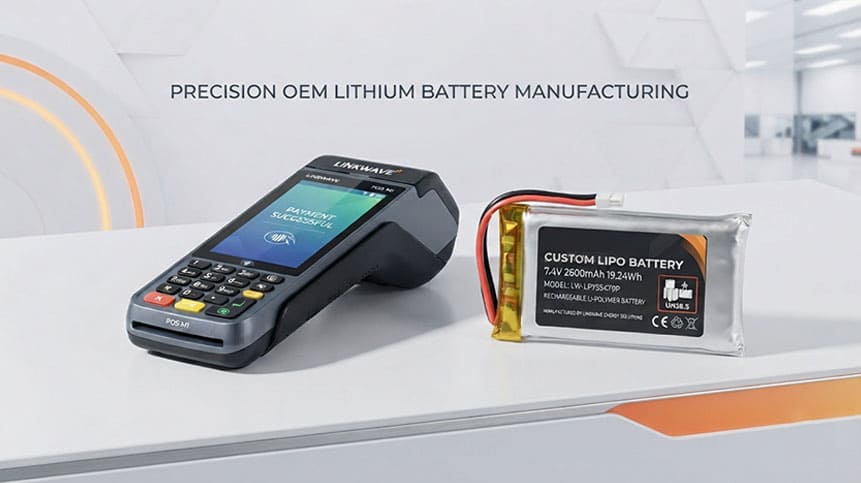
A reliable POS terminal battery supplier provides customized lithium battery solutions designed for portable payment devices, including handheld POS terminals, mobile card readers, and smart payment systems. The best suppliers offer battery customization, safety certifications, stable production capacity, and engineering support to ensure long operating time, fast charging performance, and long lifecycle reliability.
Introduction
The global payment industry is rapidly moving toward portable and wireless payment solutions. Traditional fixed payment terminals are being replaced by handheld POS terminals, mobile card readers, smart payment devices, and integrated payment systems that allow businesses to accept transactions anywhere.
Behind every portable payment device is a critical component that determines user experience — the battery.
As a professional lithium battery manufacturer, I have seen that many POS terminal manufacturers focus heavily on processor performance, display quality, and connectivity features, while the battery system is often considered only at the final stage of product development.
However, battery design directly affects:
- Device operating hours
- Charging frequency
- Product reliability
- Customer satisfaction
- Safety certification
- Overall product lifecycle
Choosing the right POS terminal battery supplier is therefore not simply a purchasing decision. It is a long-term engineering partnership that impacts the success of the entire payment device.
In this article, I will explain how POS terminal batteries are designed, what specifications matter most, how OEM manufacturers evaluate suppliers, and why customized lithium battery solutions are becoming the preferred choice for modern payment equipment.
What Is a POS Terminal Battery?
A POS terminal battery is a rechargeable lithium battery pack specifically designed to power portable payment devices.
Unlike consumer electronics batteries, POS terminal batteries must meet stricter requirements because payment equipment is used continuously in commercial environments.
A POS terminal battery normally includes:
- Lithium-ion or lithium polymer battery cells
- Battery protection circuit module (PCM/BMS)
- Temperature protection system
- Charging management system
- Customized connectors
- Protective housing or insulation materials
Modern POS terminals commonly use:
These battery types provide advantages including:
- High energy density
- Lightweight structure
- Rechargeability
- Stable voltage output
- Flexible customization options
Why Battery Quality Matters for POS Terminal Manufacturers
A payment terminal is expected to work reliably in retail stores, restaurants, transportation systems, logistics environments, and outdoor applications.
A battery failure can directly interrupt payment operations.
For businesses, this creates problems such as:
- Failed transactions
- Customer complaints
- Equipment replacement costs
- Brand reputation damage
According to data from the Federal Reserve, electronic payment usage continues to increase, with consumers and businesses increasingly relying on digital payment infrastructure.
As payment devices become more mobile, battery reliability becomes a key product requirement.
Common Battery Requirements for POS Terminals
Different POS devices require different battery specifications depending on hardware design and application scenarios.
Typical requirements include:
| Battery Requirement | Typical Specification |
|---|---|
| Battery Chemistry | Lithium Polymer / Lithium-ion |
| Voltage | 3.7V / 7.4V |
| Capacity Range | 1000mAh – 5000mAh |
| Charging Cycles | 500+ cycles |
| Protection | Overcharge, Over-discharge, Over-current, Short Circuit |
| Operating Temperature | -20°C to 60°C |
| Design Type | Custom shaped battery pack |
| Certification | UN38.3, IEC62133, CE, RoHS, UL |
Lithium Battery Types Used in POS Terminals
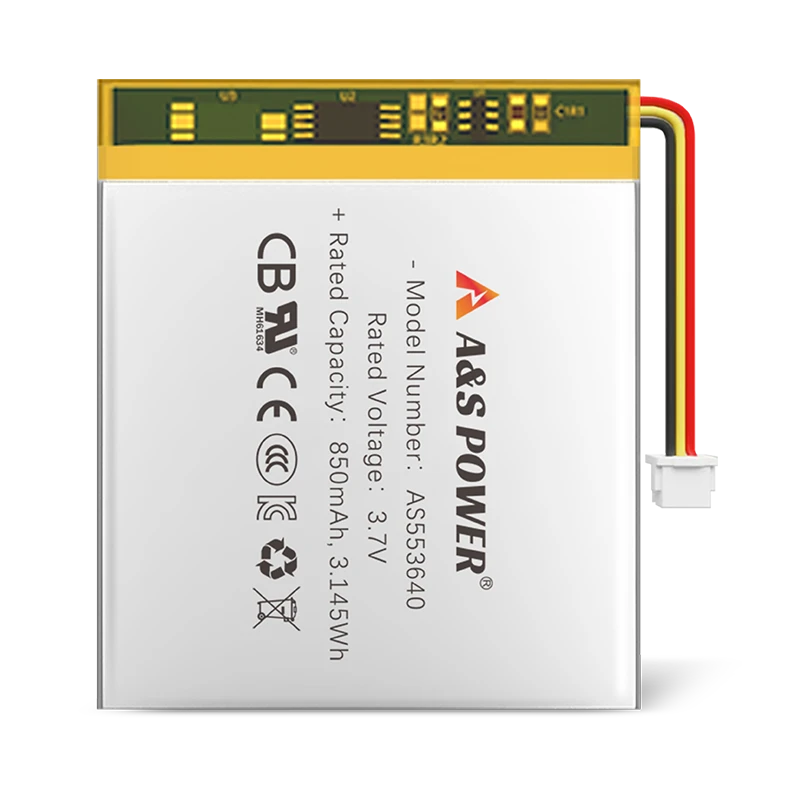
Lithium Polymer Battery for POS Devices
Lithium polymer batteries are widely used in modern handheld POS terminals because they offer excellent design flexibility.
Compared with traditional cylindrical cells, LiPo batteries can be customized into different shapes and thicknesses.
Advantages include:
1. Flexible Industrial Design
POS manufacturers often need thin and lightweight devices.
LiPo batteries can be customized for:
- Ultra-thin payment terminals
- Curved housings
- Compact card readers
- Smart handheld terminals
2. High Energy Density
A higher energy density battery allows manufacturers to increase operating time without increasing product size.
Example:
A portable POS terminal equipped with a 3.7V 3000mAh lithium polymer battery can provide longer operation time compared with a lower-capacity battery with the same dimensions.
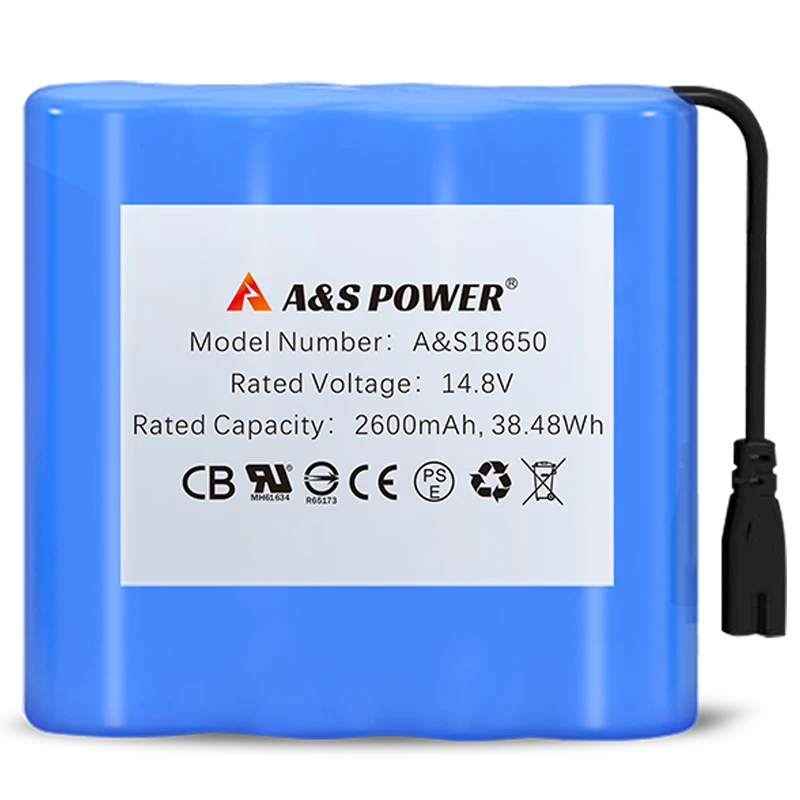
18650 Lithium Battery Pack for POS Terminals
18650 battery packs remain popular for industrial-grade POS equipment because of their reliability and mature supply chain.
A typical configuration includes:
- Multiple 18650 cells
- Protection PCB
- Nickel tabs
- Customized wiring harness
Example:
A 2S2P 18650 battery pack:
| Parameter | Value |
|---|---|
| Cell Type | 18650 Lithium-ion |
| Configuration | 2S2P |
| Voltage | 7.4V |
| Capacity | 5200mAh-7000mAh |
| Application | Industrial POS terminals |
Advantages:
- High cycle life
- Good thermal stability
- Strong discharge performance
- Cost-effective for high-volume production
Key Factors When Choosing a POS Terminal Battery Supplier
Selecting a battery supplier requires more than comparing prices.
Professional POS equipment manufacturers normally evaluate suppliers based on five major factors:
1. Battery Customization Capability
Every POS terminal has different internal structures.
A professional supplier should support:
- Custom battery dimensions
- Custom voltage
- Custom capacity
- Connector customization
- Protection circuit design
- Battery communication protocols
For OEM manufacturers, customized battery design helps achieve:
- Smaller device size
- Longer runtime
- Better user experience
2. Battery Safety Certifications
Safety certification is essential for commercial payment equipment.
Reliable POS terminal battery suppliers should provide certifications such as:
| Certification | Purpose |
|---|---|
| UN38.3 | Lithium battery transportation safety |
| IEC62133 | International rechargeable battery safety standard |
| UL1642 | Lithium battery cell safety |
| UL2054 | Household and commercial battery pack safety |
| CE | European market compliance |
| RoHS | Restriction of hazardous substances |
These certifications help manufacturers enter global markets faster and reduce compliance risks.
How to Design the Right Battery for a POS Terminal
Designing a battery for a POS terminal requires balancing multiple factors, including operating time, device size, charging speed, safety, and production cost.
From my experience working with OEM electronics manufacturers, the biggest mistake companies make is selecting a battery based only on capacity (mAh). A higher capacity battery does not always mean a better solution.
The correct battery design depends on the entire power system.
Important design factors include:
- Device power consumption
- Processor and display requirements
- Communication modules (4G, Wi-Fi, Bluetooth)
- Payment frequency
- Working environment
- Product dimensions
- Charging method
A professional POS terminal battery supplier should participate during the early product design stage instead of only supplying finished battery packs.
How to Calculate POS Terminal Battery Capacity
Battery capacity selection is usually based on the relationship between power consumption and required operating time.
The basic calculation formula is:
Battery Capacity (mAh) = Device Power Consumption (W) × Working Time (h) ÷ Battery Voltage (V) × 1000
For example:
A portable POS terminal consumes approximately:
- Average power consumption: 2W
- Required working time: 8 hours
- Battery voltage: 3.7V
Calculation:
2W × 8h ÷ 3.7V × 1000 ≈ 4324mAh
Therefore, a battery around 4000mAh–4500mAh would be suitable depending on efficiency losses.
Example POS Terminal Battery Specification Comparison
| POS Terminal Type | Recommended Battery Type | Voltage | Capacity Range | Application |
|---|---|---|---|---|
| Mini Card Reader | LiPo Battery | 3.7V | 500mAh–1500mAh | Mobile payment |
| Handheld POS Terminal | LiPo Battery Pack | 3.7V / 7.4V | 2000mAh–5000mAh | Retail payment |
| Industrial POS Device | 18650 Battery Pack | 7.4V–14.8V | 5000mAh–20000mAh | Commercial environments |
| Smart Payment Terminal | Custom Lithium Battery | Customized | Customized | OEM projects |
Why Lithium Polymer Batteries Are Popular for Modern POS Terminals
The payment industry is moving toward smaller, thinner, and more intelligent devices.
Traditional battery solutions often cannot meet modern product design requirements.
Lithium polymer batteries have become one of the preferred choices because of their flexibility.
Advantages of LiPo Batteries for POS Applications
1. Flexible Shape Customization
Unlike cylindrical batteries, lithium polymer cells can be manufactured in various shapes.
This allows battery designers to create solutions for:
- Slim POS terminals
- Curved payment devices
- Compact handheld terminals
- Wearable payment devices
For example, a manufacturer can customize:
- 3.7V 2000mAh battery
- 3.7V 3000mAh battery
- 7.4V dual-cell battery pack
according to the available internal space.
2. Lightweight Design
Portable payment devices are carried by employees throughout the day.
Battery weight directly affects user experience.
Compared with traditional battery technologies, lithium polymer batteries provide:
- Higher energy density
- Lower weight
- Better space utilization
This is especially important for:
- Restaurant ordering terminals
- Delivery payment devices
- Retail handheld POS systems
3. Better Product Integration
A professional POS battery manufacturer can integrate:
- Protection circuits
- Temperature sensors
- Custom connectors
- Battery communication systems
into a complete battery solution.
This reduces engineering complexity for POS manufacturers.
Important Safety Features of POS Terminal Battery Packs
Because POS terminals are used in commercial environments, battery safety is a critical requirement.
A reliable battery pack normally includes multiple protection functions.
Battery Protection System
| Protection Function | Purpose |
|---|---|
| Overcharge Protection | Prevents excessive charging voltage |
| Over-discharge Protection | Prevents battery damage from deep discharge |
| Over-current Protection | Protects against abnormal current flow |
| Short Circuit Protection | Reduces safety risks |
| Temperature Protection | Prevents overheating |
| Cell Balancing | Maintains multi-cell battery consistency |
A professional battery supplier should also conduct:
- Charge and discharge testing
- Internal resistance testing
- Aging testing
- High and low temperature testing
- Safety validation
These quality control processes help ensure stable performance during thousands of charging cycles.
How OEM Companies Evaluate a POS Terminal Battery Supplier
Choosing the right supplier is one of the most important decisions for payment equipment manufacturers.
Based on industry experience, OEM customers usually evaluate suppliers through the following criteria.
1. Battery Manufacturing Experience
Battery manufacturing is a highly specialized process.
Experienced suppliers understand:
- Cell selection
- Battery structure design
- Protection circuit development
- Production consistency
- Quality management
A supplier with years of lithium battery manufacturing experience can identify potential risks earlier during product development.
2. Engineering and Customization Capability
OEM customers often require customized battery solutions.
A capable supplier should support:
Mechanical Design
Including:
- Battery dimensions
- Thickness optimization
- Connector location
- Housing integration
Electrical Design
Including:
- Voltage configuration
- Capacity optimization
- Charging parameters
- Protection system
Prototype Development
Including:
- Engineering samples
- Testing validation
- Mass production preparation
3. Production Capacity and Quality Control
A professional POS terminal battery supplier should have a complete manufacturing system.
Important production processes include:
| Manufacturing Process | Quality Control Purpose |
|---|---|
| Cell Inspection | Ensure battery consistency |
| Cell Matching | Improve pack reliability |
| Welding Process | Ensure connection strength |
| PCB Assembly | Ensure protection accuracy |
| Aging Testing | Verify battery stability |
| Final Inspection | Confirm product quality |
Why Choose A&S Power as Your POS Terminal Battery Supplier
At A&S Power, we focus on providing customized lithium battery solutions for OEM customers worldwide.
With more than 15 years of lithium battery manufacturing experience, we support companies that require reliable rechargeable battery solutions for industrial and commercial applications.
Our battery solutions include:
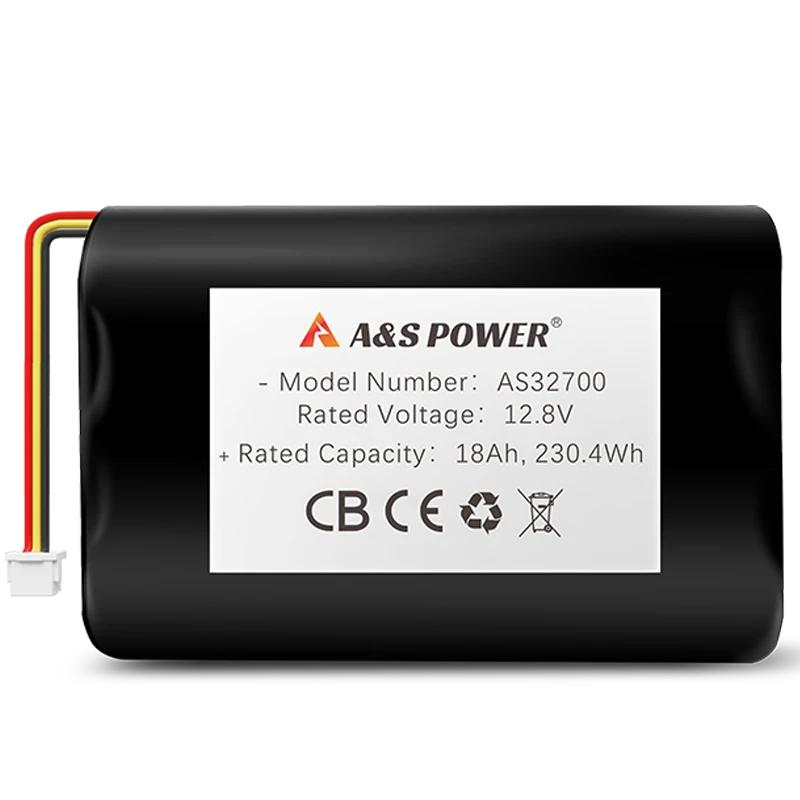
- Lithium Polymer Battery Packs
- Lithium-ion Battery Packs
- 18650 Battery Packs
- LiFePO4 Battery Solutions
- Custom rechargeable battery systems
Custom Battery Solutions for POS Terminal Manufacturers
We support:
Voltage Customization
Examples:
- 3.7V battery pack
- 7.4V battery pack
- 11.1V battery pack
Capacity Customization
Examples:
- 1000mAh
- 2000mAh
- 3000mAh
- 5000mAh+
Structural Customization
Including:
- Thin batteries
- Special-shaped batteries
- Compact battery designs
Certifications and Compliance Support
For global POS terminal manufacturers, compliance is an essential part of product development.
A&S Power provides battery solutions designed to meet international market requirements, including:
| Certification | Market/Application |
|---|---|
| UN38.3 | Global lithium battery transportation |
| IEC62133 | International battery safety |
| UL1642 | Lithium cell safety |
| CE | European market |
| RoHS | Environmental compliance |
| CB | International certification system |
| KC | Korean market |
| PSE | Japanese market |
Future Trends of POS Terminal Battery Technology
The payment industry is evolving toward smarter and more portable devices.
Future POS battery development trends include:
1. Higher Energy Density Batteries
Manufacturers are looking for batteries that provide:
- Longer operating time
- Smaller size
- Lower weight
2. Faster Charging Technology
Retail environments require minimal downtime.
Future POS batteries will increasingly support:
- Fast charging
- Improved charging efficiency
- Better thermal management
3. Smart Battery Management Systems
Advanced battery packs may integrate:
- Battery health monitoring
- Communication protocols
- Remaining capacity estimation
These technologies help businesses improve device reliability and maintenance efficiency.
Conclusion
Choosing the Right POS Terminal Battery Supplier
The battery is one of the most important components in modern portable payment devices. As POS terminals become smaller, smarter, and more mobile, manufacturers need battery solutions that provide reliable performance, safety, and long-term stability.
Choosing a professional POS terminal battery supplier is not only about purchasing a battery pack. It is about finding an experienced engineering partner who can support battery design, customization, certification, and mass production.
From my perspective as a lithium battery manufacturer, the best battery supplier should provide:
- Strong lithium battery manufacturing experience
- Flexible OEM/ODM customization capability
- Reliable battery cells and quality control
- International certification support
- Technical engineering assistance
- Stable production capacity
For POS terminal manufacturers, investing in the right battery partner helps create products with longer operating time, improved customer experience, and stronger market competitiveness.
A customized lithium battery solution can make the difference between a payment device that simply works and one that delivers reliable performance in demanding commercial environments.
FAQ
Q1:What type of battery is used in POS terminals?
Most modern POS terminals use rechargeable lithium batteries, especially lithium polymer batteries and lithium-ion battery packs. Lithium polymer batteries are widely adopted in portable payment terminals because they offer high energy density, lightweight construction, and flexible customization options. For larger industrial POS devices, manufacturers may choose 18650 lithium-ion battery packs because they provide stable performance, long cycle life, and reliable power output. The final battery selection depends on the device size, power consumption, operating time requirements, and product design.
Q2: Can I customize a battery pack for my POS terminal?
Yes, a professional POS terminal battery supplier can provide fully customized battery solutions based on the specific requirements of your payment device. Customization options usually include battery dimensions, voltage, capacity, connector type, protection circuit design, and charging specifications. This allows POS manufacturers to optimize battery performance while maintaining the required product size and user experience. OEM battery customization is especially important for handheld POS terminals where internal space is limited and every millimeter of design matters.
Q3: How long does a POS terminal battery last?
The lifespan of a POS terminal battery depends on battery chemistry, usage conditions, charging methods, and battery management system design. High-quality lithium battery packs typically support hundreds of charge cycles while maintaining stable capacity. In commercial applications, battery performance can be affected by daily transaction volume, operating temperature, and charging frequency. Working with an experienced battery supplier helps manufacturers select suitable cells and protection systems to achieve longer service life and reliable operation.
Q4: What certifications should a POS terminal battery supplier provide?
A reliable POS terminal battery supplier should support international safety and compliance requirements for different markets. Common certifications and testing standards include UN38.3 for lithium battery transportation safety, IEC62133 for rechargeable battery safety, UL1642 for lithium battery cells, CE for European market access, and RoHS for environmental compliance. These certifications help ensure that battery products meet safety requirements and reduce risks during global distribution.
Q5: How do I choose a reliable POS terminal battery supplier?
Choosing the right supplier requires evaluating technical capability, manufacturing experience, quality control systems, and customization ability. A professional supplier should be able to support the complete battery development process, including battery design, prototype production, testing validation, certification support, and mass manufacturing. For OEM POS terminal manufacturers, a supplier with strong engineering capability can help reduce development risks and create more reliable payment device solutions.
Q6: Why are lithium polymer batteries suitable for POS terminals?
Lithium polymer batteries are suitable for POS terminals because they provide excellent design flexibility and energy efficiency. Compared with traditional cylindrical batteries, LiPo batteries can be customized into different shapes and thicknesses, making them ideal for compact handheld payment devices. They also offer lightweight construction, stable voltage output, and high energy density, helping manufacturers develop thinner and more portable POS terminals.
Q7: Does A&S Power manufacture custom POS terminal batteries?
Yes. A&S Power provides customized lithium battery solutions for POS terminals and other portable electronic devices. With more than 15 years of lithium battery manufacturing experience, we support OEM customers with lithium polymer battery packs, lithium-ion battery packs, custom battery designs, protection circuit solutions, and certification support. Our engineering team works with customers from initial battery design through prototype development and mass production to ensure reliable and consistent battery performance.
-

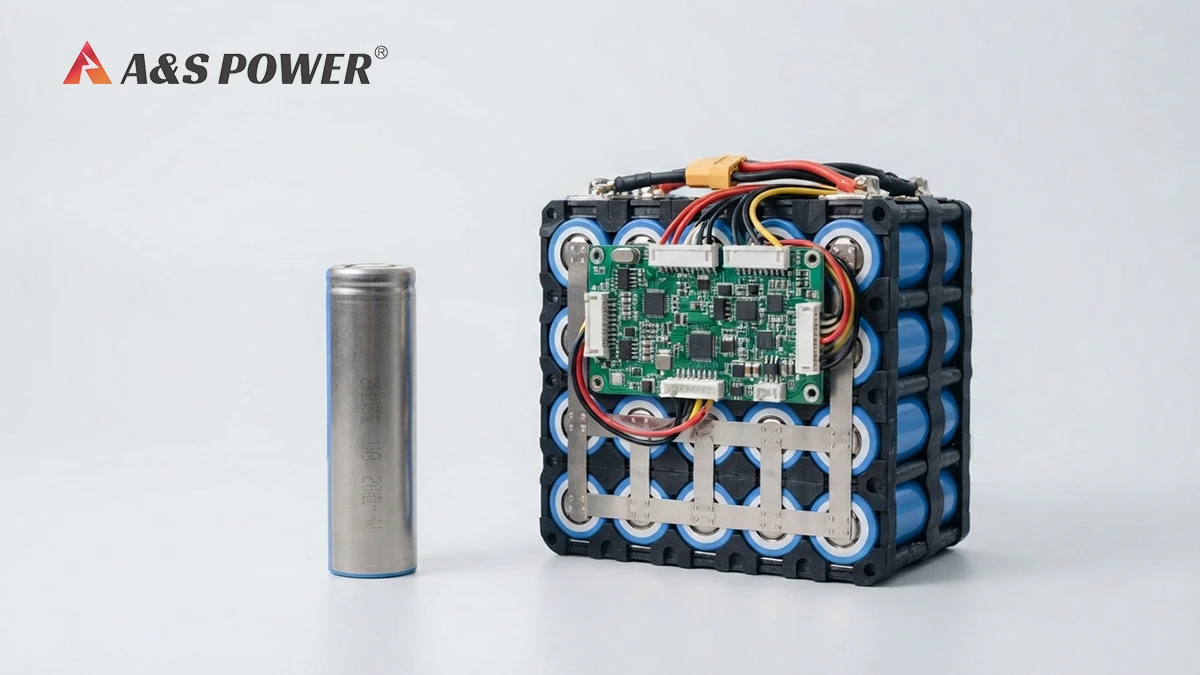 May.2026.08.0521700 Battery Pack with BMS: Design, Safety and Custom SolutionsLearn More
 -
 May.2026.08.04Smart Beauty Equipment Battery Pack ManufacturerLearn More
 -
 May.2026.08.04High Reliability Polymer Battery for Handheld Dental DevicesLearn More
 -
 May.2026.08.04Ultra Thin Lithium Polymer Battery 0.4mm 0.5mm Custom GuideLearn More
 -
 May.2026.07.30Smoke Detector Battery Guide: Choosing the Right Battery for Reliable Fire ProtectionLearn More