




Top Safety Tips for Charging LiPo Batteries
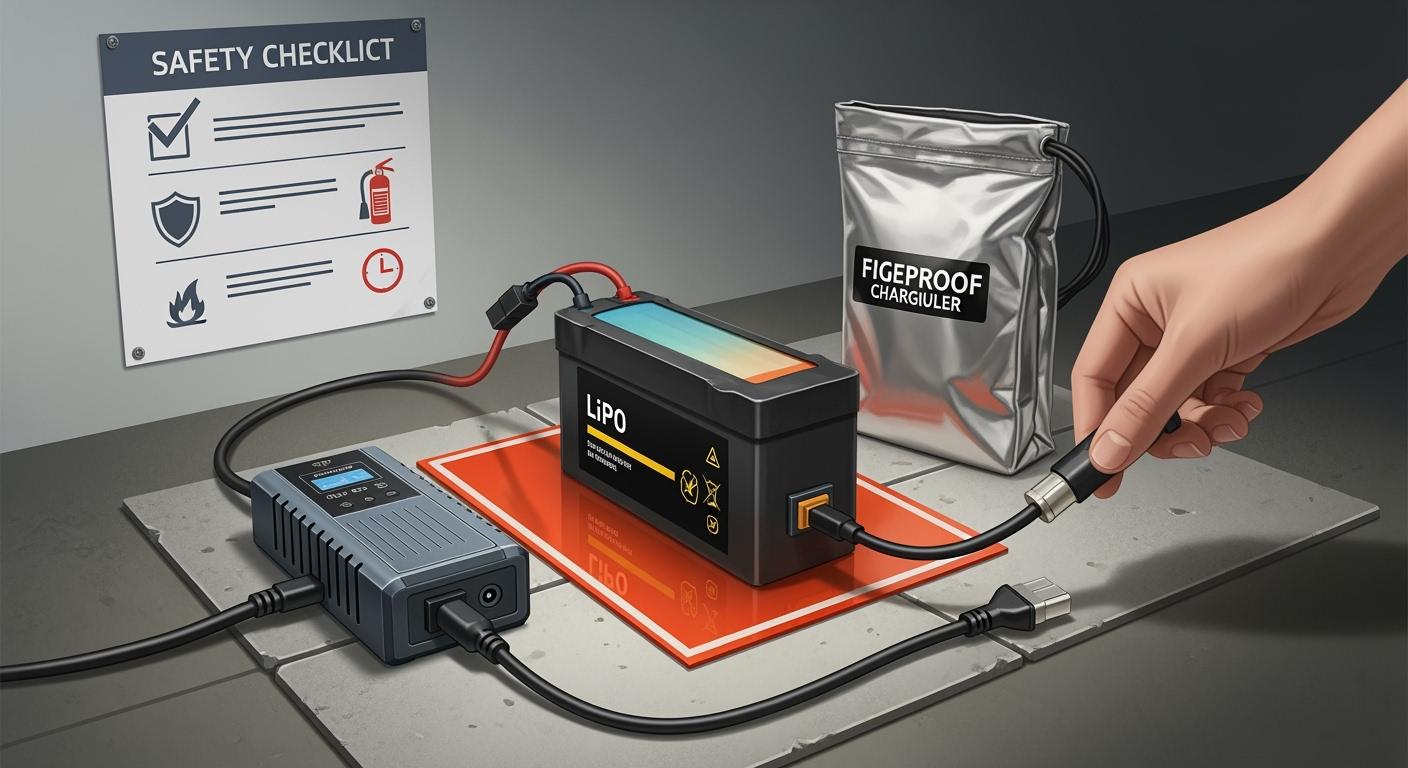
Charging a battery li po safely is essential to protect both you and your devices. You must follow safety guidelines every time you charge a battery li po. If a battery li po is used incorrectly, it can catch fire or even explode. Always inspect your battery li po for any damage before charging. Never leave a battery li po unattended while it is charging. Stay cautious and attentive to prevent accidents.
Key Takeaways
- Always check LiPo batteries for damage before charging. Look for swelling, leaks, or dents to stay safe.
- Use a charger that works with your battery's specs. This stops overcharging and helps prevent fires.
- Charge LiPo batteries in a safe place. Use a fireproof bag or box to lower risks.
- Never leave batteries alone while charging. Stay close to watch for problems during charging.
- Keep LiPo batteries in a metal box with sand at a safe charge level. This helps stop fires and makes batteries last longer.
Choose Quality LiPo Batteries
If you want your devices to be safe, start with good lipo batteries. Good batteries are less likely to catch fire or swell up. They also do not fail suddenly. Always pick batteries from sellers you can trust.
Buy from Reputable Brands
Buy lipo batteries from brands that are well-known. These companies check their batteries and follow safety rules. Trusted brands have experts who test batteries for many years. For example, UL Solutions has tested batteries for over 40 years. They help brands make safer batteries by using special tests and teaching.
| Aspect | Description |
|---|---|
| Recognized Testing Expertise | UL Solutions has tested batteries for more than 40 years to keep them safe. |
| Smarter Supplier Selection | Tools like UL Prospector® help companies pick safe suppliers using safety and performance data. |
| Systems Approach to Safety | Looks at safety for all parts, like chargers and extra batteries. |
| Failure Analysis and Audits | Uses different tests to find weak spots in battery products. |
| Continual Training and Education | Gives training to workers so they know how to stay safe and follow the rules. |
Check Certification and Authenticity
Check for safety labels before you buy any battery li po. Look for stickers or papers that show the battery passed safety checks. Certified batteries are tested many times to make sure they are safe and do not get too hot. You can ask the seller to prove the battery is real. This helps you stay away from fake batteries.
Avoid Counterfeit or Damaged Batteries
Fake lipo batteries may look real, but they skip safety steps. These batteries do not have important safety parts inside. They can catch fire or break without warning. The table below shows the difference between real and fake batteries:
| Feature | Authentic LiPo Batteries | Counterfeit LiPo Batteries |
|---|---|---|
| Safety Mechanisms | Has PTC and CID for safety | Does not have safety parts inside |
| Testing and Certification | Tested and certified for safety | Not tested or certified |
| Performance under stress | Works as it should when stressed | Can catch fire or get too hot |
Never use a battery that is damaged. If you see swelling, leaks, or dents, put the battery in a safe box and throw it away the right way. Picking good lipo batteries keeps you and your devices safe.
Charging Battery Li Po: Safety Guidelines
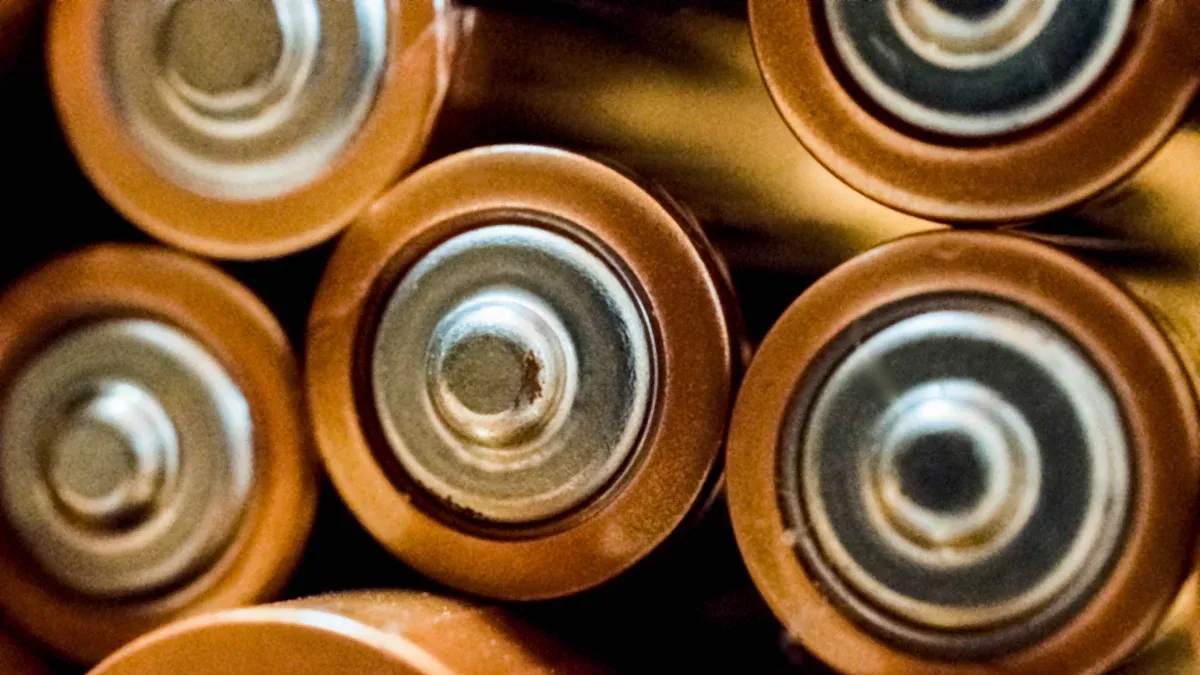
Charging lipo batteries needs you to be careful. You should follow every safety rule to stop fires or injuries. These steps help you stay safe and protect your battery li po.
Use a Compatible Charger
Pick a charger that matches your lipo battery. Make sure the charger fits the battery’s type, size, and voltage. Chargers with adjustable rates help you avoid charging too much. Always use a charger that can balance the cells. Look for safety features like overcharge protection and temperature checks. Buy chargers from trusted brands. Check that the charger fits your power source. Chargers with screens help you watch the charging process.
Recommended Charger Features:
- Works with your lipo battery’s type, size, and voltage.
- Lets you change charge rates to stop overcharging.
- Can balance the voltage in all cells.
- Has safety features like overcharge and temperature checks.
- Comes from a trusted brand.
- Fits your power source.
- Has a screen for easy checking.
Charge in a Safe Area or LiPo Bag
Charge lipo batteries in a safe place. Use a steel cabinet made for flammable things to lower risk. You can also use batteries covered in epoxy and fiberglass. Hanging the battery in a plastic bag over water helps keep you safe. Many people use a LiPo bag made of fireproof material. Always keep the charging spot free of things that can burn.
Safe Charging Materials:
- Steel cabinet for flammable things
- Epoxy with fiberglass
- Plastic bag over water
- Fireproof LiPo bag
Tip: Charging in a fireproof bag or on a surface that does not burn gives extra safety.
Never Leave Charging Unattended
Never leave lipo batteries charging alone. Problems can happen fast, so you need to be close. Stay near while charging. If you must leave, stop charging and unplug the battery. This keeps you and your home safe.
Set Correct Voltage and Current
Set the right voltage and current for lipo batteries. Each battery has its own voltage limits. Charging outside these limits can hurt the battery or start a fire. Use the table below to find the right settings:
| Configuration | Nominal Voltage | Minimum Voltage | Maximum Voltage |
|---|---|---|---|
| 1S | 3.7V | 3.0V | 4.2V |
| 2S | 7.4V | 6.0V | 8.4V |
| 3S | 11.1V | 9.0V | 12.6V |
| 4S | 14.8V | 12.0V | 16.8V |
| 5S | 18.5V | 15.0V | 21.0V |
| 6S | 22.2V | 18.0V | 25.2V |
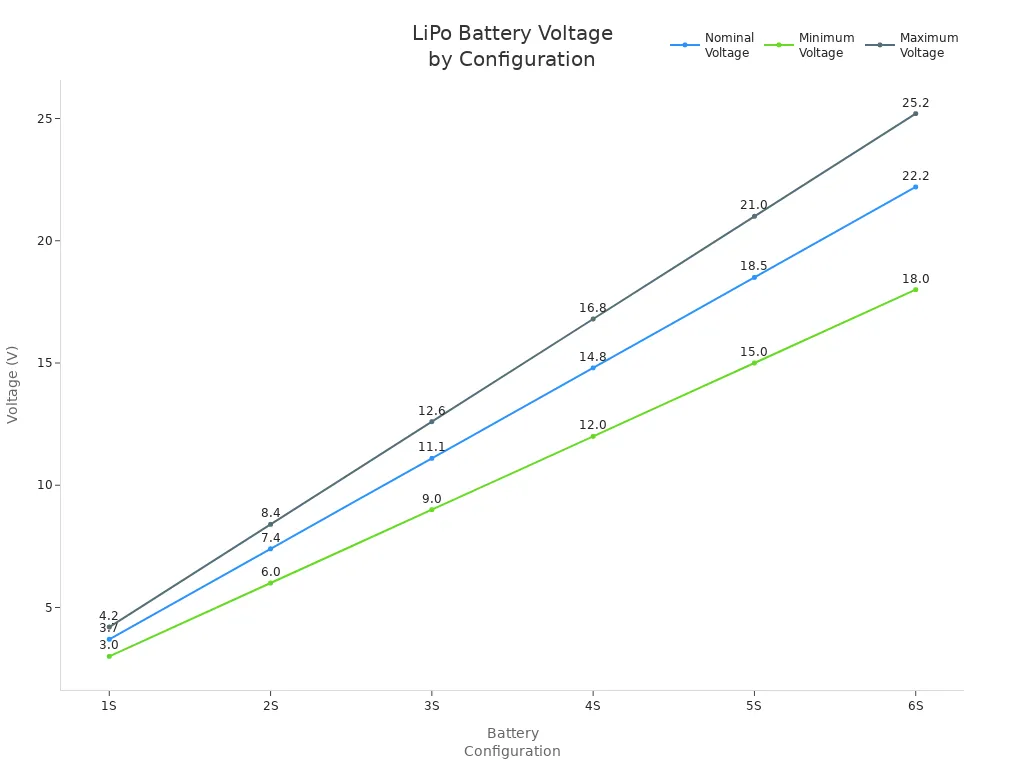
Charge most lipo batteries at 1C. This means you charge at the battery’s capacity rate. For example, a 2200mAh battery should be charged at 2.2A. Using the wrong voltage or current can ruin the battery. Low voltage can damage cells and cause overheating or explosions. Always check your charger before you start.
Connect Balance Leads
Balance charging is needed for batteries with more than one cell. Connect the balance leads to your charger. This makes sure all cells charge to the same voltage. Balancing stops any cell from going too high or too low. The balance plug lets the charger check each cell. This helps you avoid charging too much and keeps your battery li po healthy.
Note: Balance charging keeps all cells within about 0.01 volts of each other when done.
Start with Low Current
Start charging at a low current, especially with new or unused batteries. Charging slowly puts less stress on the battery and stops it from getting too hot. You can raise the current after you know the battery works well. This helps your lipo batteries last longer and stay safe.
Avoid Charging Below 2.8V
Never charge lipo batteries if the voltage is under 2.8V per cell. Charging below this can damage the battery and make it lose power. Low voltage for a long time can mess up the battery’s inside. This can cause overheating or explosions. Always check the voltage before you charge.
- Low voltage can damage battery cells forever.
- Long low voltage raises the chance of overheating or explosions.
- Over-discharging can ruin the battery, especially the first time.
Monitor Battery Temperature
Watch the temperature of lipo batteries while charging. The safe range is 0-50°C (32-122°F). Room temperature, around 20°C (68°F), is best. Do not charge if the battery is hotter than 40°C (104°F) or colder than 5°C (41°F). The battery should not go over 140°F (60°C). High heat can make the battery swell, leak, or catch fire. Use chargers that check temperature for extra safety.
Caution: If the battery gets hot, stop charging and check for damage.
Charging lipo batteries safely means following every safety rule and staying alert. Careful handling helps you avoid injury and keeps your devices working well.
LiPo Batteries Storage Safety
Storing lipo batteries the right way stops fires. It also helps your battery li po last longer. You need to think about where you put your lipo batteries. How you store them matters too. Safe storage keeps your home and devices safe.
Store in Metal Container with Sand
Put lipo batteries in a metal box. Use a fireproof box with sand inside for extra safety. If a battery starts burning, sand can put out the fire. Metal boxes keep the fire from spreading. Always close the lid tight. Keep the box away from things that can burn.
Use Fireproof Bags
Fireproof bags make storage safer. These bags are made to resist heat and flames. Put each lipo battery in its own fireproof bag. Then put the bags in the metal box. This lowers the chance of fire damage. You can buy fireproof bags at hobby shops.
Tip: Use a fireproof bag when you travel with lipo batteries.
Keep at Safe Charge Level
Store lipo batteries at the right charge level. Do not store batteries full or empty. The best charge for storage is about 3.92 volts per cell. This helps the battery last longer. Many chargers have a "store" button for this.
- Store at 3.92V per cell for best results.
- Use the "store" setting on your charger.
- Do not keep batteries full or empty.
Avoid Heat, Cold, and Moisture
Heat and cold can hurt lipo batteries in storage. Cold makes batteries weak and slow. Too much heat can make batteries swell or catch fire. Keep lipo batteries in a dry place. The best temperature is between 50°F and 77°F. Water can damage batteries and cause rust.
- Cold makes batteries weak and slow.
- Heat makes batteries age faster and raises fire risk.
- Best storage temperature: 50°F to 77°F.
- Keep batteries dry and away from water.
Safe storage means using the right box, keeping the right charge, and watching the temperature. These steps help you stop fires and make your battery li po last longer.
Routine Inspection and Caution
Checking your lipo batteries often helps you find problems early. This keeps you and your battery li po safe. Look at your battery li po before and after you use it. This lowers the chance of getting hurt. Taking care of your battery li po helps stop accidents. It also makes your battery last longer. Always be careful if you see any damage.
Check for Swelling or Damage
Look for swelling, dents, or leaks every time you use your lipo. A good lipo battery is firm and shaped like a rectangle. If you see puffiness or rounded parts, you need a new battery. Smell the battery for a sweet or strong odor. This smell means the battery is going bad. Throw it away safely if you notice this. Watch the temperature when charging. If the battery gets hot at low charging, stop right away. Check that all cells have close voltage. If cells are not balanced, the battery can get overcharged and break.
| Inspection Step | Description |
|---|---|
| Visual Check | Look for puffiness or rounded cells; a healthy LiPo should be firm and rectangular. |
| Olfactory Check | A sweet, pungent smell indicates the battery is failing and should be disposed of. |
| Temperature Monitoring | If the battery gets hot during charging at low rates, stop charging immediately. |
| Cell Balance Check | Ensure all cells are balanced; unbalanced cells can lead to overcharging and battery failure. |
Tip: Always check your battery li po before and after you use it. Also check after any accident or harsh event.
Inspect Connectors and Wires
Look at connectors and wires for rust, loose parts, or wear. Bad connectors can make charging poor or cause short circuits. Make sure wires are not broken or frayed. Check the case for cracks or holes. Do not use the battery if you see any damage. Handling connectors and wires with care keeps you safe. It also helps your devices work well.
Clean Terminals
Clean terminals help your battery charge better. Use a dry cloth to wipe off dust or dirt. Do not use water or chemicals. Clean terminals help stop overheating. Good care of terminals helps with safe charging and storage.
You should do these checks often:
- Before each use, look for swelling, damage, connector issues, and voltage.
- After each use, check for heat, voltage, and any wear.
- Every week, check cell balance, case, and wires.
- Every month, check stored batteries so they do not get worse.
- After accidents or harsh events, do special checks.
Precautions: Never ignore damage signs. Throw away any lipo with swelling, leaks, or odd smells. Careful checks and good care help you stay safe and keep your battery li po working.
Handling Damaged LiPo Batteries
Damaged lipo batteries are very dangerous. You need to know how to find problems and act fast. Handling and throwing away batteries the right way keeps you and your things safe.
Identify Damage Signs
Check your lipo for damage before every use. Watch for these warning signs:
- Leaks, smoke, or weird smells mean the battery has inside problems.
- Fast voltage drops and bad performance show the battery is not healthy.
- Swelling, dents, or cracks mean the battery is hurt.
- Hot spots or uneven heat during charging show trouble inside.
Caution: Never use or charge a damaged battery li po. Damaged cells can catch fire or blow up.
Safe Disposal Steps
Be very careful when throwing away damaged lipo batteries. Here are the safe steps:
- If you see big damage, do not try to drain the battery.
- Put the damaged battery in a strong, closed plastic bag.
- Wear gloves and safety glasses to protect yourself.
- Never poke or cut open the cells.
- If it is safe, drain the battery to 2 V per cell or less at a rate no higher than 0.5C.
- Take the battery to a special waste or recycling center.
- Never put lipo batteries in normal trash.
Tip: Always be careful with damaged batteries. Wear safety gear and follow the rules for throwing them away.
Follow Local Regulations
You must follow your local rules for throwing away batteries. Many places have special centers for dangerous waste. These centers know how to handle lipo batteries safely. Ask your local waste center for help. Throwing away batteries the right way keeps your town safe and helps the earth.
Checking and handling lipo batteries carefully helps stop damage. If you see warning signs, act fast and use safe steps to throw them away. Doing these things keeps you safe and stops accidents with battery li po.
Safety During LiPo Battery Use
When you use lipo batteries, always pay attention. You need to follow safety steps every time. Careful use helps stop accidents. It also keeps your devices working.
Avoid Over-Discharging
Never let your lipo battery get too low. If you use too much power, the battery can get too hot. This can cause a fire. The battery may get hotter than 140°F. That is very dangerous. High heat can ruin the battery. It can also make it unsafe to use.
- Letting the battery get too low can cause fires.
- Using too much power can make the battery catch fire.
- High heat can hurt the battery and make it not last as long.
Check your battery’s voltage often. Stop using it if the voltage is close to the limit. This keeps you and your things safe.
Prevent Physical Impact
Keep your lipo battery safe from bumps or drops. Hitting or crushing the battery can break it inside. Broken parts can make the battery get hot fast. This can cause swelling or even a fire. If the battery swells, it will not work well. Heat and age also make the battery weaker. Be gentle with your battery. Keep it away from sharp things.
Use Battery Alarms
Battery alarms tell you when your lipo is low. They warn you before the battery gets too weak. Some people think alarms are hard to set up. If you set the alarm wrong, it may not help. For example, an alarm at 3.75V under load may not show the real level. Learn how to set your alarm the right way. This helps you stop over-discharging and keeps your battery safe.
Tip: Test your battery alarm before you use it to make sure it works.
Follow Manufacturer Guidelines
Always read the instructions that come with your lipo battery. Buy batteries from brands you trust. Check for damage before you use the battery. Never burn, open, or poke the battery. Follow the charging steps from the maker. Use the right charger and check your outlet’s voltage. Keep your battery between 59°F and 95°F. If you will not use your battery for more than three days, store it safely. Use fireproof bags or boxes for storage. Never use a NiCd or NiMH charger for lipo batteries. Never leave your battery charging alone. Always check for damage before charging.
Note: Manufacturer rules help you use your battery safely and stop accidents.
If you follow these steps, you lower fire risk. You also help your lipo batteries last longer. Stay careful and use alarms for extra safety.
You can stay safe and protect your devices by following important LiPo battery safety rules.
- Keep batteries in a place that is between 59 and 77 degrees Fahrenheit. Make sure the air is not too wet, under 60% humidity.
- Always put batteries in a fire-safe box when you charge or store them.
- Look at the battery wires before charging. Never leave batteries alone while they charge.
- Check batteries often for swelling or any damage.
Checking your batteries often and charging them with care helps stop fires or injuries. Always pay attention and follow these rules every time you use LiPo batteries.
FAQ
How do you know if your LiPo battery is fully charged?
Most chargers show a green light or display "Full" when charging finishes. You can also check the voltage. A fully charged cell reads about 4.2 volts. Always use a charger with a clear indicator.
Can you charge a LiPo battery overnight?
You should never charge a LiPo battery overnight. Charging for too long can cause overheating or fire. Always stay nearby and unplug the battery when charging ends.
What should you do if your LiPo battery gets hot while charging?
Stop charging right away if the battery feels hot. Move the battery to a safe place. Let it cool down. Check for swelling or damage before using it again.
Is it safe to use a swollen LiPo battery?
No, you should not use a swollen LiPo battery. Swelling means the battery is damaged. Using it can cause fire or explosion. Dispose of it safely at a recycling center.
How often should you inspect your LiPo batteries?
Check your LiPo batteries before and after every use. Look for swelling, leaks, or damage. Regular inspection helps you catch problems early and keeps you safe.
-

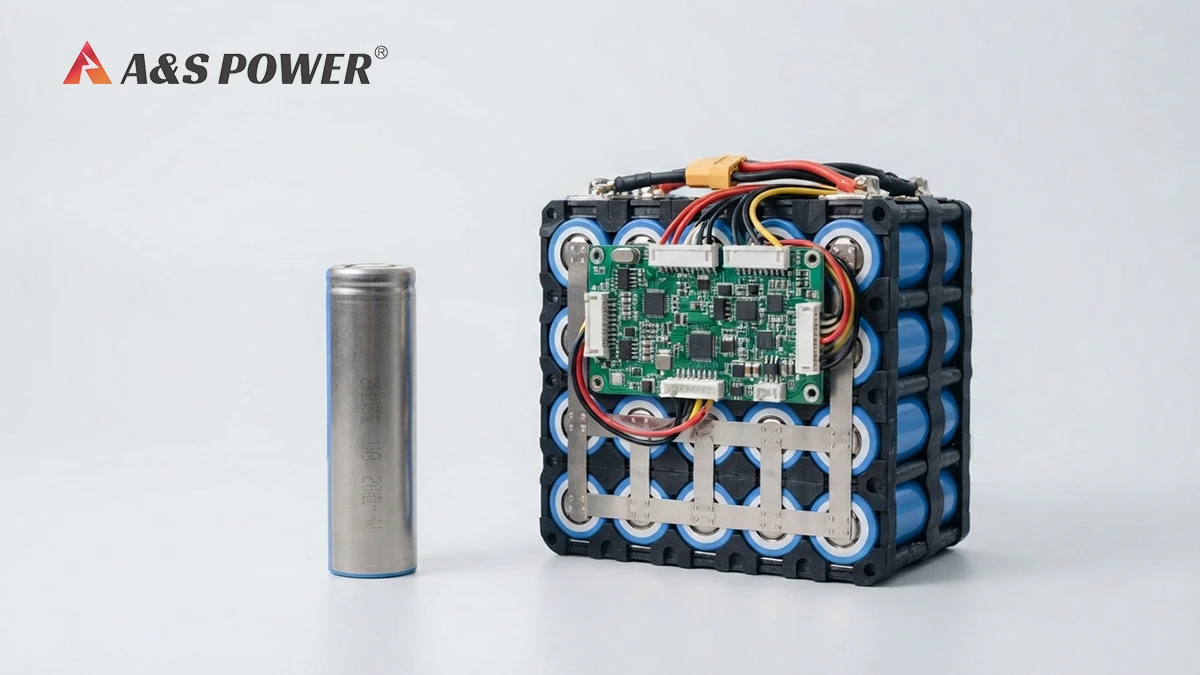 May.2026.08.0521700 Battery Pack with BMS: Design, Safety and Custom SolutionsLearn More
 -
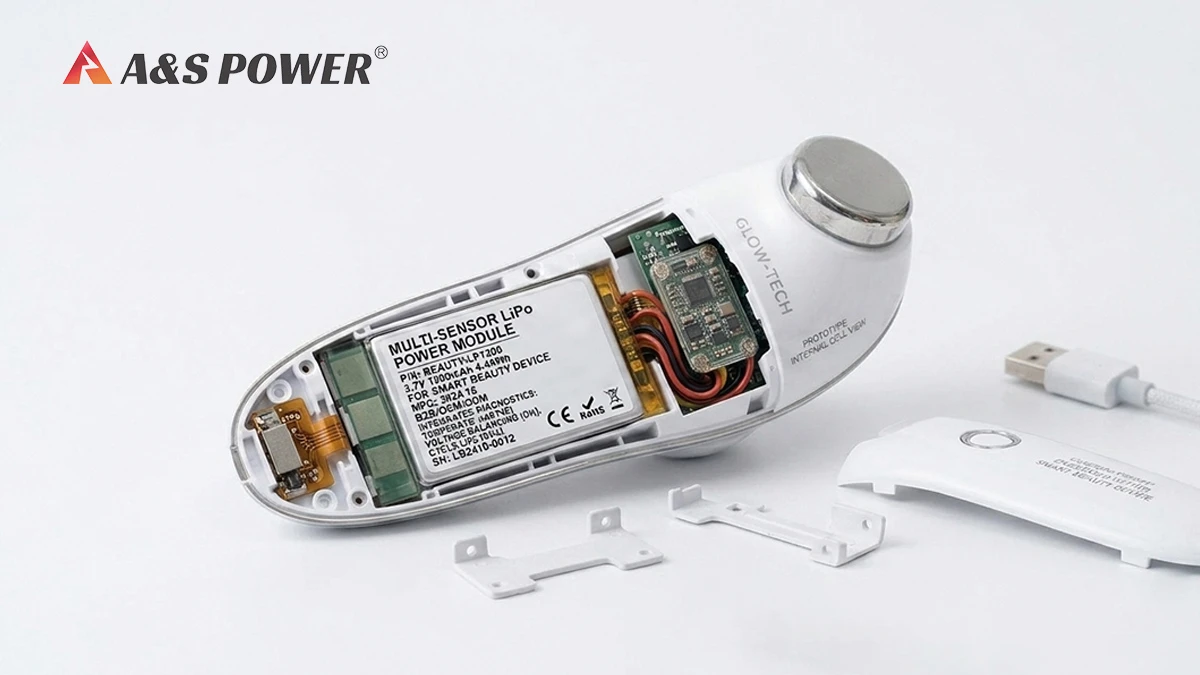 May.2026.08.04Smart Beauty Equipment Battery Pack ManufacturerLearn More
 -
 May.2026.08.04High Reliability Polymer Battery for Handheld Dental DevicesLearn More
 -
 May.2026.08.04Ultra Thin Lithium Polymer Battery 0.4mm 0.5mm Custom GuideLearn More
 -
 May.2026.07.30Smoke Detector Battery Guide: Choosing the Right Battery for Reliable Fire ProtectionLearn More