




Lithium-Ion Battery Packs for Agricultural Lighting: Applications and Market Impact
Introduction
Modern agriculture is undergoing a technological transformation driven by automation, data analytics, and energy innovation. One technology that is quietly reshaping farming operations is the lithium-ion battery pack.
In traditional agricultural environments, lighting systems relied heavily on fixed grid infrastructure or diesel generators. These systems often lacked flexibility, consumed excessive energy, and required expensive maintenance.
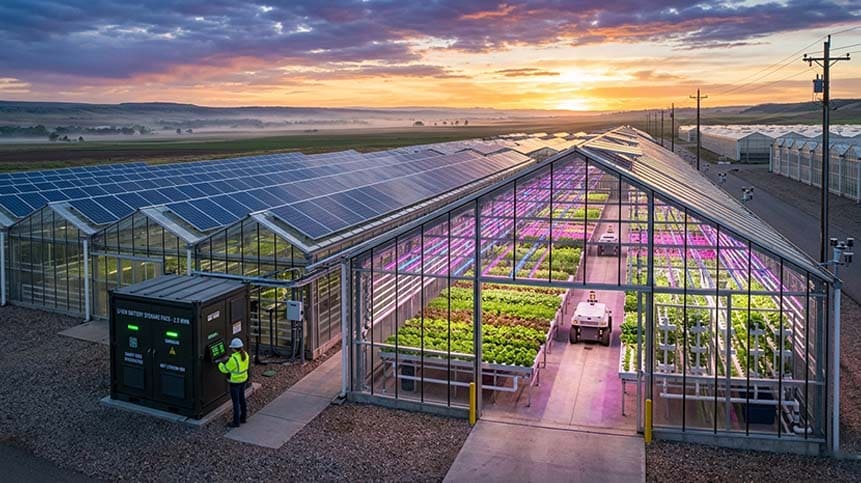
Today, lithium-ion battery technology is enabling mobile, efficient, and intelligent agricultural lighting solutions. From greenhouse LED grow lights to solar insect traps and livestock facility illumination, battery-powered lighting systems are improving productivity while reducing operational costs.
In this article, we explore:
-
Key applications of lithium-ion battery packs in agricultural lighting
-
The economic and environmental benefits
-
Market trends driving adoption
-
How battery technology supports smart and precision agriculture
For agricultural equipment manufacturers and smart farming developers, lithium battery systems are quickly becoming a core enabling technology.
The Role of Lighting in Modern Agriculture
Lighting is a critical factor influencing plant growth, pest control, and livestock productivity.
In controlled agriculture environments, lighting determines:
-
photosynthesis efficiency
-
crop yield
-
flowering cycles
-
livestock growth rhythms
According to research published by the U.S. Department of Agriculture (USDA) and horticulture technology groups, optimized lighting strategies can increase crop yield by 20%–40% in greenhouse environments.
External reference:
https://www.usda.gov
However, achieving precise lighting control requires reliable energy systems, particularly in:
-
remote farms
-
greenhouses
-
vertical farms
-
mobile agricultural equipment
-
This is where lithium-ion battery packs play a major role.
Why Lithium-Ion Batteries Are Ideal for Agricultural Lighting
Compared with traditional lead-acid batteries, lithium-ion batteries offer significant advantages for agricultural equipment.
Key Performance Advantages
|
Feature
|
Lithium-Ion Battery
|
Lead-Acid Battery
|
|---|---|---|
|
Energy Density
|
High
|
Low
|
|
Weight
|
Lightweight
|
Heavy
|
|
Cycle Life
|
2000–5000 cycles
|
300–500 cycles
|
|
Charging Efficiency
|
90–95%
|
70–80%
|
|
Maintenance
|
Minimal
|
High
|
|
Operating Temperature Range
|
Wide
|
Limited
|
Data source references:
International Energy Agency (IEA)
Because agricultural lighting often requires continuous operation and outdoor deployment, lithium batteries provide the reliability and efficiency required for modern farming systems.
Applications of Lithium-Ion Battery Packs in Agricultural Lighting
Lithium-ion battery systems are used in several important agricultural lighting scenarios.
1. Mobile Greenhouse and Vertical Farming Grow Lights
Greenhouses and vertical farms rely heavily on LED grow lighting systems to optimize plant growth.
Lithium battery packs provide portable energy solutions for:
-
mobile lighting racks
-
robotic grow light platforms
-
automated vertical farm systems
Benefits
Grid Independence
Battery-powered lighting systems allow farms to operate independently from unstable power grids.
This is particularly valuable in:
-
rural farming regions
-
developing agricultural zones
-
temporary farming installations
Precision Light Recipes
Different crops require different light wavelengths.
For example:
|
Crop Type
|
Preferred Light Spectrum
|
|---|---|
|
Lettuce
|
Blue + Red
|
|
Tomatoes
|
Red dominant
|
|
Strawberries
|
Balanced spectrum
|
Lithium battery systems allow automated lighting platforms to deliver precise photoperiod control, improving crop yield and quality.
Energy Cost Optimization
Many farms charge battery systems during off-peak electricity hours and discharge power during peak demand periods.
This approach can reduce electricity expenses by 15%–30% annually, depending on local energy pricing.
2. Solar-Powered Intelligent Insect Traps
One of the most widespread agricultural applications of lithium batteries is solar pest control systems.
A typical smart insect trap system consists of:
Solar panel
Lithium-ion battery pack
LED attractant light
Electronic insect killing grid
IoT monitoring module
System Advantages
Flexible Deployment
Unlike wired systems, solar insect traps can be installed anywhere in a field, without trenching or power cables.
This enables full coverage across:
-
orchards
-
rice fields
-
vegetable farms
-
vineyards
Chemical-Free Pest Control
Solar insect traps reduce dependence on pesticides.
Research from agricultural technology studies shows these systems can reduce pesticide usage by 30–50% in some crop environments.
External reference:
Food and Agriculture Organization (FAO)
Long Operational Lifespan
Lithium battery packs used in solar insect traps typically operate for 3–5 years without replacement, making them ideal for seasonal agricultural use.
3. Livestock and Poultry Farm Lighting Systems
Lighting also plays an essential role in livestock farming.
In poultry farms, lighting directly influences:
-
egg production cycles
-
bird growth rate
-
feeding behavior
Similarly, dairy farms use lighting to regulate cow activity patterns.
Lithium Battery Applications
Battery systems are used for:
-
backup lighting power
-
mobile barn lighting
-
emergency lighting systems
-
off-grid livestock facilities
Stable Lighting Cycles
Maintaining consistent light duration improves poultry productivity.
Studies show optimized lighting schedules can increase egg production by 5–10% annually.
Market Significance of Lithium Battery Adoption in Agriculture
The use of lithium batteries in agricultural lighting is not just a technological upgrade — it represents a shift toward intelligent farming ecosystems.
1. Enabling Smart Agriculture and IoT Farming
Battery-powered agricultural equipment forms the foundation of IoT-enabled farming systems.
Devices powered by lithium batteries include:
-
agricultural robots
-
environmental sensors
-
mobile lighting systems
-
pest monitoring stations
These devices collect real-time data used for:
-
crop health monitoring
-
soil condition analysis
-
automated lighting adjustments
This integration supports precision agriculture, a rapidly expanding sector.
2. Increased Crop Productivity and Quality
Controlled lighting environments allow farmers to grow crops outside natural seasonal limitations.
Examples include:
-
winter strawberry production
-
year-round herb cultivation
-
indoor leafy vegetable farming
Vertical farms powered by LED grow lights can achieve 10–15 times higher yield per square meter compared to traditional agriculture.
External reference:
NASA Controlled Environment Agriculture Research
3. Reduction in Long-Term Operational Costs
Although lithium battery systems require higher initial investment, their total cost of ownership (TCO) is significantly lower over time.
|
Cost Factor
|
Lithium Battery System
|
Traditional Power System
|
|---|---|---|
|
Maintenance Cost
|
Low
|
High
|
|
Replacement Frequency
|
5–10 years
|
2–3 years
|
|
Energy Efficiency
|
High
|
Moderate
|
|
Labor Cost
|
Lower
|
Higher
|
As automation increases, farms can significantly reduce labor costs associated with manual lighting control.
4. Sustainability and Environmental Benefits
Agriculture faces increasing pressure to reduce its environmental footprint.
Lithium-ion battery systems support sustainability in several ways.
Renewable Energy Integration
Lithium batteries integrate seamlessly with solar photovoltaic systems, allowing farms to operate partially or fully off-grid.
Reduced Carbon Emissions
Replacing diesel generators with solar-battery systems significantly lowers greenhouse gas emissions.
Reduced Chemical Use
Solar insect traps reduce pesticide application, improving soil health and food safety.
5. New Markets and Business Opportunities
The integration of lithium batteries in agriculture is also creating new technology markets.
Emerging sectors include:
-
smart agricultural robotics
-
autonomous crop monitoring drones
-
mobile LED grow lighting systems
-
containerized vertical farms
Industry analysts estimate the global smart agriculture market could exceed USD 30 billion by 2030.
Source:
https://www.grandviewresearch.com
This growth directly increases demand for custom lithium battery packs designed specifically for agricultural equipment.
How Custom Lithium Battery Packs Support Agricultural Equipment
Agricultural lighting systems often require custom battery designs to match specific operational conditions.
Typical customization factors include:
Battery voltage configuration
Capacity requirements
Operating temperature range
Waterproof and dustproof enclosure
Battery management system (BMS)
At A&S Power, we work with agricultural equipment manufacturers to design lithium battery packs that deliver:
-
long cycle life
-
high safety standards
-
reliable outdoor performance
-
integration with solar energy systems
The Future of Battery-Powered Agricultural Lighting
Several technology trends will further accelerate adoption.
AI-Driven Crop Lighting
Artificial intelligence will analyze crop growth data and automatically adjust lighting levels.
Autonomous Agricultural Robots
Battery-powered robots will deliver lighting, nutrients, and monitoring functions across large farms.
Urban and Vertical Agriculture
Lithium batteries will play a key role in warehouse farms, container farms, and rooftop agriculture.
These developments are transforming agriculture into a data-driven, high-efficiency industry.
Conclusion
Lithium-ion battery packs are rapidly becoming a critical technology in modern agricultural lighting systems.
Their ability to provide portable, efficient, and renewable energy makes them ideal for a wide range of farming applications.
From greenhouse grow lights and solar insect traps to livestock facility lighting, lithium battery systems enable:
-
smarter farming operations
-
improved crop productivity
-
lower operational costs
-
reduced environmental impact
As agriculture continues to adopt automation, IoT, and renewable energy technologies, lithium battery packs will remain at the center of this transformation.
FAQ Section
Why are lithium batteries used in agricultural lighting equipment?
Lithium batteries offer high energy density, long cycle life, and excellent efficiency, making them ideal for powering mobile or solar agricultural lighting systems such as grow lights and insect traps.
Can agricultural lighting systems operate fully off-grid?
Yes. Many agricultural lighting systems combine solar panels with lithium battery packs, enabling completely off-grid operation without dependence on electrical infrastructure.
How long do lithium batteries last in agricultural equipment?
Most lithium battery packs used in agricultural equipment last 3–10 years, depending on usage cycles, environmental conditions, and battery quality.
Are lithium batteries safe for outdoor agricultural environments?
Yes. Modern lithium battery packs include Battery Management Systems (BMS) that provide protection against overcharge, over-discharge, overheating, and short circuits.
Can lithium batteries reduce farming costs?
Although initial costs are higher, lithium battery systems reduce long-term expenses through higher efficiency, lower maintenance requirements, and longer service life.
-

 May.2026.08.0521700 Battery Pack with BMS: Design, Safety and Custom SolutionsLearn More
 -
 May.2026.08.04Smart Beauty Equipment Battery Pack ManufacturerLearn More
 -
 May.2026.08.04High Reliability Polymer Battery for Handheld Dental DevicesLearn More
 -
 May.2026.08.04Ultra Thin Lithium Polymer Battery 0.4mm 0.5mm Custom GuideLearn More
 -
 May.2026.07.30Smoke Detector Battery Guide: Choosing the Right Battery for Reliable Fire ProtectionLearn More