




What Battery Is Used in Portable Guitar Amplifiers? A Complete Technical & Practical Guide
As someone who has worked closely with portable audio systems and lithium battery solutions for consumer electronics and OEM amplifier designs, I often get one recurring question from musicians:
What battery is actually used in portable guitar amplifiers, and which one performs best in real-world use?
The answer is more technical than most people expect. Portable guitar amplifiers are not limited to a single battery type—instead, they rely on different chemistries depending on design, portability goals, power output, and cost.
In this guide, I’ll break down all major battery types used in portable guitar amplifiers, compare their performance, and help you understand which option fits different playing scenarios.
Overview – Why Battery Choice Matters in Guitar Amplifiers
Portable guitar amplifiers must balance:
- Power stability (clean tone output)
- Weight (portability for musicians)
- Runtime (practice or performance duration)
- Safety (heat and discharge control)
- Cost efficiency
Most modern portable amps are designed around low-voltage DC systems (6V–18V range) using either disposable or rechargeable batteries.
Main Battery Types Used in Portable Guitar Amplifiers
1. Alkaline Batteries (Most Common Traditional Choice)
Alkaline batteries—especially 9V and AA cells—are still widely used in entry-level portable amps.
Key characteristics:
- Nominal voltage: 1.5V per cell (9V typical pack)
- Primary (non-rechargeable)
- Widely available worldwide
Advantages:
- Cheap and easy to replace
- Stable enough for low-power amps
- Long shelf life (5–10 years)
Disadvantages:
- Voltage drops under load
- Not environmentally friendly (single-use)
- Limited runtime in high-output amps
Industry observation: alkaline batteries can drop below usable voltage within hours in high-draw audio systems, affecting tone consistency significantly
2. Lithium Primary Batteries (High-Performance Disposable Option)
Lithium AA or 9V primary batteries are an upgraded version of alkaline.
Key characteristics:
- Higher energy density
- Lighter weight
- More stable voltage curve
Advantages:
- Longer runtime than alkaline
- Better performance in cold environments
- Very low self-discharge
Disadvantages:
- Higher cost
- Not rechargeable
These are often used in touring musicians’ backup systems where reliability is critical.
3. NiMH Rechargeable Batteries (Budget Rechargeable Option)
Nickel-Metal Hydride (NiMH) batteries are widely used in portable amps with AA battery slots.
Key characteristics:
- Nominal voltage: 1.2V per cell
- Rechargeable (500–1000 cycles typical)
- Common in consumer electronics
Advantages:
- Environmentally friendly
- Stable discharge curve
- Cost-effective long term
Disadvantages:
- Lower voltage than alkaline (can reduce max volume slightly)
- Requires external charger
Interestingly, NiMH batteries often deliver more stable tone under load than alkaline, even with lower nominal voltage, because of flatter discharge behavior
4. Lithium-Ion (Li-ion) Batteries – Modern Standard
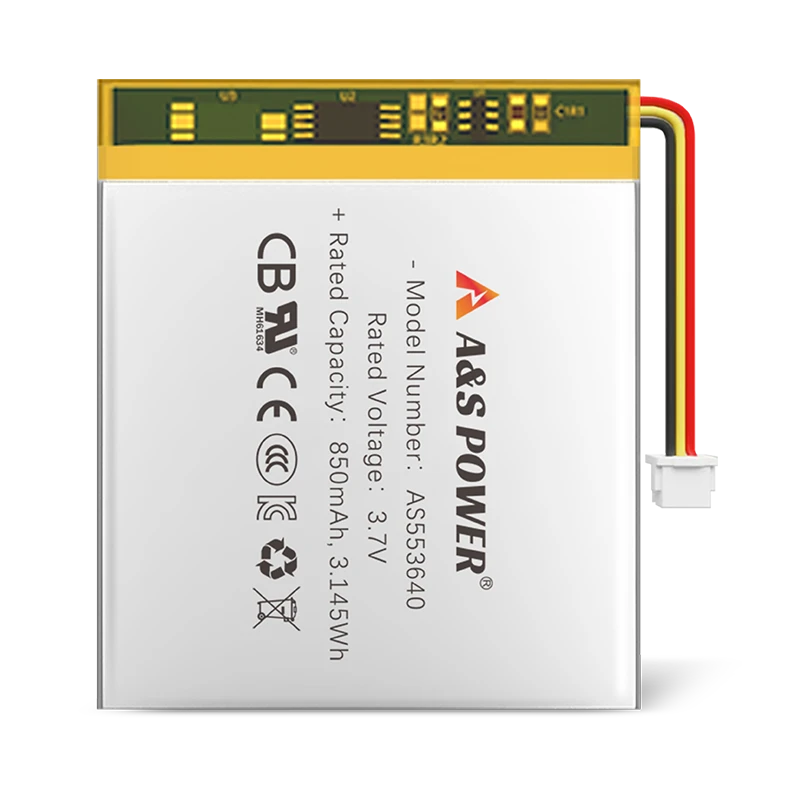
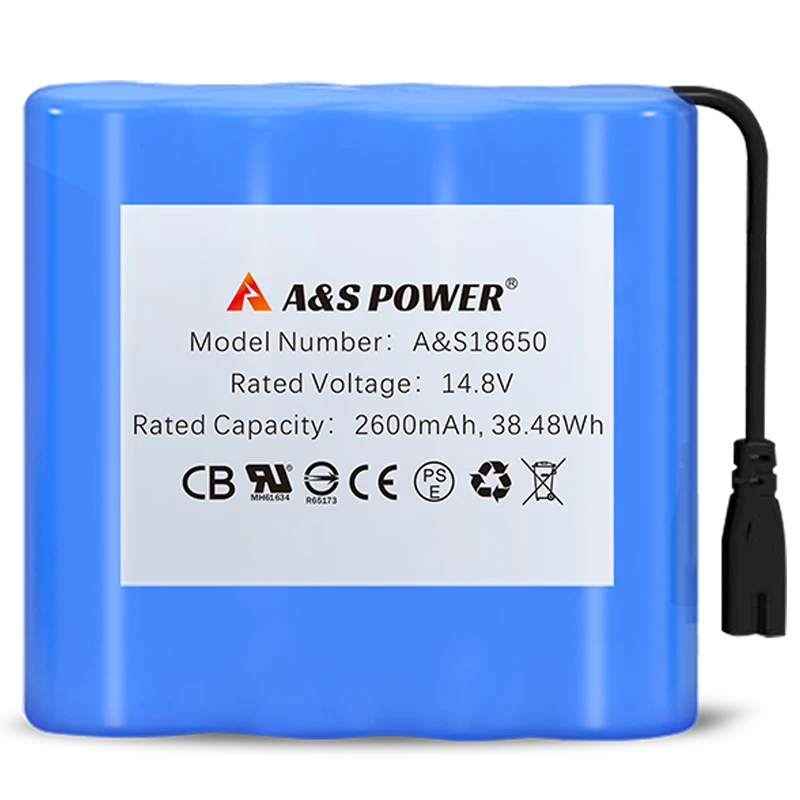
Lithium-ion batteries are now the dominant technology in premium portable guitar amplifiers.
Key characteristics:
Advantages:
- Long runtime (4–12 hours typical depending on amp)
- Lightweight
- Stable voltage output
- Rechargeable (500–1000+ cycles)
Disadvantages:
- Requires protection circuit (BMS)
- More expensive
- Safety considerations if poorly designed
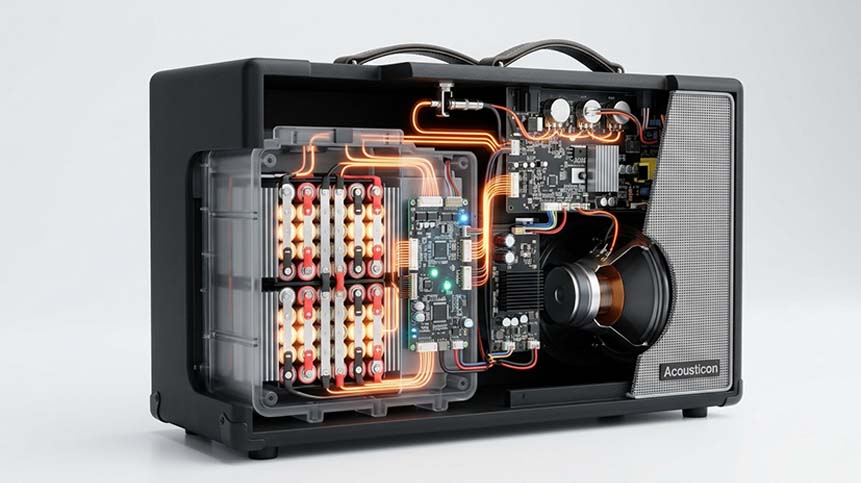
Modern amplifier systems increasingly integrate built-in Li-ion battery packs or external Li-ion power modules for consistent touring performance.
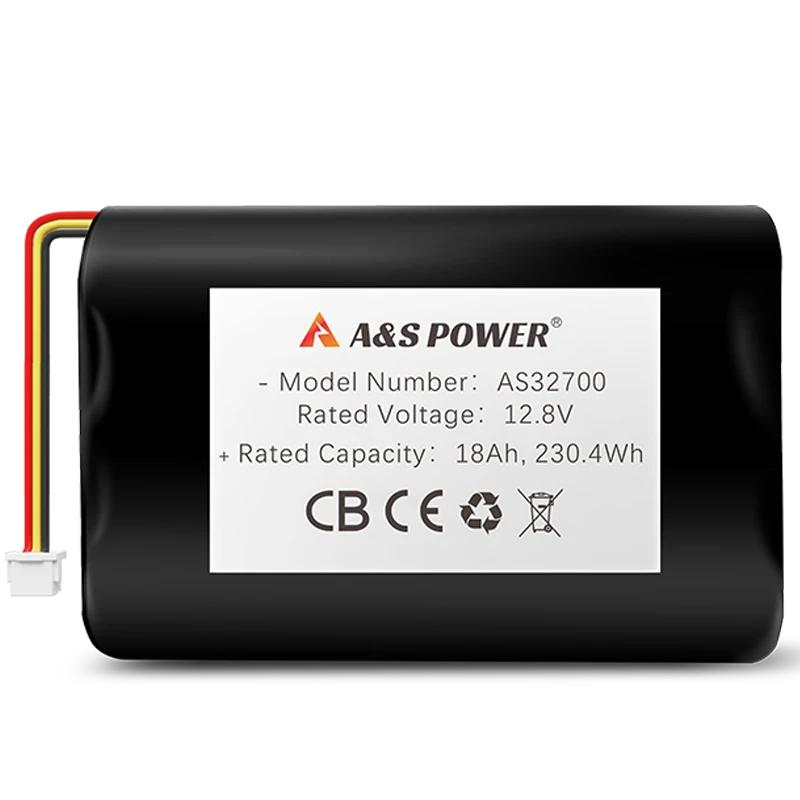
5. Lithium Iron Phosphate (LiFePO4) – Premium Stability Option
This is a specialized subtype of lithium battery increasingly used in professional audio gear.
Advantages:
- Extremely stable voltage curve
- Very safe chemistry (thermal stability)
- 2000+ charge cycles
Disadvantages:
- Heavier than Li-ion
- Higher upfront cost
This chemistry is often found in high-end portable PA systems and stage amplifiers.
Battery Comparison Table (Real-World Performance)
| Battery Type | Rechargeable | Runtime Stability | Weight | Cost | Best Use Case |
|---|---|---|---|---|---|
| Alkaline 9V | ❌ | Medium | Medium | Low | Entry-level amps |
| Lithium Primary | ❌ | High | Low | Medium | Backup power |
| NiMH AA | ✅ | High | Medium | Low | Practice amps |
| Li-ion | ✅ | Very High | Very Low | Medium–High | Modern portable amps |
| LiFePO4 | ✅ | Excellent | High | High | Professional stage use |
How Much Runtime Do Portable Guitar Amps Get?
Typical runtime depends on amplifier wattage and battery capacity.
Real-world estimates:
| Amp Type | Battery Type | Runtime |
|---|---|---|
| Mini practice amp (1–5W) | 9V alkaline | 3–10 hours |
| Modeling portable amp | Li-ion pack | 5–12 hours |
| Wireless amp system | Li-ion | 6–8 hours |
| High-output portable PA | LiFePO4 | 8–20 hours |
Important factor: volume level drastically affects runtime. Higher gain = higher current draw.
Why Lithium-Ion Is Becoming the Industry Standard
From an engineering standpoint, Li-ion dominates modern portable amplifiers because:
- Higher energy density (lighter for same runtime)
- Stable voltage under load
- Fast recharge capability
- Better integration with DSP-based amplifiers
As noted in battery engineering research, lithium-ion provides significantly higher energy density than NiMH or lead-acid systems
This is why brands like Roland and Fender increasingly use rechargeable lithium systems in portable amp designs.
Common Mistakes Musicians Make
1. Mixing battery types
This can cause voltage imbalance and damage.
2. Using low-quality rechargeables
Cheap cells often cannot supply peak current, causing distortion or shutdown.
3. Ignoring amp voltage range
Each amplifier has a safe operating voltage window.
4. Over-discharging lithium batteries
This reduces lifespan significantly.
Expert Recommendation
Based on industrial battery applications, here is the recommended usage model:
- Beginner: NiMH rechargeable batteries
- Intermediate: Lithium primary or NiMH
- Advanced musicians: Lithium-ion battery systems
- Professional stage: LiFePO4 systems
FAQ
Q1: Can I use rechargeable batteries in a guitar amplifier?
Yes. NiMH and Li-ion rechargeable batteries are widely used in modern portable amps, but compatibility depends on voltage requirements.
Q2: Why do some amps not work well with rechargeable batteries?
Some rechargeable batteries have lower voltage (like NiMH 1.2V vs alkaline 1.5V), which may slightly reduce maximum output.
Q3: Which battery lasts the longest in portable guitar amps?
Lithium-ion batteries generally provide the longest runtime and most stable performance.
Q4: Are lithium batteries safe for guitar amplifiers?
Yes, if they include proper protection circuits (BMS). Most commercial amp systems already include safety design.
Q5: Can I upgrade my amp to lithium-ion battery power?
Yes, but only if the amplifier supports the required voltage and current. Otherwise, it may damage the circuit.
Conclusion
Portable guitar amplifiers use a range of battery technologies, but the industry is clearly shifting toward lithium-ion and lithium-based rechargeable systems due to their efficiency, stability, and portability advantages.
From my experience working with OEM battery systems, the future of portable music gear is fully integrated rechargeable lithium power—balancing performance, safety, and mobility in a way traditional alkaline batteries cannot match.
-

 May.2026.08.0521700 Battery Pack with BMS: Design, Safety and Custom SolutionsLearn More
 -
 May.2026.08.04Smart Beauty Equipment Battery Pack ManufacturerLearn More
 -
 May.2026.08.04High Reliability Polymer Battery for Handheld Dental DevicesLearn More
 -
 May.2026.08.04Ultra Thin Lithium Polymer Battery 0.4mm 0.5mm Custom GuideLearn More
 -
 May.2026.07.30Smoke Detector Battery Guide: Choosing the Right Battery for Reliable Fire ProtectionLearn More