




Series vs Parallel Battery Connections: The Complete Guide for Lithium Battery Systems
Introduction
When designing or selecting a battery system for industrial equipment, electric vehicles, or electronic devices, one of the most important decisions involves how the battery cells are connected.
Two fundamental configurations dominate modern battery pack design:
-
Series connections
-
Parallel connections
Although these terms are frequently mentioned in discussions about lithium batteries, many device manufacturers and buyers are still unclear about how these configurations actually affect voltage, capacity, runtime, and system performance.
In this guide, I will explain the engineering principles behind series and parallel battery connections, how they influence power systems, and how real-world industrial equipment—such as forklifts, medical devices, and robotics—use these configurations to achieve optimal performance.
To make the concept easier to understand, I often compare batteries to water tanks connected through pipes. This analogy helps illustrate how voltage and capacity behave when batteries are combined.
Understanding Battery Voltage and Capacity
Before comparing series and parallel configurations, it is important to understand two core electrical characteristics of batteries:
|
Parameter
|
Meaning
|
Practical Impact
|
|---|---|---|
|
Voltage (V)
|
Electrical pressure that pushes current through a circuit
|
Determines whether a device can operate
|
|
Capacity (Ah)
|
Total amount of stored energy
|
Determines how long a device can run
|
|
Energy (Wh)
|
Voltage × Capacity
|
Indicates total stored energy
|
For example:
|
Battery Cell Type
|
Nominal Voltage
|
Capacity
|
|---|---|---|
|
Lithium Iron Phosphate (LiFePO4)
|
3.2V
|
100Ah
|
|
|
3.6–3.7V
|
2–5Ah
|
|
|
3.7V
|
Custom sizes
|
Understanding these parameters makes it much easier to see how series and parallel connections influence system performance.
Series Battery Connection: Increasing Voltage
A series connection links batteries end-to-end.
The positive terminal of one battery connects to the negative terminal of the next battery.
This arrangement increases the total voltage of the battery pack.
Example
If we connect four 3.2V lithium iron phosphate cells in series:
3.2V + 3.2V + 3.2V + 3.2V = 12.8V total voltage
However:
-
Capacity remains the same
-
Current capability remains similar
|
Configuration
|
Voltage
|
Capacity
|
|---|---|---|
|
Single Cell
|
3.2V
|
100Ah
|
|
4 Cells Series
|
12.8V
|
100Ah
|
Water Tank Analogy
Imagine stacking water tanks vertically.
The water pressure at the bottom increases because of gravity.
Similarly:
Series connection increases electrical pressure (voltage).
Parallel Battery Connection: Increasing Capacity
In a parallel connection, all positive terminals connect together, and all negative terminals connect together.
This configuration increases capacity while keeping voltage the same.
Example
Four 3.2V 100Ah batteries connected in parallel produce:
|
Configuration
|
Voltage
|
Capacity
|
|---|---|---|
|
Single Cell
|
3.2V
|
100Ah
|
|
4 Cells Parallel
|
3.2V |
400Ah
|
Water Tank Analogy
Instead of stacking tanks vertically, imagine placing them side-by-side and connecting their outlets.
The water pressure remains the same, but the total water volume increases.
Similarly:
Parallel connections increase energy storage and runtime.
Series vs Parallel: Key Differences
| Feature | Series Connection | Parallel Connection |
|---|---|---|
| Voltage | Increases | Remains same |
| Capacity | Same | Increases |
| Energy | Increases | Increases |
| Current capability | Same | Increases |
| Typical applications | EVs, forklifts, solar systems | Backup power, energy storage |
Both methods increase total energy, but they do so in different ways.
Why Most Battery Packs Use Series-Parallel Combinations
In real industrial battery systems, series or parallel alone is rarely enough.
Most battery packs combine both configurations.
This is called a series-parallel battery pack design.
Example: Electric Forklift Battery
Many forklifts require:
-
48V system voltage
-
high capacity for full-shift operation
Engineers often design the pack like this:
16 lithium iron phosphate cells (3.2V each)
Step 1 — Series Connection
16 × 3.2V = 51.2V
This matches a typical 48V forklift system.
Step 2 — Parallel Connection
If runtime needs to double, two series strings can be connected in parallel.
|
Configuration
|
Voltage
|
Capacity
|
|---|---|---|
|
16S1P
|
51.2V
|
100Ah
|
|
16S2P
|
51.2V
|
200Ah
|
This significantly increases operational runtime.
Applications of Series and Parallel Battery Configurations
Electric Vehicles
EV battery packs rely heavily on series connections to achieve high system voltage.
For example:
|
EV Battery Pack
|
Cells in Series
|
Voltage
|
|---|---|---|
|
Tesla Model battery modules
|
~96 cells
|
~350–400V
|
Higher voltage improves:
-
motor efficiency
-
power delivery
-
reduced current losses
Industrial Equipment
Devices such as:
-
electric forklifts
-
AGV robots
-
warehouse vehicles
typically require 48V or 72V battery systems.
These systems use series connections for voltage and parallel connections for runtime.
Consumer Electronics
Smart devices often rely on parallel connections to extend runtime without increasing voltage.
Examples include:
-
power banks
-
laptops
-
portable tools
Engineering Considerations When Designing Battery Packs
Battery pack design requires more than simply connecting cells.
Important engineering factors include:
Battery Management System (BMS)
A BMS monitors and protects cells by controlling:
-
overcharge protection
-
over-discharge protection
-
temperature monitoring
-
cell balancing
Reference:
https://www.nrel.gov
Cell Matching
Cells connected in series must have:
-
identical voltage
-
similar internal resistance
-
consistent capacity
Mismatched cells may cause premature battery degradation.
Thermal Management
Large battery packs must dissipate heat efficiently.
Industrial battery packs often integrate:
-
cooling plates
-
air flow channels
-
thermal sensors
How to Choose the Right Battery Configuration
When selecting a battery configuration, engineers typically evaluate three questions:
-
What voltage does the device require?
-
How long should the device operate?
-
What size and weight limitations exist?
|
Requirement
|
Recommended Configuration
|
|---|---|
|
Higher voltage
|
Series
|
|
Longer runtime
|
Parallel
|
|
Industrial power systems
|
Series + Parallel
|
Future Trends in Battery Pack Architecture
Battery technology continues to evolve.
Key trends include:
-
high-voltage EV platforms (800V systems)
-
modular battery pack architecture
-
smart BMS with cloud diagnostics
-
custom lithium battery solutions for OEM equipment
Manufacturers increasingly rely on custom battery pack engineering to match device requirements precisely.
Conclusion
Understanding the difference between series and parallel battery connections is essential for anyone involved in battery system design, device manufacturing, or industrial equipment development.
In simple terms:
-
Series connections increase voltage
-
Parallel connections increase capacity
Most real-world systems combine both methods to achieve the ideal balance between power output and runtime.
For equipment manufacturers, choosing the right configuration directly impacts:
-
system efficiency
-
operational stability
-
equipment lifespan
That is why many OEMs work with experienced battery manufacturers to design custom lithium battery packs optimized for their devices.
FAQ Section
What is the difference between series and parallel battery connections?
A series connection increases the total voltage of the battery pack, while a parallel connection increases the total capacity and runtime without changing voltage.
Can batteries be connected both in series and parallel?
Yes. Most industrial battery packs use series-parallel combinations to meet both voltage and capacity requirements.
Does connecting batteries in parallel increase power?
Parallel connections increase capacity and current capability, allowing devices to operate longer or handle higher loads.
What happens if batteries in series are mismatched?
Mismatched batteries may cause voltage imbalance, overheating, and reduced lifespan. This is why cell matching and BMS protection are essential.
-

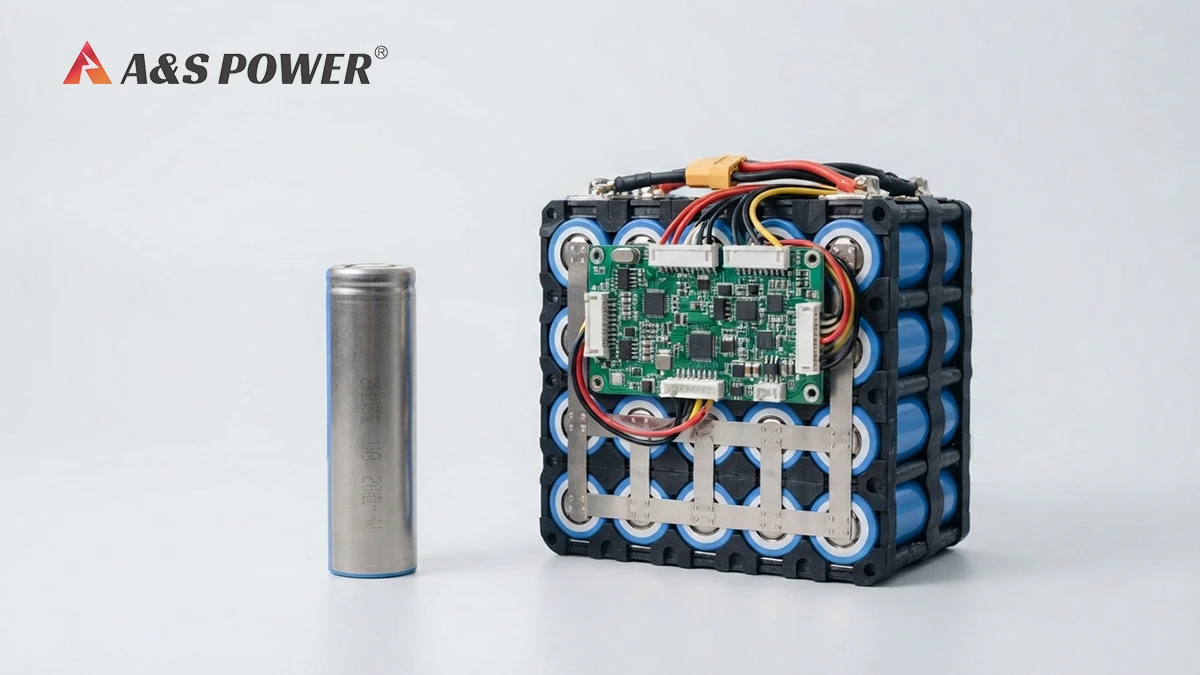 May.2026.08.0521700 Battery Pack with BMS: Design, Safety and Custom SolutionsLearn More
 -
 May.2026.08.04Smart Beauty Equipment Battery Pack ManufacturerLearn More
 -
 May.2026.08.04High Reliability Polymer Battery for Handheld Dental DevicesLearn More
 -
 May.2026.08.04Ultra Thin Lithium Polymer Battery 0.4mm 0.5mm Custom GuideLearn More
 -
 May.2026.07.30Smoke Detector Battery Guide: Choosing the Right Battery for Reliable Fire ProtectionLearn More