




14.8V 2600mAh Li-ion Battery for Handheld Printers Guide
As someone working closely with OEM battery solutions for portable and industrial devices, I often get asked a very specific question:
What makes a 14.8V 2600mAh Li-ion battery the right choice for handheld printers?
In this article, I want to break this down from a real engineering and application perspective—not just theory. I’ll cover performance characteristics, design structure, safety compliance, and how this battery chemistry supports modern handheld printing systems used in logistics, retail, warehousing, and field service operations.
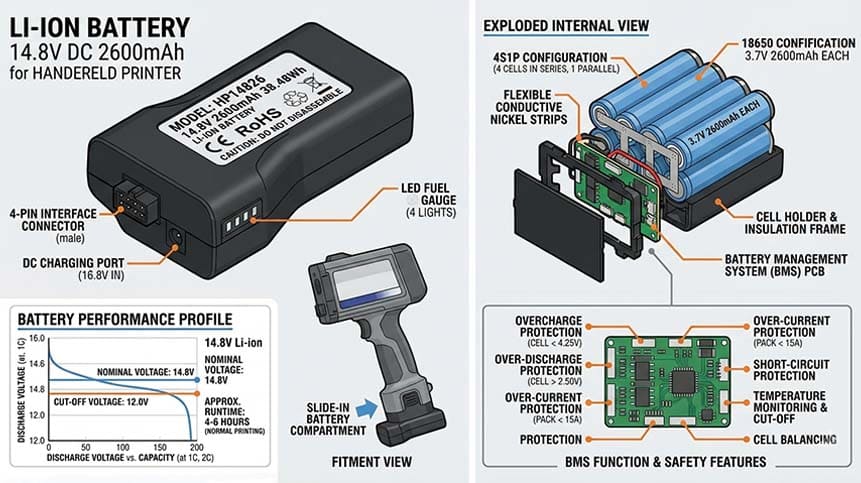
Understanding the 14.8V 2600mAh Li-ion Battery Structure
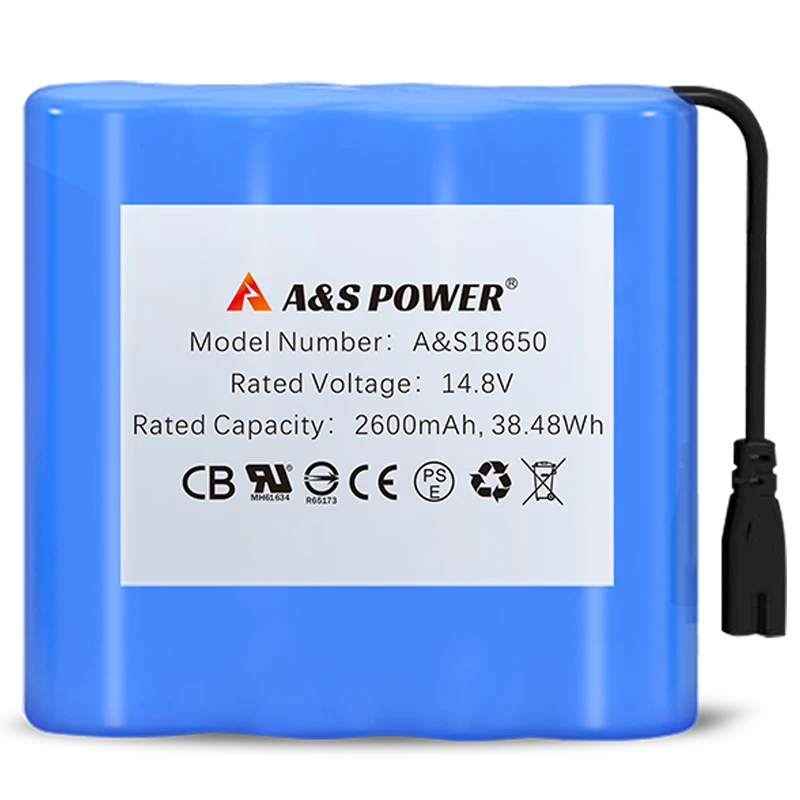
A 14.8V lithium-ion battery pack is typically built using a 4-series (4S) cell configuration, where each cell has a nominal voltage of 3.7V:
- 3.7V × 4 cells = 14.8V nominal voltage
- Fully charged voltage: 16.8V
- Typical capacity: 2600mAh (depending on cell configuration such as 4S1P or 4S2P)
Why 2600mAh is commonly used in handheld printers
From my experience in OEM projects, 2600mAh strikes a balance between:
- Compact size for handheld devices
- Sufficient runtime for thermal printing tasks
- Controlled heat generation during discharge
- Cost-effective cell configuration
Performance Requirements of Handheld Printers
Handheld printers (especially thermal and label printers) have very specific power demands.
Typical power consumption profile:
| Component | Power Usage |
|---|---|
| Thermal print head | High burst load |
| Bluetooth/WiFi module | Low continuous load |
| MCU control board | Stable low load |
| Motor (paper feed) | Medium intermittent load |
The key challenge is burst current stability, not just capacity.
A 14.8V Li-ion pack provides:
- Stable voltage during peak printing
- Reduced voltage drop under load
- Better thermal efficiency compared to 7.4V systems
Why 14.8V is Ideal for Handheld Printing Devices
Many manufacturers initially consider 7.4V battery systems. However, in real industrial environments, 14.8V systems offer several advantages:
1. Higher efficiency power delivery
Higher voltage means lower current for the same power output:
- Lower I²R losses
- Reduced heat generation
- Improved battery life cycle stability
2. Better support for high-speed printing
Modern handheld printers require rapid heating of thermal heads. 14.8V packs ensure:
- Faster response time
- More stable printing density
- Reduced print lag in cold environments
3. Improved system compatibility
Many industrial printer boards are designed for 12V–16V input range, making 14.8V an optimal midpoint.
Real-World Application Scenarios
In my work with OEM clients, I see handheld printers used in:
Logistics & Warehousing
- Shipping label printing
- Barcode generation
- Inventory tracking
Retail & Point-of-Sale
- Mobile receipt printing
- On-the-go billing systems
Field Service Industry
- Utility inspection reports
- On-site documentation printing
Healthcare & Mobile Documentation
- Patient label printing
- Portable record systems
Technical Design Considerations
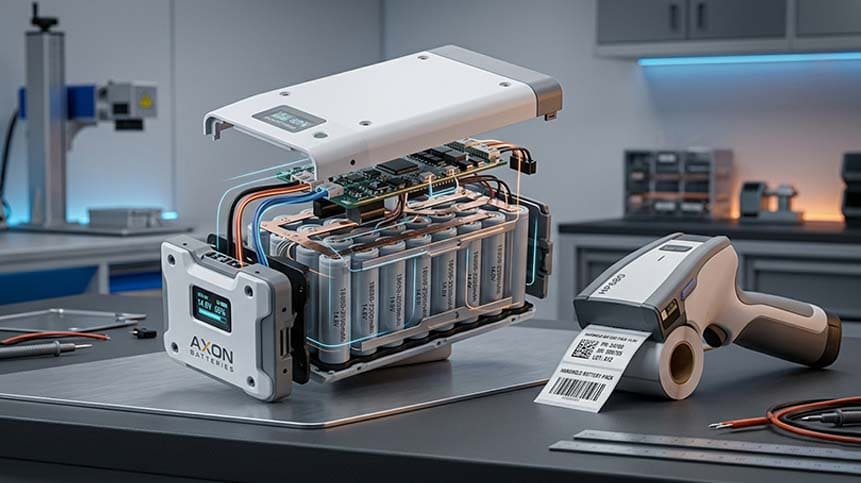
When designing a 14.8V 2600mAh battery pack for handheld printers, I usually focus on the following engineering factors:
1. Cell selection consistency
Matched internal resistance cells are critical for:
- Stable discharge curves
- Longer cycle life
- Reduced imbalance risk
2. Battery Management System (BMS)
A proper BMS includes:
- Overcharge protection
- Over-discharge protection
- Short-circuit protection
- Temperature monitoring
3. Mechanical structure design
For handheld printers, space is limited:
- Slim rectangular pack design
- Shock-resistant casing
- Lightweight polymer housing
Battery Safety Standards and Compliance
For international markets (especially EU and US), compliance is essential.
Key certifications include:
- IEC 62133 (Safety for portable sealed batteries)
- UN38.3 (Transport safety testing)
- UL 2054 (Household and commercial batteries safety)
- CE marking (EU conformity)
External reference:
- IEC official standards: https://www.iec.ch
- UL Standards: https://www.ul.com
These standards ensure safe transport, usage, and integration into end devices.
Performance Data Comparison
Below is a simplified comparison based on typical OEM battery configurations used in handheld printers:
| Battery Type | Voltage | Capacity | Runtime Stability | Heat Control | Application Fit |
|---|---|---|---|---|---|
| Li-ion 7.4V 2000mAh | 7.4V | 2000mAh | Medium | Medium | Light-duty printers |
| Li-ion 11.1V 2200mAh | 11.1V | 2200mAh | Good | Good | Mid-range devices |
| Li-ion 14.8V 2600mAh | 14.8V | 2600mAh | Excellent | Excellent | Industrial handheld printers |
OEM Customization Advantages
From a manufacturing perspective, customization is a major value driver.
We typically offer:
Electrical customization
- Voltage tuning (11.1V / 14.8V options)
- Capacity adjustment (2000mAh–5000mAh)
- High discharge rate design
Mechanical customization
- Shape and dimension matching
- Connector type (JST / Molex / custom)
- Cable length adjustment
Branding support
- Private label printing
- OEM packaging
- Serial tracking system integration
Reliability and Lifecycle Expectations
A high-quality 14.8V 2600mAh battery typically delivers:
- 500–800 full charge cycles (standard industrial usage)
- Stable performance for 1.5–3 years depending on environment
- Low degradation under moderate discharge conditions
Key factors affecting lifespan:
- Temperature exposure
- Charging behavior
- Load consistency
Engineering Challenges & Solutions
In handheld printer projects, I often see three common challenges:
1. Voltage drop during high-speed printing
Solution: use low internal resistance cells
2. Overheating during continuous use
Solution: improve thermal dissipation and BMS cutoff control
3. Size constraints
Solution: high-density lithium cell layout optimization
Industry Trends
From a global perspective, handheld printing devices are moving toward:
- Wireless integration (Bluetooth + WiFi printing)
- Lightweight battery systems
- Faster charging capability (fast-charge Li-ion packs)
- Higher energy density designs
AI-driven logistics systems are also increasing demand for portable, reliable power solutions, making 14.8V Li-ion packs more relevant than ever.
Conclusion
From my perspective working with OEM battery systems, the 14.8V 2600mAh Li-ion battery is one of the most balanced power solutions for handheld printers today. It delivers the right mix of voltage stability, compact design, and industrial reliability.
As handheld printing technology continues to evolve, especially in logistics and field service sectors, the demand for efficient and safe lithium battery systems will only increase.
FAQ - 14.8V 2600mAh Li-ion Battery for Handheld Printers
Q1: How long does a 14.8V 2600mAh battery last in a handheld printer?
It depends on print frequency and device efficiency, but typically it supports several hours of intermittent printing under normal industrial use.
Q2: Can this battery be replaced with a 7.4V battery?
Not directly. The system must be designed for 14.8V input; using a lower voltage battery may cause malfunction or reduced performance.
Q3: Is 2600mAh enough for industrial use?
Yes, for most handheld printing tasks it provides a balanced runtime and size efficiency. Higher capacities can be customized if needed.
Q4: Is this battery safe for air transport?
Yes, if it passes UN38.3 testing, it is compliant for international shipping.
Q5: What is the lifespan of this battery?
Typically 500–800 cycles depending on usage and charging conditions.
-

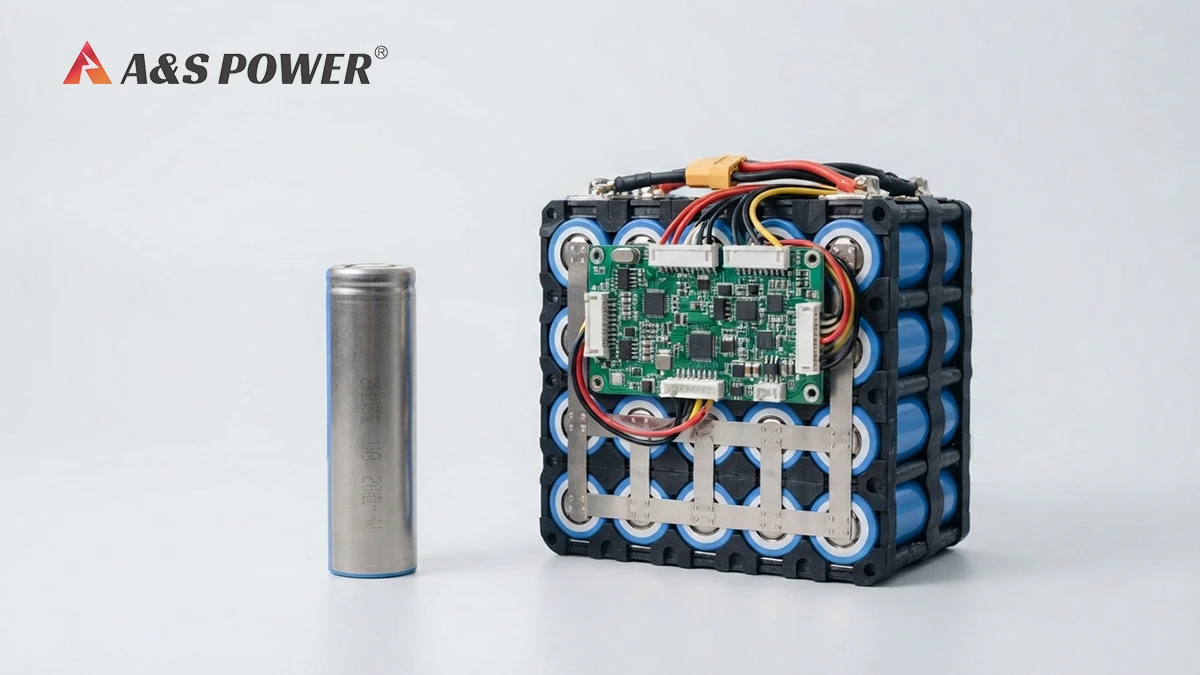 May.2026.08.0521700 Battery Pack with BMS: Design, Safety and Custom SolutionsLearn More
 -
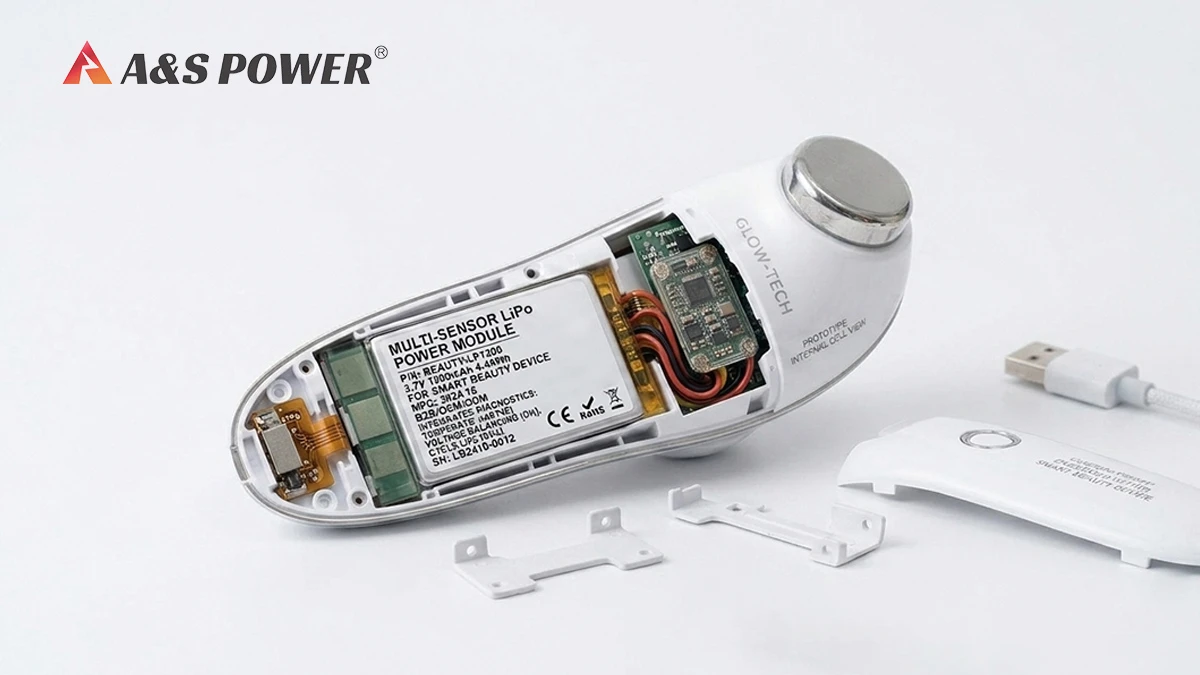 May.2026.08.04Smart Beauty Equipment Battery Pack ManufacturerLearn More
 -
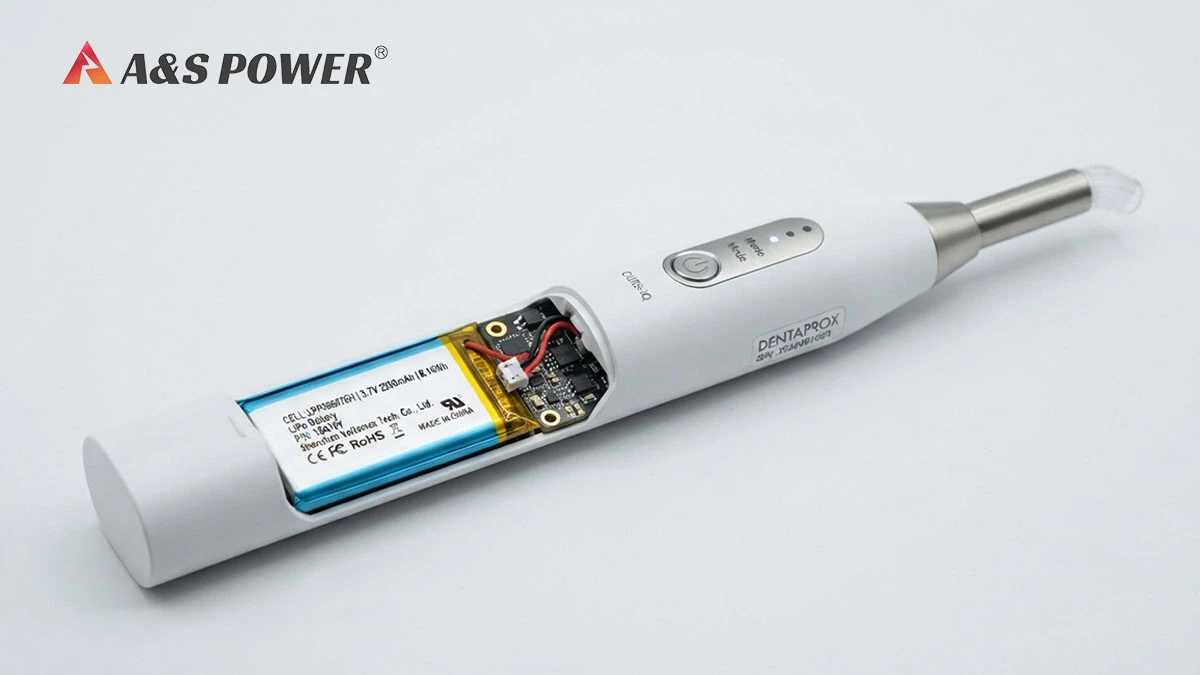 May.2026.08.04High Reliability Polymer Battery for Handheld Dental DevicesLearn More
 -
 May.2026.08.04Ultra Thin Lithium Polymer Battery 0.4mm 0.5mm Custom GuideLearn More
 -
 May.2026.07.30Smoke Detector Battery Guide: Choosing the Right Battery for Reliable Fire ProtectionLearn More