




How to Ship Lithium Batteries Internationally (IATA Rules, Labels & Documents Guide)
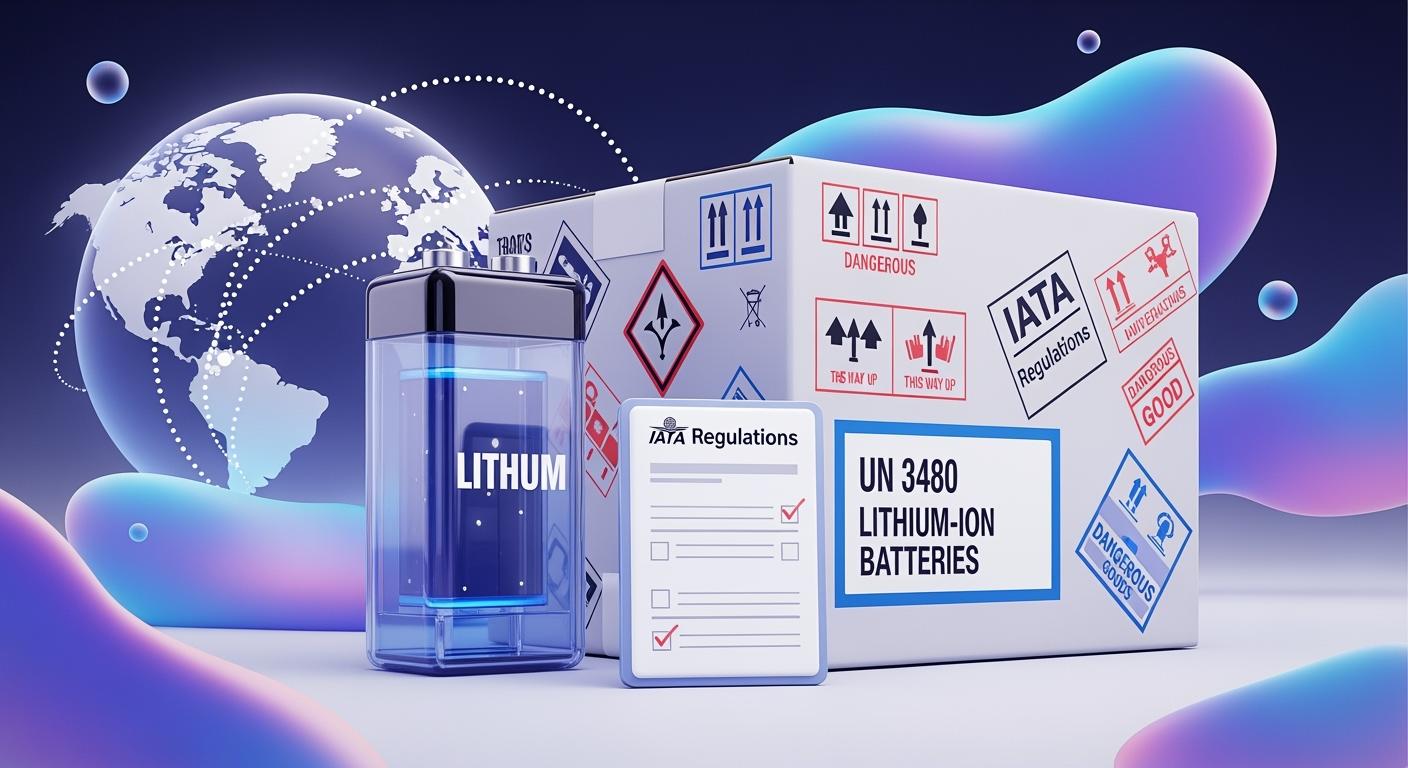
You need to follow IATA rules to ship lithium batteries. First, find out what type of battery you have. Next, use packaging that is approved. Put the right labels on your package. Fill out all the needed documents. Pick a carrier that follows the rules. These steps keep your shipment safe. They also help you avoid expensive errors.
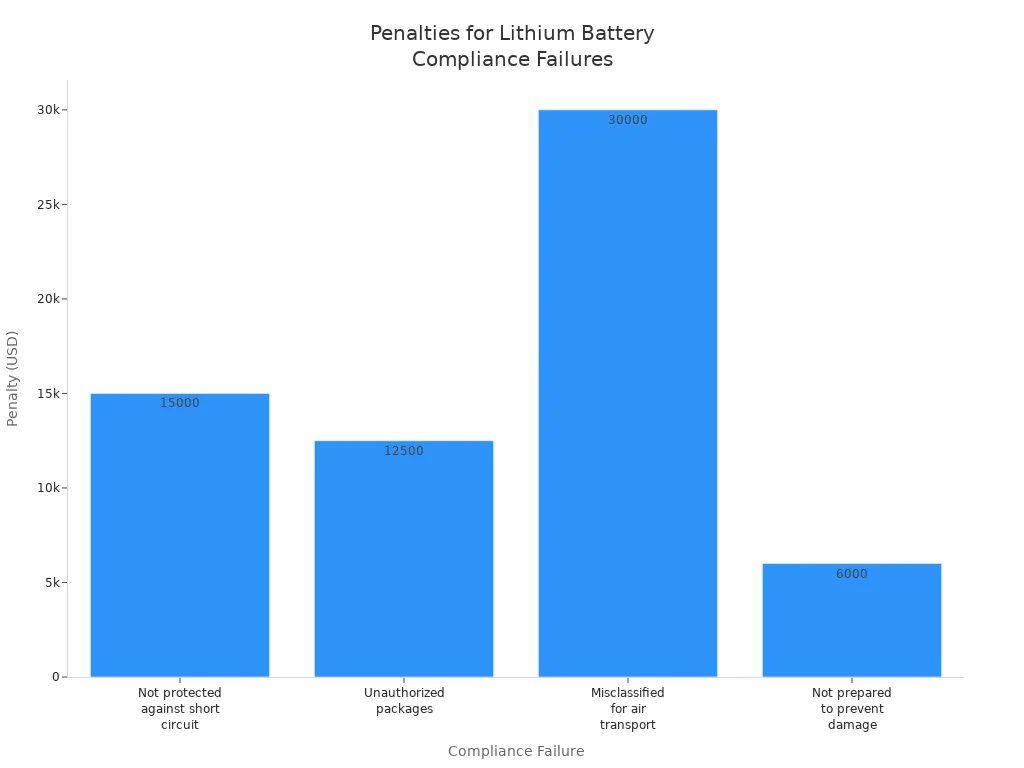
Safety and following the law are important. If you do not follow IATA rules, you can get big fines.
| Compliance Failure | Description | Penalty |
|---|---|---|
| Batteries not protected against short circuit | Packaging must stop short circuits. | $15,000 |
| Unauthorized packaging | Only use packaging that is approved for each battery. | $12,500 |
| Transport on passenger aircraft or misclassification | Know which batteries you can send by air. | $30,000 |
| Poor damage prevention | Use padding so batteries do not break. | $6,000 |
A lithium battery guide gives you easy steps. It tells you about special things to think about. It shares trusted resources for safe shipping around the world.
Key Takeaways
- Find out what kind of lithium battery you are sending. Lithium-ion and lithium metal batteries have different rules. They also have different limits.
- Always pack batteries in a safe way to stop damage. This also helps stop short circuits. Use strong boxes and soft padding to protect batteries when shipping.
- Put the right hazard labels on your packages. This helps people handle them safely. It also makes sure you follow the rules.
- Fill out all the shipping papers before you send batteries. The right paperwork helps you avoid delays and fines.
- Follow the 30% state of charge rule for lithium-ion batteries. This lowers the chance of fires when flying.
IATA Regulations for Shipping Lithium Batteries
Why IATA Rules Matter
You have to follow IATA rules when you send lithium batteries by air. These rules help keep people, things, and nature safe. If you break the rules, fires can start. You could lose your cargo or someone could get hurt. You might also have to pay big fines. The FAA has charged companies up to $170,000 for not classifying lithium batteries right. Fires from batteries can ruin cargo. They can slow down business and make insurance cost a lot.
IATA changes its rules every year. They do this because of new tech, new batteries, and safety worries. Always check the newest rules before you ship.
| Regulation Description | Details |
|---|---|
| Forbidden on passenger aircraft | Lithium-ion cells and batteries sent as cargo are forbidden on passenger aircraft since 1 April 2016. |
| State of Charge (SoC) requirement | Lithium-ion cells and batteries must be offered for transport with a SoC not exceeding 30% of their rated capacity. |
| Carry-on luggage allowance for spare batteries | Spare Lithium-ion batteries not exceeding 100Wh are permitted in carry-on luggage. |
| Maximum allowance for larger spare batteries | A maximum of 2 spare Lithium-ion batteries exceeding 100Wh but not exceeding 160Wh are allowed in carry-on luggage with airline approval. |
| Restrictions on checked luggage | It is expressly forbidden to check-in luggage containing Lithium-ion batteries. |
Lithium Ion vs. Lithium Metal
It is important to know the difference between lithium-ion and lithium metal batteries. Lithium-ion batteries store power for things you can charge again, like phones and laptops. Lithium metal batteries cannot be charged again. They give power to things like watches and medical tools.
The rules for each battery type are not the same. For lithium-ion, the cell can be up to 20 Wh and the battery up to 100 Wh. For lithium metal, the cell can have 1 gram of lithium and the battery can have 2 grams. You must follow these limits to ship batteries safely.
| Type of Storage | Cell or Battery | Capacity limit for “small” devices |
|---|---|---|
| Lithium ion | Cell | 20 Wh |
| Lithium ion | Battery | 100 Wh |
| Lithium metal | Cell | 1 g lithium content |
| Lithium metal | Battery | 2 g lithium content |
Dangerous Goods Classification
IATA says lithium batteries are dangerous goods. You have to test each battery using the UN Manual of Tests and Criteria. Every battery needs safety parts, like vents and short circuit protection. If you do not classify batteries the right way, fires can happen. Batteries can melt and you can get big fines.
Always use the right packaging, labels, and papers when you ship lithium batteries. This keeps everyone safe and helps you stay out of trouble.
| Criteria | Description |
|---|---|
| Testing Requirements | Each cell or battery must be tested per the UN Manual of Tests and Criteria Part III Subsection 38.3. |
| Safety Features | Each cell and battery must have a safety venting device or be designed to prevent violent rupture. |
| Short Circuit Prevention | Each cell and battery must prevent external short circuits. |
| Reverse Current Prevention | Batteries with parallel cells must prevent dangerous reverse current flow. |
| Quality Management | Cells and batteries must be made under a quality management program. |
General Requirements to Ship Lithium Batteries
Battery Types and Limits
You need to know what kind of battery you are sending. Lithium-ion batteries are used in things you can charge, like phones and laptops. Lithium metal batteries are found in items like watches and medical tools. Each battery type has its own weight limit. Lithium-ion batteries cannot be heavier than 10 kg in one package. Lithium metal batteries cannot be more than 2.5 kg in a package. You must check the watt-hour rating for lithium-ion batteries. For lithium metal batteries, check the amount of lithium inside.
Always check the UN number for your battery. Use UN3480 for lithium-ion and UN3090 for lithium metal.
Packaging and Materials
You need strong boxes to ship lithium batteries safely. The box should not break if it is dropped or hit. Put padding inside so the batteries do not move around. Every battery must be safe from short circuits. Keep batteries apart from each other and away from metal things.
- Use inner packaging so batteries do not touch.
- Close the box with strong tape.
- Write the net weight outside if you send more than one box.
Labeling and Marking
Labels help people know what is inside your box. You must use the right hazard labels and marks.
| Label Type | Description |
|---|---|
| Cargo Aircraft Only (CAO) | Needed for big batteries. Shows the box can only go on cargo planes. |
| Lithium Battery Mark | Needed for small batteries. Has a red dashed border and a battery picture. |
| Class 9 Hazard Label | Needed for shipments with more risk. Warns about safety dangers. |
Tip: Put labels on the outside of the box where they are easy to see. Do not cover them with tape or other stickers.
Documentation Needed
You need to get papers ready before you ship lithium batteries. These papers tell carriers and customs what you are sending.
| Requirement | Description |
|---|---|
| Proper shipping name and UN number | Write the right name and UN number for the battery type. |
| Shipping papers | Add sender and receiver details, number of boxes, and weight. |
| Dangerous goods declaration | Say your shipment has dangerous goods. List the type and amount. |
| Marking and labeling | Show all hazard labels and handling steps. |
| Shipper’s Declaration | Fill out the form and add 'IB' after the PI number for lithium batteries. |
| Training | You must finish dangerous goods training before shipping. |
You must follow all lithium battery rules to avoid delays and fines. Shipping lithium batteries the right way helps keep people and things safe.
Step-by-Step: Safely Pack and Ship Batteries
Shipping lithium batteries by air takes careful planning. You must follow each step to pack and ship batteries safely. This helps you meet IATA rules.
Identify Battery Type and Condition
First, check what kind of battery you have. Is it a lithium-ion battery or a lithium metal battery? Each one has its own rules. Here are the steps:
- Test every battery with the United Nations standard 38.3. This test checks for safety in eight ways. It looks at things like shaking, dropping, and heat.
- Look at the batteries for any damage. Check for swelling, leaks, or dents. Do not send batteries that are damaged.
- Find out the battery’s watt-hour rating or how much lithium it has. This helps you pick the right box and labels.
- Make sure everyone who handles the shipment has finished hazardous materials training.
Tip: Only send lithium batteries that pass all safety tests and checks.
Prepare and Secure Packaging
Good packaging keeps batteries safe while they travel. You must pack and ship batteries so they do not get damaged or short circuit. Follow these tips:
- Lower lithium-ion batteries to less than 30% charge. This makes fires less likely.
- Use bubble wrap or foam to keep batteries apart. These materials stop batteries from touching metal or each other.
- Put caps or tape on battery ends to cover them.
- Pack each battery by itself. This helps stop short circuits.
- Use strong boxes that will not break if dropped.
- Close the box with strong tape.
- Only send loose lithium-ion batteries on cargo planes. Passenger planes do not allow these batteries as cargo.
Note: Always use IATA packaging rules. FedEx and UPS might have extra rules.
Apply Correct Labels
Labels tell people what is inside your box. You must use the right labels when you ship lithium batteries. Here is what you need:
| Label Type | When to Use |
|---|---|
| Cargo Aircraft Only (CAO) | For big batteries or loose lithium-ion batteries sent by air. |
| Lithium Battery Mark | For small batteries or batteries packed with devices. |
| Class 9 Hazard Label | For shipments with more risk or bigger amounts. |
Put labels on the outside of the box. Make sure they are easy to see and not covered by tape or stickers.
Tip: Check label rules with your carrier. FedEx, UPS, and USPS may have special label needs.
Complete Shipping Documents
You need to get papers ready before you send lithium batteries. These papers tell carriers and customs what you are sending.
- Write the right shipping name and UN number. Use UN3480 for lithium-ion and UN3090 for lithium metal batteries.
- Fill out the dangerous goods form. List the type and amount of batteries.
- Add sender and receiver names, number of boxes, and total weight.
- Put all needed hazard labels and handling steps.
- Finish the Shipper’s Declaration. Add "IB" after the PI number for lithium batteries.
Tip: Keep copies of all your papers. Carriers might ask for more paperwork.
Choose a Compliant Carrier
Not every carrier will take all kinds of lithium batteries. You must check the carrier’s rules before you ship.
- UPS, FedEx, and USPS have different rules for lithium batteries. FedEx lists special rules in the IATA book.
- Some carriers only take batteries if you follow extra steps. This could mean special boxes or more papers.
- Always ask your carrier for the newest rules. Rules can change in different countries or places.
- U.S. shippers must follow world rules when sending outside the country. PHMSA rules might not be the same as other countries.
Tip: Call your carrier before you ship. Ask about any special rules for lithium-ion or lithium metal batteries.
Important: The 30% State of Charge Rule
IATA says you must ship lithium-ion batteries at 30% charge or less. This rule helps stop fires during air shipping. If you need to send batteries with more charge, you must get approval from the State of Origin and the State of the Operator. You also need to follow written rules.
- Starting January 1, 2026, more shipments must follow the 30% rule.
- For 2025, IATA says to limit the charge for batteries packed with devices and vehicles.
Always check the newest IATA rules before you pack and ship batteries. Following the 30% charge rule is very important.
If you follow these steps, you can pack and ship batteries safely. This helps you avoid delays or fines. Always check carrier and IATA rules before you send lithium batteries.
Damaged or Defective Lithium Batteries
Identifying Damaged Batteries
You need to check each lithium battery before shipping. Damaged batteries can start fires or even explode. Watch for these signs:
- The battery case has dents, cracks, or is broken.
- The battery looks swollen or has changed color.
- There are leaks or it smells strange.
Do not ship a battery if you see any of these signs. IATA rules do not allow shipping batteries that are damaged or defective. You have to look at each battery yourself. A damaged battery can be dangerous for everyone.
Tip: Always look for damage on batteries before you pack them.
Extra Packaging and Handling
If you must send a damaged battery for recycling or throwing away, use special packaging. Put each battery in its own inner package that is not metal and covers it completely. Use padding around the inner package that does not break or catch fire. The outer box should be made of metal, plastic, or wood. Never use old boxes again.
- Use a UN-rated box with a tight lid.
- Put a Class 9 hazard label on the box.
- Mark the box with the right UN shipping label.
- Check with your carrier to make sure they take hazardous items.
Places that ship these batteries must follow strict safety rules. You can use new types of packaging made for lithium-ion batteries. This makes shipping safer.
Shipping Restrictions
IATA has very strict rules for sending damaged or defective lithium batteries. You must do these things:
- Keep devices with damaged batteries in your carry-on bag, not checked bags.
- Put each battery or cell in its own non-metal inner package.
- Use padding that does not burn, conduct electricity, or leak.
- Pick an outer box that is good for Packing Group 1 materials.
- Write on the outside that it has a "Damaged/defective lithium ion battery" or "Damaged/defective lithium metal battery."
? Never send damaged lithium batteries unless you follow all IATA and carrier rules. This keeps people and things safe.
Shipping Used Devices with Lithium Batteries
Requirements for Used Devices
You have to follow IATA rules when sending used devices with lithium batteries. These rules keep people safe and help your package arrive without trouble. Always turn off the device before you pack it. Check that the battery is not swollen or broken. If you see leaks or cracks, do not send the device.
- Put the right labels and marks on every package.
- Use labels that are clear and cannot be taken off or covered.
- Section 7 in the Dangerous Goods Regulations explains more about labels and marks.
- Only people with training and certificates should handle these packages.
Tip: Learning how to handle lithium batteries is not just a rule. It helps stop accidents and keeps your shipment on time.
Packaging and Labeling for Devices
Good packaging keeps your device and battery safe while they travel. You must use the correct box and follow the rules for battery size and charge.
| Section | Applies to | Max. State of Charge | Max Gross Weight | Packaging Needs |
|---|---|---|---|---|
| IA | Cells > 20 Wh, Batteries > 100 Wh | ≤ 30% | 35 kg | UN-spec packaging, Shipper’s Declaration, Class 9 & CAO labels |
| IB | Cells ≤ 20 Wh, Batteries ≤ 100 Wh | ≤ 30% | 10 kg | Special packaging, Shipper’s Declaration, Class 9, Lithium Battery Mark & CAO labels |
When you put a label on your box, make sure the lithium battery mark is at least 100mm by 100mm (4” by 4”). The label needs a red border that is at least 5mm wide. It must show the UN number, a phone number for help, and a battery picture. Make sure the battery is charged to 30% or less before you send it.
Documentation for Used Shipments
You need the right papers to send used devices with lithium batteries. These papers help customs and carriers know what is inside your package.
| Requirement | Description |
|---|---|
| Packaging | Use strong boxes that pass a 1.2-meter drop test. |
| Labeling | Put a lithium battery mark and a statement that you followed the rules. |
| Declaration | Tell the carrier your package has lithium batteries inside. |
| Compliance | Follow all shipping rules and make sure the device is off and packed safely. |
| UN Testing | Some devices do not need UN testing if they meet special rules, but broken batteries must follow all rules. |
Note: Always keep copies of your shipping papers. This helps you answer questions or show you followed the rules.
Battery Collection and Recycling Shipments
Shipping for Recycling
There are strict rules for sending lithium batteries to be recycled. IATA makes these rules to keep everyone safe. You need to know the class, packing group, and shipping name for your batteries. Use the right labels and follow the packing steps. The table below shows the main IATA rules for recycling shipments:
| Requirement | Details |
|---|---|
| Class | 9 (Miscellaneous Dangerous Goods) |
| Packing group | II |
| Proper shipping name | Lithium-ion batteries, UN3480 |
| Labels required | Class 9 hazard label |
| Special provisions | A88, A99, A154, A164 |
| Packing instructions | P965, P966, P967, P968, P969, P970 |
| Shipping restrictions | Damaged, defective, or waste batteries are not permitted to be shipped by air. |
Never send damaged or waste batteries by air. Only ship batteries that pass safety checks. Always use strong boxes and clear labels.
End-of-Life Handling
When you collect batteries for recycling, handle them with care. First, sort batteries by type. Keep lithium-ion batteries away from metal things and other batteries. Use padding that does not conduct electricity to stop short circuits. Put each battery in its own bag or box. Seal the package tightly.
Work with recycling centers that have the right certificates. These places know how to handle lithium batteries safely. They follow local and world rules. Recycling batteries the right way helps protect the environment.
Tip: Always check if your recycling center takes lithium batteries. Some centers only accept certain types.
Safety and Environmental Tips
You help keep people and nature safe when you ship batteries for recycling. Follow these tips:
- Store batteries in a cool, dry place before shipping.
- Never mix damaged batteries with healthy ones.
- Use gloves when handling old batteries.
- Mark packages with emergency contact information.
- Pick carriers who know how to ship dangerous goods.
Recycling lithium batteries helps stop pollution and saves important materials. You help the planet when you follow safety rules and recycle the right way.
♻️ Remember: Safe battery recycling keeps people, property, and the planet safe.
Resources and Training for Shipping Lithium Batteries
Official IATA Guidance
You should use trusted guides when shipping lithium batteries. IATA has documents that show you the rules and steps. These guides tell you how to pack, label, and fill out papers. You can find easy instructions and new updates in these guides.
| Resource Title | Description |
|---|---|
| Lithium Battery Guidance Document | This guide helps shippers learn the rules for moving lithium batteries. It explains how to pack and follow IATA Dangerous Goods Regulations. |
| Lithium Battery Shipping Regulations Manual | This manual makes the hard rules for shipping lithium batteries by air easier to understand. It gives shippers step-by-step help. |
Tip: Always look at the newest IATA guides before you ship. The rules can change every year.
Training and Certification
You have to finish training before you ship lithium batteries. Training shows you how to pack, label, and fill out forms. You learn how to stay safe and what to do in an emergency. The 'Shipping Lithium Batteries: Fully Regulated and Excepted Cells and Batteries Training' class meets the rules from DOT HMR, IATA DGR, and IMDG Code.
| Training Program | Duration | Key Topics Covered |
|---|---|---|
| IATA Lithium Battery Training | 4 hours | Dangerous goods rules, packing, marking, labeling, paperwork, limits, emergency steps |
You need training if you:
- Ship lithium batteries by air, sea, or truck.
- Work for a company that moves lithium batteries.
- Pack or label lithium batteries.
- Check if shipments follow the rules.
- Make sure your company does everything right.
Note: Training helps you not make mistakes and keeps everyone safe.
Where to Get Help
You can get help from many places if you have questions. IATA has a website and customer service to help you. Big carriers like UPS, FedEx, and USPS have help lines and online guides. You can also talk to local dangerous goods experts for advice.
- Go to the IATA website for news and answers.
- Ask your carrier about their shipping rules.
- Join online groups for shipping workers.
- Talk to your company’s safety officer for help.
If you are not sure about a rule, always ask before you ship. Getting help early can stop problems later.
You must do every step when you ship lithium batteries. First, find out what kind of battery you have. Next, put the battery in a strong box. Make sure you use the right labels on the package. Fill out all the needed papers before you send it. Pick a shipping company that follows IATA rules. Use the checklist and tips from this guide for each shipment. Stay safe by finishing your training and looking for new rules. When you follow these steps, you keep people and things safe.
FAQ
Can you ship lithium batteries internationally by air?
Yes, you can send lithium batteries by air if you follow IATA rules. You need to use the right packaging and labels. You also have to fill out all the needed papers.
What is the 30% state of charge rule for lithium-ion batteries?
Lithium-ion batteries must be shipped with 30% charge or less. This rule helps stop fires when flying. Always look at the newest IATA rules before you ship.
Do you need special training to ship lithium batteries?
Yes, you need special training for dangerous goods. Training shows you how to pack, label, and fill out forms safely. Carriers and IATA want proof that you finished training.
Which carriers accept lithium battery shipments?
Big carriers like UPS, FedEx, and USPS will ship lithium batteries. Each one has its own rules. Always ask your carrier about their rules before you send anything.
What happens if you ship damaged lithium batteries?
You cannot send damaged lithium batteries by air. Damaged batteries might catch fire or explode. You must follow strict rules to recycle or throw them away.
-

 May.2026.08.0521700 Battery Pack with BMS: Design, Safety and Custom SolutionsLearn More
 -
 May.2026.08.04Smart Beauty Equipment Battery Pack ManufacturerLearn More
 -
 May.2026.08.04High Reliability Polymer Battery for Handheld Dental DevicesLearn More
 -
 May.2026.08.04Ultra Thin Lithium Polymer Battery 0.4mm 0.5mm Custom GuideLearn More
 -
 May.2026.07.30Smoke Detector Battery Guide: Choosing the Right Battery for Reliable Fire ProtectionLearn More