




Comprehensive Guide to Lithium Ion Battery HS Code for Global Import & Export Compliance
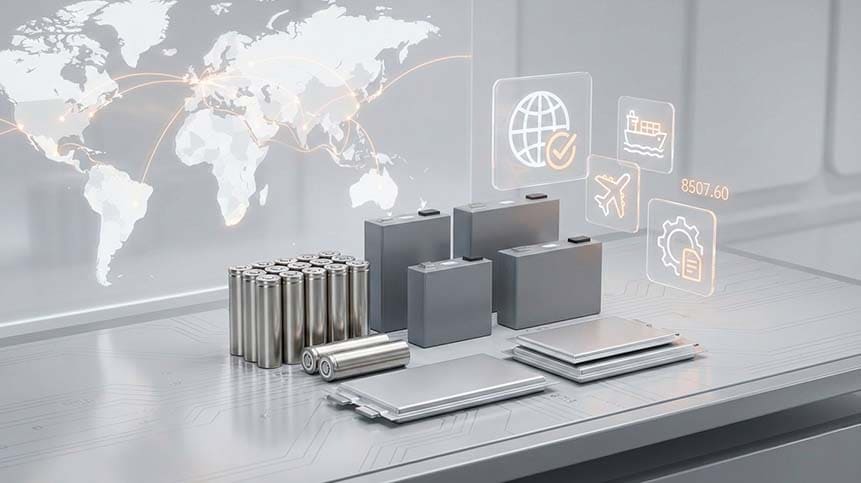
If you are involved in manufacturing, sourcing, importing, or exporting lithium-ion batteries, understanding the correct HS code for lithium ion batteries is not optional—it is essential.
I work closely with global buyers, logistics partners, and customs brokers, and one issue repeatedly causes shipment delays, unexpected tariffs, and even customs penalties: incorrect HS classification.
This guide is written from real export and compliance experience. It explains what HS codes apply to lithium-ion batteries, how different countries classify them, what tariffs apply, and how to avoid costly mistakes—all in one place.
What Is an HS Code and Why Lithium-Ion Batteries Are Sensitive
The Harmonized System (HS) is a globally standardized product classification system maintained by the World Customs Organization (WCO).
-
The first 6 digits are internationally harmonized
-
Additional digits (8–10) are country-specific
-
HS codes determine:
-
Import duties
-
VAT / GST
-
Regulatory controls
-
Trade statistics
-
Eligibility for FTA benefits
-
Lithium-ion batteries are high-risk, high-attention products because they are:
-
Energy-dense
-
Classified as dangerous goods for transport
-
Strategically sensitive (EV, energy storage, medical devices)
As a result, customs authorities examine their HS codes very closely.
Core HS Code for Lithium-Ion Batteries (Global Standard)
At the global 6-digit level, lithium-ion batteries are classified under:
HS Code 8507.60 – Lithium-ion accumulators
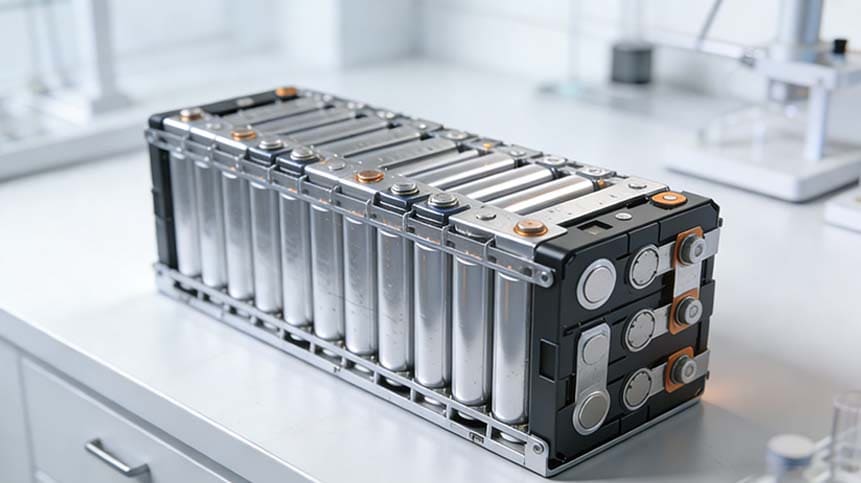
This code covers:
-
Rechargeable lithium-ion battery cells
-
Battery packs
-
Modules and assemblies (unless classified elsewhere due to integration)
However, the real complexity begins at the national level.
Lithium Ion Battery HS Code by Country & Region (Detailed Breakdown)
United States (HTS – Harmonized Tariff Schedule)
Base HS Code: 8507.60.00 – Lithium-ion batteries
Typical Import Duty (MFN):
-
~3.4% ad valorem
Important Notes (US):
-
Most lithium-ion batteries enter under low MFN rates
-
Trade remedy tariffs (e.g., Section 301 on Chinese origin goods) may apply
-
Certain EV or large battery systems may face higher duties in future policy updates
Practical Tip:
Always verify country of origin + HTS statistical suffix, not just HS6.
European Union (EU) & Germany (TARIC System)
EU TARIC Code: 8507.60.00
Import Duty (EU Common External Tariff):
-
Typically 3%–8%, depending on sub-classification
Germany (as EU member):
-
Same customs duty as EU
-
VAT: ~19%
Key EU Characteristics:
-
One HS/TARIC classification applies across all EU countries
-
VAT varies by member state
-
Lithium batteries for EVs, industrial storage, or medical devices may be further subdivided
United Kingdom (UK Global Tariff)
HS Code: 8507.60
Import Duty:
-
Typically 3%–6%
VAT:
-
20% UK VAT
Post-Brexit Note:
-
UK now operates its own tariff system
-
Preferential tariffs may apply under UK FTAs if Rules of Origin are met
China (10-Digit HS System)
China applies extended HS codes beyond the 6-digit level.
Most Common Code:
-
8507600090 – Other lithium-ion batteries
China Import Taxes:
-
MFN Duty: ~10%
-
VAT: 13%
-
Non-MFN / punitive rate: up to 40% in some cases
Export Rebate (China exporters):
-
~9% export tax rebate
Special Sub-Codes Exist For:
-
EV battery cells
-
High-energy density battery systems
-
Industrial battery assemblies
Australia
HS Code: 8507.60.00
Import Duty:
-
5% MFN
GST:
-
10%
Good News:
-
Tariff concessions and FTAs may reduce duty
-
Lithium batteries often qualify for simplified clearance when documentation is complete
Malaysia
HS Code: 8507.60
Import Duty:
-
0% in most cases
Sales & Service Tax (SST):
-
Applies depending on end-use and importer registration
ASEAN Advantage:
-
Strong FTA network enables duty-free trade with many partners
Summary Table — Lithium Ion Battery HS Code & Tariffs
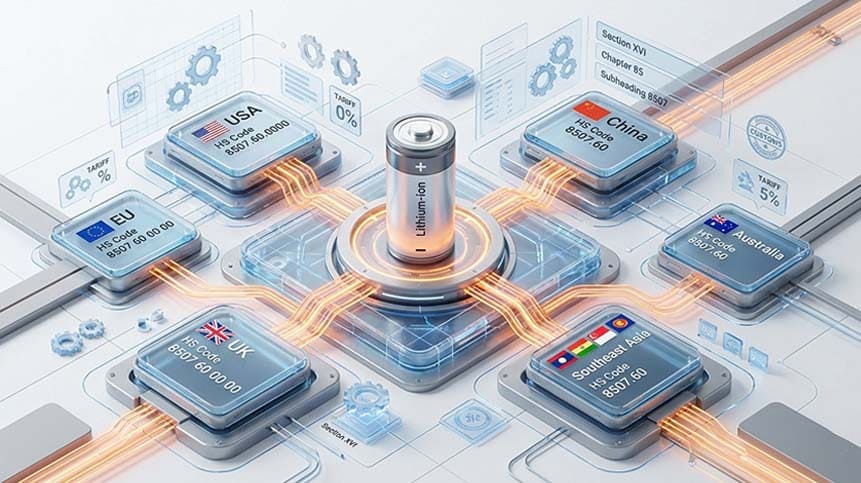
| Country / Region | HS Code | Import Duty | VAT / GST |
|---|---|---|---|
| United States | 8507.60 | ~3.4% | — |
| EU (Germany) | 8507.60.00 | 3–8% | ~19% |
| United Kingdom | 8507.60 | 3–6% | 20% |
| China | 8507600090 | 10% MFN | 13% |
| Australia | 8507.60 | 5% | 10% |
| Malaysia | 8507.60 | 0% | SST |
Common HS Code Mistakes That Cause Customs Delays
From real-world cases, the most common errors include:
-
Declaring battery packs as cells
-
Using a generic HS code for integrated battery systems
-
Ignoring country-specific extensions
-
Mismatch between HS code and invoice description
-
Declaring HS code without supporting technical data
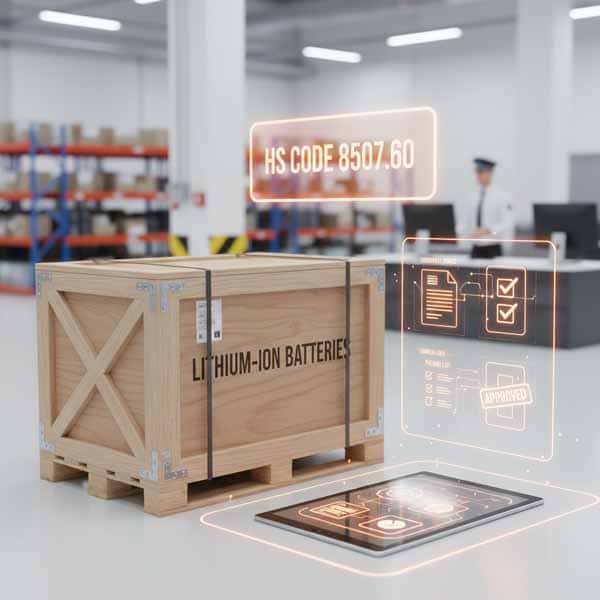
Any of these can trigger:
-
Cargo holds
-
Physical inspections
-
Reclassification penalties
-
Retroactive tax collection
HS Code vs UN3480 / UN3481 — Do Not Confuse Them
A critical clarification:
-
HS codes are for customs & taxation
-
UN3480 / UN3481 are for transport safety
They serve different legal systems, but both must be correct.
Customs may reject shipments if:
-
HS code says “battery pack”
-
Transport documents describe “equipment with battery”
-
Technical specs are inconsistent
How to Classify Lithium-Ion Batteries Correctly (Best Practices)
I recommend always preparing:
-
Battery datasheet (voltage, capacity, chemistry)
-
Intended application (consumer, medical, EV, industrial)
-
Physical configuration (cell, module, pack)
-
Safety certificates (UN38.3)
Correct classification is not guesswork—it is technical documentation-driven.
FAQ — Lithium Ion Battery HS Code
Q1: Is HS code 8507.60 used worldwide?
Yes. 8507.60 is the global base code, but countries extend it differently.
Q2: Are lithium battery cells and packs the same HS code?
Sometimes at HS6 level, but often different at national sub-code level.
Q3: Can the wrong HS code increase my import duty?
Absolutely. It may also invalidate FTA benefits.
Q4: Do EV batteries use the same HS code?
They often start with 8507.60 but are frequently subdivided.
Recommended
Final Thoughts — Turning Compliance Into Competitive Advantage
Understanding the lithium ion battery HS code is not just about avoiding mistakes—it’s about controlling landed cost, accelerating customs clearance, and building trust with global buyers.
-

 May.2026.08.0521700 Battery Pack with BMS: Design, Safety and Custom SolutionsLearn More
 -
 May.2026.08.04Smart Beauty Equipment Battery Pack ManufacturerLearn More
 -
 May.2026.08.04High Reliability Polymer Battery for Handheld Dental DevicesLearn More
 -
 May.2026.08.04Ultra Thin Lithium Polymer Battery 0.4mm 0.5mm Custom GuideLearn More
 -
 May.2026.07.30Smoke Detector Battery Guide: Choosing the Right Battery for Reliable Fire ProtectionLearn More