




What Is a 3.8V LiPo Battery? A Complete Engineering & OEM Guide
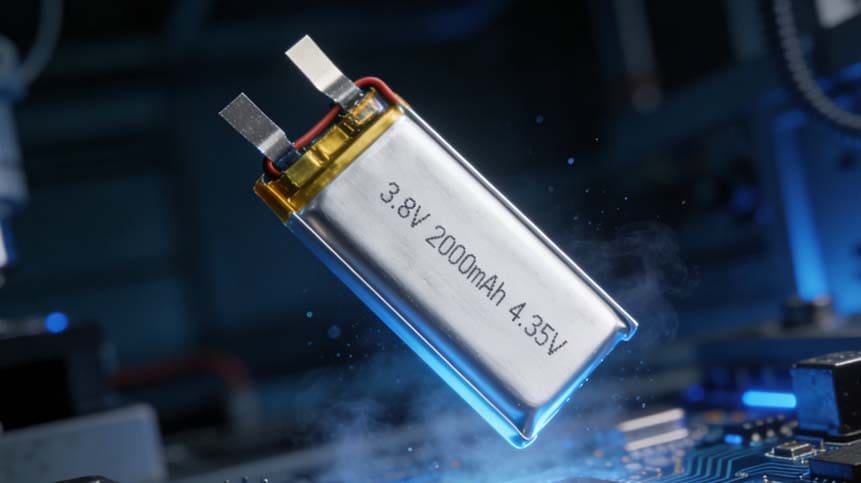
A 3.8V LiPo battery is a high-voltage lithium polymer cell with a nominal voltage of 3.8V and a full charge voltage typically reaching 4.35V. Compared with traditional 3.7V LiPo cells (4.2V full charge), 3.8V cells offer higher energy density and longer runtime in the same physical size, making them ideal for smartphones, wearables, medical devices, GPS trackers, and other compact electronics.
In this guide, I will explain:
-
What 3.8V actually means
-
How it differs from 3.7V LiPo
-
Voltage range and charging profile
-
Energy density comparison
-
Cycle life performance
-
Safety certifications
-
OEM customization considerations
-
When to choose 3.8V over 3.7V
If you are an engineer, sourcing manager, or product developer, this article will give you practical, production-level insight.
Understanding Nominal Voltage in LiPo Batteries
Lithium polymer batteries (LiPo) are a subtype of lithium-ion batteries using a polymer electrolyte instead of liquid electrolyte. The voltage rating printed on the battery — such as 3.7V or 3.8V — refers to the nominal voltage, not the maximum voltage.
What Does 3.8V Nominal Mean?
For a 3.8V LiPo battery:
-
Nominal voltage: 3.8V
-
Full charge voltage: 4.35V
-
Discharge cut-off voltage: typically 3.0V
-
Chemistry: Modified high-voltage lithium cobalt oxide (LiCoO₂-based variants)
The nominal voltage represents the average operating voltage during discharge.
3.8V vs 3.7V LiPo Battery — Key Differences
This is one of the most searched comparisons in Google’s top ranking pages.
Here is the technical comparison:
|
Parameter
|
3.7V LiPo
|
3.8V LiPo
|
|---|---|---|
|
Nominal Voltage
|
3.7V
|
3.8V
|
|
Full Charge Voltage
|
4.2V
|
4.35V
|
|
Energy Density
|
Standard
|
5–10% Higher
|
|
Cycle Life
|
500–800 cycles
|
300–600 cycles (typical)
|
|
Charging IC Compatibility
|
4.2V chargers
|
Requires 4.35V charger
|
|
Application
|
General electronics
|
High-end smartphones, compact devices
|
Why 3.8V Offers Higher Energy Density
Energy (Wh) = Voltage × Capacity (Ah)
Even if the mAh rating is similar, the higher average voltage increases total watt-hours.
Example:
-
2000mAh 3.7V = 7.4Wh
-
2000mAh 3.8V = 7.6Wh
That ~3% increase translates into longer runtime without increasing battery size.
Voltage Curve Characteristics of 3.8V LiPo
A 3.8V LiPo battery operates in the following voltage window:
-
4.35V — Fully charged
-
3.8V — Nominal plateau
-
3.0V — Cutoff
Compared with 3.7V cells, the discharge curve is slightly shifted upward.
Important Engineering Note
A 3.8V battery must not be charged with a 4.2V charger.
Using an incompatible charger will:
-
Undercharge the battery
-
Reduce available capacity
-
Impact runtime
Conversely, charging a 3.7V battery to 4.35V is dangerous.
Chemistry Behind 3.8V High-Voltage LiPo Cells
3.8V LiPo batteries use modified cathode materials that tolerate higher voltage:
-
High-voltage lithium cobalt oxide (LCO) variants
-
Surface-coated cathodes
-
Electrolyte additives to improve stability
The industry developed this chemistry mainly for the smartphone market, where energy density improvement was critical without increasing device thickness.
Energy Density Comparison
Typical ranges in real production:
|
Battery Type
|
Gravimetric Energy Density
|
|---|---|
|
Standard 3.7V LiPo
|
180–220 Wh/kg
|
|
3.8V High Voltage LiPo
|
200–240 Wh/kg
|
The increase is generally 5–10%, depending on cell design.
For ultra-thin wearable devices, this improvement is significant.
Applications of 3.8V LiPo Batteries
Based on current industry use cases, 3.8V LiPo batteries are commonly found in:
-
Smartphones
-
Tablets
-
Smartwatches
-
GPS tracking devices
-
Portable medical equipment
-
Bluetooth communication devices
-
High-end IoT modules
If your product requires:
-
Slim battery profile
-
Maximum runtime per volume
-
Premium performance positioning
Then 3.8V LiPo is often the better solution.
Charging Requirements
Charging profile for 3.8V LiPo:
-
CC (Constant Current) phase
-
CV (Constant Voltage) phase
-
CV limit: 4.35V ± 0.05V
Charger Compatibility Checklist
Before selecting 3.8V:
-
Confirm PMIC supports 4.35V termination
-
Validate BMS protection IC rating
-
Ensure cell balancing (for packs)
Failure to verify these is one of the most common engineering mistakes.
Cycle Life Considerations
Higher voltage generally means slightly reduced cycle life.
Typical cycle life:
-
3.7V LiPo: 500–800 cycles
-
3.8V LiPo: 300–600 cycles
However, cycle life depends on:
-
Depth of discharge
-
Charging voltage limit
-
Operating temperature
-
Cell quality
By limiting charge to 4.30V instead of 4.35V, cycle life can be extended.
Safety Standards & Certifications
For export to Europe and North America, 3.8V LiPo batteries typically require:
-
UN38.3 (transport safety)
-
IEC 62133
-
CE marking
-
RoHS compliance
-
UL 1642 (for cell level)
You can review official transport requirements at:
https://unece.org/transport/dangerous-goods
OEM Custom 3.8V LiPo Battery Solutions
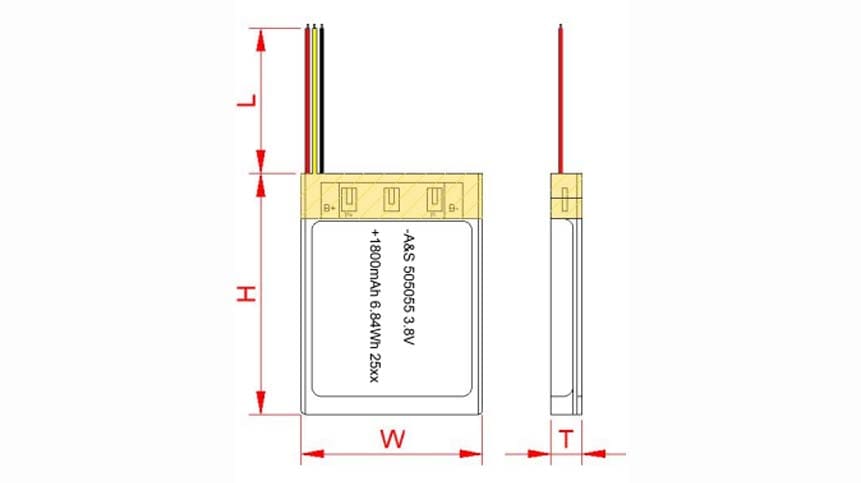
From my experience working with device manufacturers, custom requirements usually include:
-
Ultra-thin design (≤5mm)
-
High discharge rate
-
Custom connector (JST, Molex, etc.)
-
NTC temperature sensor
-
PCM protection circuit
-
Laser marking and labeling
-
Custom shape (L-shape, curved cell)
When developing a custom 3.8V battery, I always recommend evaluating:
-
Device operating voltage range
-
PCB charger compatibility
-
Mechanical constraints
-
Thermal environment
When Should You Choose 3.8V Instead of 3.7V?
Choose 3.8V if:
-
You need maximum runtime in fixed space
-
Your charger IC supports 4.35V
-
Your product competes in premium category
Choose 3.7V if:
-
You prioritize longer cycle life
-
You use legacy 4.2V charging systems
-
Cost sensitivity is high
Data Summary Table
|
Feature
|
3.7V LiPo
|
3.8V LiPo
|
|---|---|---|
|
Nominal Voltage
|
3.7V
|
3.8V
|
|
Full Charge Voltage
|
4.2V
|
4.35V
|
|
Energy Density
|
Medium
|
Higher
|
|
Cycle Life
|
Longer
|
Moderate
|
|
Charger Required
|
4.2V
|
4.35V
|
|
Typical Market
|
General
|
High-performance devices
|
Frequently Asked Questions (FAQ)
1. Is 3.8V LiPo better than 3.7V?
It depends on the application. 3.8V offers higher energy density but slightly reduced cycle life.
2. Can I replace a 3.7V battery with 3.8V?
Only if your charging circuit supports 4.35V termination voltage.
3. Is 4.35V charging safe?
Yes, if the battery is designed for high-voltage chemistry and paired with correct BMS.
4. Does 3.8V LiPo cost more?
Generally 5–15% higher due to chemistry and production complexity.
5. Are 3.8V batteries widely available?
Yes, especially in consumer electronics and custom OEM battery manufacturing.
Conclusion
A 3.8V LiPo battery represents an evolution in lithium polymer technology, offering higher energy density and improved runtime in the same footprint. It is widely adopted in premium electronics and compact smart devices.
For OEMs and procurement teams, selecting between 3.7V and 3.8V should be a technical decision based on:
-
Charger compatibility
-
Runtime requirements
-
Lifecycle expectations
-
Safety certifications
If you are developing a new electronic product and need engineering support for custom 3.8V LiPo battery packs, consulting with an experienced manufacturer early in the design phase will reduce redesign cost and certification delays.
-

 May.2026.08.0521700 Battery Pack with BMS: Design, Safety and Custom SolutionsLearn More
 -
 May.2026.08.04Smart Beauty Equipment Battery Pack ManufacturerLearn More
 -
 May.2026.08.04High Reliability Polymer Battery for Handheld Dental DevicesLearn More
 -
 May.2026.08.04Ultra Thin Lithium Polymer Battery 0.4mm 0.5mm Custom GuideLearn More
 -
 May.2026.07.30Smoke Detector Battery Guide: Choosing the Right Battery for Reliable Fire ProtectionLearn More