




NiMH vs NiCd vs LiFePO4 solar rechargeable batteries

If you want the best performance and longest lifespan from solar rechargeable batteries, you should choose LiFePO4. This battery stands out for its safety, reliability and minimal environmental impact. Your choice of rechargeable batteries affects how efficiently your solar system stores and delivers energy. Recent innovations help these batteries last for many years and improve energy storage:
- Lithium-based batteries boost system performance and hold more power.
- Smart management systems extend battery life and maximize efficiency.
- New designs reduce degradation and keep your solar setup reliable.
Key Takeaways
- LiFePO4 batteries are the best choice for solar systems due to their long lifespan, safety, and low environmental impact.
- NiMH batteries are a good option for everyday solar devices, offering moderate performance without toxic materials.
- NiCd batteries are affordable but pose environmental risks and have a memory effect that can reduce their capacity.
- Choosing the right battery depends on your energy needs, budget, and the specific requirements of your solar setup.
- To maximize battery life, keep them in a stable environment, avoid complete discharges, and regularly check connections.
Quick Comparison: NiMH vs NiCd vs LiFePO4 Solar Batteries
Which Battery Is Best?
When you compare solar rechargeable batteries, LiFePO4 stands out as the top choice for most users. You get excellent cycle life, high safety, and minimal environmental impact. If you want a battery that lasts for years and handles daily charging, LiFePO4 gives you the best results. NiMH and NiCd rechargeable batteries offer moderate performance, but they fall short in safety issues and longevity. You should choose LiFePO4 if you want reliable energy storage and fewer worries about maintenance.
Tip: LiFePO4 batteries work well in solar setups because they resist overheating and provide stable power over thousands of cycles.
Main Differences Overview
You need to understand how each battery type compares before making a decision. The table below shows the main features side by side:
| Feature | NiMH | NiCd | LiFePO4 |
|---|---|---|---|
| Voltage Range | 1.2V | 1.2V | 3.2V |
| Capacity Range | 600–3000mAh | 600–2000mAh | 600–3000mAh |
| Cycle Life | Moderate | Moderate | Excellent |
| Safety | Moderate | Low | High |
| Environmental Impact | Moderate | Low | Low |
| Cost | Affordable | Affordable | Higher |
NiMH rechargeable batteries offer a good balance between cost and performance. NiCd batteries remain affordable but raise safety issues and environmental concerns. LiFePO4 batteries cost more upfront, but you save money over time because they last longer and require less maintenance. You should weigh these differences based on your solar system needs.
Battery Types Explained
NiMH Rechargeable Batteries
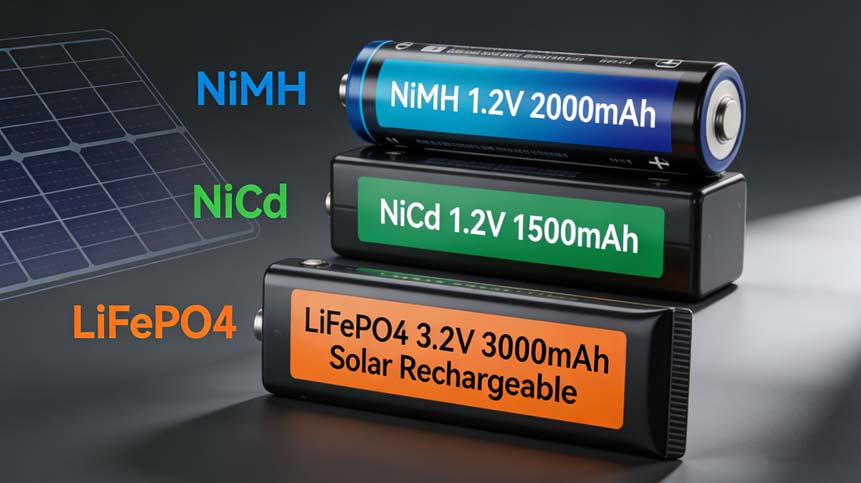
You often see nimh rechargeable batteries in solar garden lights and small electronics. These battery types use nickel-metal hydride chemistry, which gives you a stable voltage of 1.2V and a capacity up to 2.5Ah. Nimh batteries do not contain toxic cadmium or mercury, making them eco-friendly and safer for the environment. You can recharge nimh batteries up to 500 times, which makes them a practical choice for moderate use. Their lightweight design and button-top termination style fit most solar devices. Nimh batteries serve as a drop-in replacement for nicd batteries, offering better environmental friendliness and less risk of memory effect.
| Characteristic | Description |
|---|---|
| Battery Chemistry | Nickel Metal Hydride |
| Voltage - Rated | 1.2 V |
| Capacity | 2.5 Ah |
| Size / Dimension | 0.57" Dia x 1.99" H |
| Termination Style | Button Top (Extending) |
Note: Nimh rechargeable batteries are cadmium-free and mercury-free, which helps you reduce your environmental footprint.
NiCd Rechargeable Batteries
Nicd rechargeable batteries have powered solar devices for decades. You get a reliable 1.2V output and affordable cost, but you face some drawbacks. Nicd batteries suffer from the memory effect, which means their capacity drops if you do not fully discharge them before recharging. This issue can reduce performance in solar applications, especially when sunlight varies. Nicd batteries contain toxic cadmium, so they pose environmental risks and require special disposal. You may still use nicd batteries in older solar systems, but nimh batteries offer a safer and more eco-friendly alternative.
| Issue | Impact on Solar Applications |
|---|---|
| Memory Effect | Reduced capacity after partial cycles |
| Toxic Content | Cadmium harms environment |
| Cost | Low upfront expense |
Tip: If you want to avoid the memory effect and environmental hazards, switch from nicd to nimh rechargeable batteries.
LiFePO4 Rechargeable Batteries
Lithium iron rechargeable batteries, also called lithium iron phosphate or lifepo4, represent the latest advancement in solar energy storage. You benefit from a higher voltage of 3.2V and thousands of recharge cycles, which means your solar system runs longer and more reliably. Lithium iron batteries resist overheating and provide stable power, even in harsh conditions. You do not need to worry about the memory effect, and you get a safer chemistry compared to older lithium-ion batteries. Lithium iron batteries are lightweight, durable, and have a low environmental impact. You pay more upfront, but you save money over time due to their long lifespan and minimal maintenance.
? Lithium iron rechargeable batteries give you the best combination of safety, cycle life, and eco-friendly performance for solar applications.
Pros and Cons of Each Battery Above
NiMH: Strengths and Weaknesses
You will find nimh rechargeable batteries offer a practical solution for solar energy storage. Nickel-metal hydride chemistry gives you a stable voltage and moderate cycle life. You can recharge nimh cells hundreds of times, which makes them suitable for garden lights and small electronics. These rechargeable batteries do not contain toxic metals, so you get an eco-friendly option. You can use nimh as a direct replacement for nicd in most solar devices.
Strengths:
- You get moderate cost and easy availability.
- Nimh rechargeable batteries avoid the memory effect.
- You benefit from a safer, eco-friendly design.
Weaknesses:
- Nimh cells lose capacity faster in high temperatures.
- You may notice moderate cycle life compared to lithium iron batteries.
- Charging nimh batteries requires careful management to prevent overcharging.
Tip: Choose nimh rechargeable batteries for simple solar setups where cost and environmental impact matter most.
NiCd: Strengths and Weaknesses
Nicd rechargeable batteries have powered solar systems for decades. You can rely on nicd for deep discharges and stable performance in extreme temperatures. These rechargeable batteries remain affordable and widely available. However, you must consider the environmental risks and maintenance challenges.
- Nicd batteries handle deep discharges well.
- You can use nicd in harsh climates without losing performance.
- Nicd rechargeable batteries cost less upfront.
Weaknesses:
- Cadmium in nicd batteries harms the environment.
- You face the memory effect, which reduces usable capacity.
- Disposal of nicd batteries requires special care.
Note: If you want reliability in tough conditions, nicd batteries deliver. You must weigh the environmental impact before choosing them.
LiFePO4: Strengths and Weaknesses
Lithium iron rechargeable batteries set the standard for modern solar energy storage. You get fast charging, lightweight design, and deep discharge capability. Lithium iron batteries last much longer than nimh or nicd. You benefit from stable power and high safety, even in demanding solar applications. Lithium iron batteries use advanced lithium-ion technology, which improves reliability and reduces maintenance.
| Pros of LiFePO4 Batteries | Cons of LiFePO4 Batteries |
|---|---|
| Charges faster | Heat sensitive |
| Significantly lighter | Costly initial expense |
| Can be deeply discharged | Requires a unique charging algorithm |
| Longer lifespan | Sensitive to overcharging |
| Lower current limit for high-current applications |
? Lithium iron rechargeable batteries give you the best combination of safety, cycle life, and eco-friendly performance for solar power. You pay more upfront, but you save money over time.
Side-by-Side Comparison of Solar Rechargeable Batteries
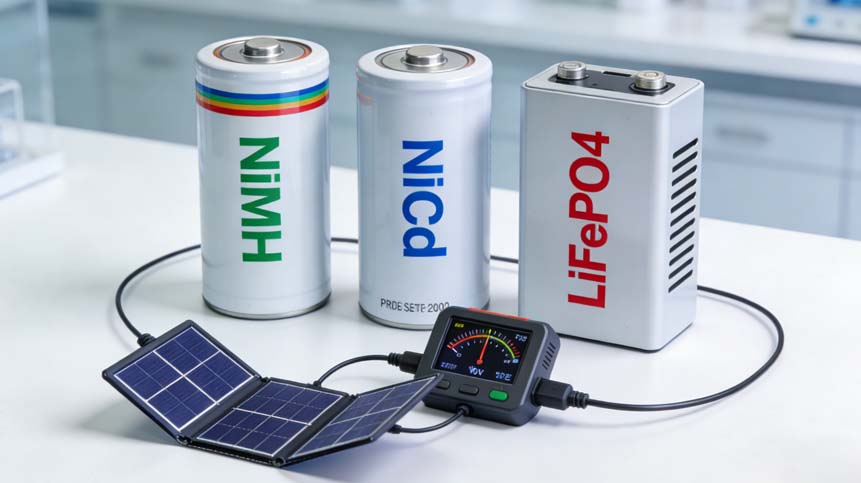
Voltage and Capacity
When you compare solar rechargeable batteries, voltage and capacity play a major role in system performance. NiMH and NiCd batteries both deliver a standard 1.2V per cell, which fits most small solar devices. You often see these batteries in garden lights and remote sensors. LiFePO4 batteries, a type of lithium iron technology, provide a higher voltage of 3.2V per cell. This higher voltage means you can use fewer cells to reach your target system voltage, which reduces weight and complexity.
Capacity varies by chemistry. NiMH batteries typically range from 600 to 3000mAh, while NiCd batteries usually offer 600 to 2000mAh. Lithium iron batteries match or exceed these numbers, often reaching up to 3000mAh per cell. You get more energy density with lithium iron and lithium-ion batteries, which translates to longer run times and better support for high-drain devices.
If you want a battery that delivers more power in a smaller package, lithium iron stands out as the best choice.
Cycle Life and Durability
Cycle life measures how many times you can charge and discharge a battery before it loses significant capacity. NiMH and NiCd batteries offer moderate cycle life, usually between 500 and 1000 cycles. You may notice a drop in performance after a few years, especially if you use them daily.
Lithium iron batteries, including LiFePO4, excel in this area. You can expect 2000 to 5000 cycles or more, depending on how you use and maintain them. This long cycle life makes lithium iron batteries a cost-effective solution for solar systems that require daily cycling. You spend less time and money on replacements, and your solar setup stays reliable for years.
Lithium iron batteries give you unmatched durability, making them ideal for long-term solar energy storage.
Safety and Reliability
Safety matters when you install solar rechargeable batteries in your home or business. NiCd batteries contain toxic cadmium, which can leak if the battery gets damaged. NiMH batteries use safer materials but still require careful handling to avoid overheating or overcharging.
Lithium iron batteries set the standard for safety. LiFePO4 chemistry resists thermal runaway, so you face less risk of fire or explosion compared to other lithium-ion batteries. You can use lithium iron batteries in a wide range of temperatures without losing reliability. This makes them a top choice for outdoor solar applications where conditions change quickly.
You get peace of mind with lithium iron batteries, thanks to their stable chemistry and advanced safety features.
Environmental Impact
You need to consider the environmental footprint of your battery choice. NiCd batteries pose the highest risk due to cadmium, which can contaminate water supplies if not disposed of properly. NiMH batteries contain semi-toxic nickel and electrolyte, so they require responsible recycling. Lithium iron batteries, including LiFePO4, contain harmful elements at lower toxicity levels compared to traditional lithium-ion batteries.
Here’s a quick look at recycling rates and toxic material content:
| Battery Type | Recycling Rate | Toxic Material Content |
|---|---|---|
| NiCd | Not specified | Cadmium, which can contaminate water supplies. |
| NiMH | Not specified | Semi-toxic nickel and electrolyte. |
| LiFePO4 (Li-ion) | Not specified | Contains harmful elements at toxicity levels. |
You reduce your environmental impact by choosing lithium iron batteries and recycling all rechargeable batteries at the end of their life.
Cost Comparison
Cost influences your decision when you select solar rechargeable batteries. NiCd and NiMH batteries remain affordable, making them popular for small-scale solar projects. For example, you can find a NiMH battery for around R 189.75 (including VAT) or R 165.00 (excluding VAT). These prices make NiMH a cost-effective option for budget-conscious users.
Lithium iron batteries, such as LiFePO4, cost more upfront. However, you save money over time because of their long cycle life and low maintenance needs. You invest more at the start, but you avoid frequent replacements and enjoy better performance.
- NiMH batteries: R 189.75 (Inc VAT), R 165.00 (Ex VAT)
- NiCd batteries: Typically lower than lithium iron, but prices vary by supplier and capacity.
- LiFePO4 batteries: Higher initial cost, but lower total cost of ownership due to longevity.
If you want the best value for long-term solar energy storage, lithium iron batteries deliver a strong return on investment.
Best Uses for Each Battery
NiMH: Ideal Applications
You can rely on NiMH rechargeable batteries for everyday solar devices. These batteries work well in solar garden lights, remote controls, and small electronics. You get moderate capacity and stable voltage, which makes them a solid choice for low-drain applications. NiMH batteries fit most devices that previously used NiCd, so you can upgrade without changing your setup. If you want an eco-friendly option for your solar-powered decorations or sensors, NiMH delivers reliable performance.
Common NiMH Uses:
- Solar garden lights
- Wireless sensors
- Portable radios
- Remote controls
Tip: Choose NiMH rechargeable batteries when you need a safe, affordable solution for light-duty solar projects.
NiCd: Where It Still Fits
You may find NiCd rechargeable batteries in older solar systems and devices that require deep discharges. These batteries handle extreme temperatures and rugged conditions better than most alternatives. If you operate equipment in harsh climates or need a battery that tolerates frequent cycling, NiCd remains a practical choice. However, you should consider environmental impact and disposal requirements before selecting NiCd.
NiCd Battery Applications:
- Emergency lighting
- Industrial solar panels
- Remote weather stations
- Legacy solar equipment
Note: NiCd rechargeable batteries suit tough environments, but you must manage their environmental risks.
LiFePO4: Top Solar Uses
LiFePO4 rechargeable batteries set the standard for modern renewable energy setups. You get high energy density, long life, and advanced safety features. These lithium batteries excel in solar storage systems, off-grid cabins, and backup power supplies. You can use lithium batteries for RVs, marine applications, and home energy storage. If you want the best uses for each battery, lithium stands out for demanding solar projects that require reliability and efficiency.
| Top LiFePO4 Applications | Benefits |
|---|---|
| Home solar storage | Long cycle life |
| Off-grid cabins | Stable performance |
| RV and marine solar systems | Lightweight and safe |
| Backup power supplies | Fast charging |
? You maximize your investment in renewable energy setups when you choose lithium rechargeable batteries for solar storage.
Choosing the Right Battery
Key Factors to Consider
When you select a battery for your solar system, you need to look at several important factors. The right choice ensures your setup runs efficiently and lasts for years. Here’s a quick table to help you compare what matters most:
| Factor | Description |
|---|---|
| Battery Capacity | The total amount of electricity a solar battery can store, measured in kilowatt-hours (kWh). |
| Depth of Discharge (DoD) | The amount of electricity withdrawn from the battery; affects lifespan if fully discharged. |
| Round Trip Efficiency | The percentage of energy that can be used compared to the energy required to store it. |
| Battery Life & Warranty | The expected lifespan and performance guarantee of the battery, often measured in cycles. |
You should match battery capacity to your system size. For small solar setups, look for 100Ah-200Ah. Medium systems need 200Ah-300Ah, while large installations require 300Ah or more. Voltage compatibility matters too. Most small systems use 12V, medium homes use 24V, and large projects use 48V. Depth of discharge is another key point. LiFePO4 batteries offer up to 90% DoD, which means you get more usable energy and longer life.
Tip: A&S Power stands out as a trusted brand for solar rechargeable batteries. You can explore their product options and get expert advice directly on their website.
Tips for Maximizing Battery Life
You want your solar system to run smoothly for years. Follow these tips to get the most out of your rechargeable batteries:
- Keep your batteries in a cool, stable environment between 20°C and 25°C.
- Test your system regularly to catch issues early.
- Avoid draining batteries completely; partial discharges extend lifespan.
- Replace batteries before they fail to maintain reliability.
- Check connections for corrosion and make sure they stay secure.
- Manage your load so you do not exceed the battery’s rated capacity.
- Monitor battery health by tracking voltage and charge levels.
- Use smart charging strategies and install batteries in temperature-controlled areas.
Note: Staying informed about new battery technology helps you make better choices and keep your solar system running efficiently.
If you want reliable performance and long-term savings, choose a high-quality battery from a reputable brand like A&S Power. Their products deliver strong cycle life, safety, and efficiency for solar energy storage.
You now know that LiFePO4 stands out as the best choice for most solar rechargeable batteries users, thanks to its long life, safety, and low environmental impact. Before you select a battery, think about your energy needs and budget. To get the most from your solar setup, follow these steps:
- Review your current energy use and look for ways to save.
- Explore financing options that fit your plan.
- Start with a basic system and upgrade over time.
- Pick efficient rechargeable batteries for reliable storage.
- Make sure you install and register your system properly.
You have the power to make a smart, lasting choice for your solar energy future.
FAQ
What makes LiFePO4 batteries safer for solar use?
LiFePO4 batteries use a stable chemistry that resists overheating and fire. You get peace of mind because these batteries rarely experience thermal runaway. Their design makes them ideal for home and outdoor solar systems.
Can you replace NiCd batteries with NiMH in solar lights?
Yes, you can swap NiCd for NiMH in most solar lights. NiMH batteries fit the same slots and offer better environmental safety. You also avoid the memory effect, so your lights stay brighter longer.
How long do solar rechargeable batteries usually last?
You can expect NiCd and NiMH batteries to last 2–3 years with regular use. LiFePO4 batteries often last 5–10 years or more. Proper care and charging habits extend battery life.
Do solar rechargeable batteries need special chargers?
You should use chargers designed for your battery type. LiFePO4 batteries require specific charging profiles for safety and performance. NiMH and NiCd chargers are not interchangeable with lithium batteries.
Are solar rechargeable batteries environmentally friendly?
Solar rechargeable batteries help reduce waste and pollution. NiMH and LiFePO4 batteries contain fewer toxic materials than NiCd. Always recycle used batteries at approved centers to protect the environment.
-

 May.2026.05.21IEC 62133 Rechargeable LiPo Battery for Medical Devices GuideLearn More
 -
 May.2026.05.20Custom UL2054 Certified Lithium Polymer Battery Pack: Complete OEM GuideLearn More
 -
 May.2026.05.20Battery for Portable PA System: Complete Guide to Lithium Battery Solutions for Professional Audio EquipmentLearn More
 -
 May.2026.05.19What Battery Is Used in Portable Guitar Amplifiers? A Complete Technical & Practical GuideLearn More
 -
 May.2026.05.15Complete Guide to Portable Amplifier Battery Packs (Li-ion & LiFePO4 Solutions)Learn More