



Silicon-carbon (Si-C) batteries have rapidly emerged as one of the most promising next-generation battery technologies, offering significantly higher energy density, faster charging capabilities, and improved low-temperature performance compared with conventional lithium-ion (Li-ion) batteries. While standard Li-ion batteries have relied primarily on graphite anodes for more than 30 years, the industry is approaching the theoretical limits of graphite. Silicon-carbon composite anodes are widely recognized as the most realistic commercial upgrade before full silicon anodes or solid-state batteries become mainstream.
This professional report provides a complete, engineering-level comparison between silicon-carbon batteries and traditional lithium-ion batteries. It includes chemical differences, energy density metrics, cycle life considerations, stress-strain mechanics, cost curves, charging characteristics, thermal management requirements, and real engineering applications across consumer electronics, EVs, medical devices, wearables, and industrial markets.
1. Overview of Silicon-Carbon vs Lithium-Ion Battery Technologies
| To understand the advantages of silicon-carbon batteries, it is essential to examine the core structural differences in anode materials. Traditional Li-ion chemistry uses graphite (C₆) as the dominant anode. Silicon-carbon batteries use a composite of silicon (Si) and carbon (C), typically engineered with nano-structured silicon particles embedded in a carbon matrix. This structure helps reduce silicon’s well-known expansion problem during lithiation. | 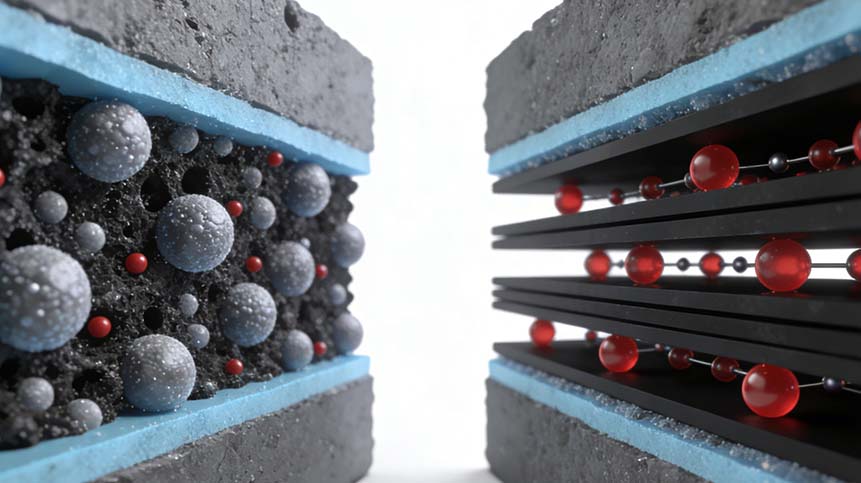 |
1.1 Chemical Structure Comparison
| Feature | Silicon-Carbon Anode | Graphite Anode (Li-ion) |
|---|---|---|
| Theoretical capacity (mAh/g) | 2,000–3,600 | 300–372 |
| Volume expansion during lithiation | Up to 300% | ~10% |
| Conductivity | Moderate (improved with carbon) | High |
| Mechanical stability | Requires engineered composites | Stable |
| Commercial maturity | Growing | Highly mature |
These foundational material differences drive nearly every performance distinction observed in real-world battery packs.
2. Energy Density Comparison: Gravimetric and Volumetric
Energy density is the most frequently cited advantage of silicon-carbon batteries. Because the anode is no longer the limiting factor in cell capacity, the industry sees increases in both gravimetric (Wh/kg) and volumetric (Wh/L) energy density.
2.1 Typical Commercial Energy Density Values
| Battery Type | Gravimetric (Wh/kg) | Volumetric (Wh/L) |
|---|---|---|
| Lithium-ion (standard graphite) | 180–260 | 500–730 |
| Silicon-carbon enhanced Li-ion | 260–350 | 700–950 |
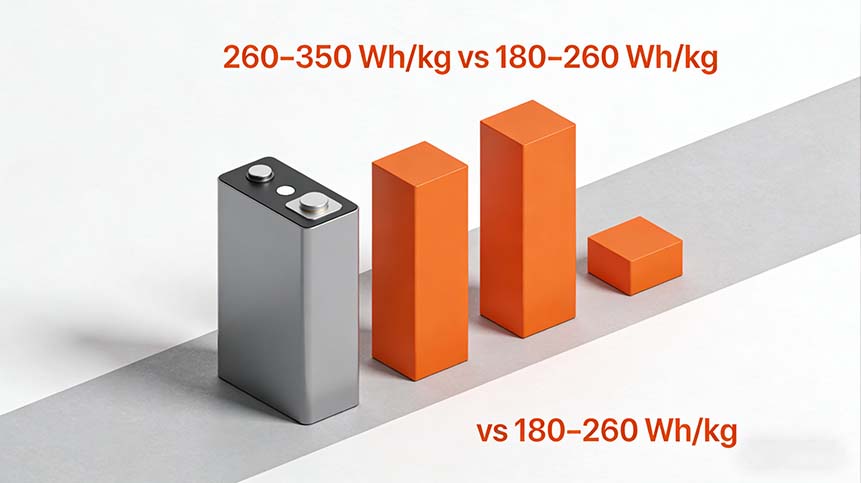
Real production values vary based on NCM, NCA, LFP, or blended cathode materials, but silicon-carbon universally provides measurable gains.
3. Charging Speed and Fast-Charging Behavior
One of the strongest performance benefits of silicon-carbon batteries is rapid lithium diffusion and lower charge-transfer resistance, enabling higher C-rates and shorter charging times.
3.1 Charging Speed Comparison
| Battery Type | Recommended Fast Charge Rate | Time to 80% |
|---|---|---|
| Lithium-ion | 0.8C–1C | 45–60 minutes |
| Silicon-carbon | 1.2C–2C | 20–35 minutes |
These improvements stem from:
- Silicon’s higher lithium diffusion rate
- Reduced polarization during high-current charging
- Enhanced SEI (solid-electrolyte interphase) stability with engineered coatings
4. Cycle Life and Degradation Mechanisms
Historically, silicon-based anodes suffered from rapid degradation due to expansion and contraction during cycling. Modern silicon-carbon composites significantly improve mechanical stability.
4.1 Cycle Life Comparison
| Battery Type | Typical Cycle Life (80% retention) |
|---|---|
| Lithium-ion (graphite) | 500–1,200 cycles |
| Silicon-carbon | 800–2,000 cycles |
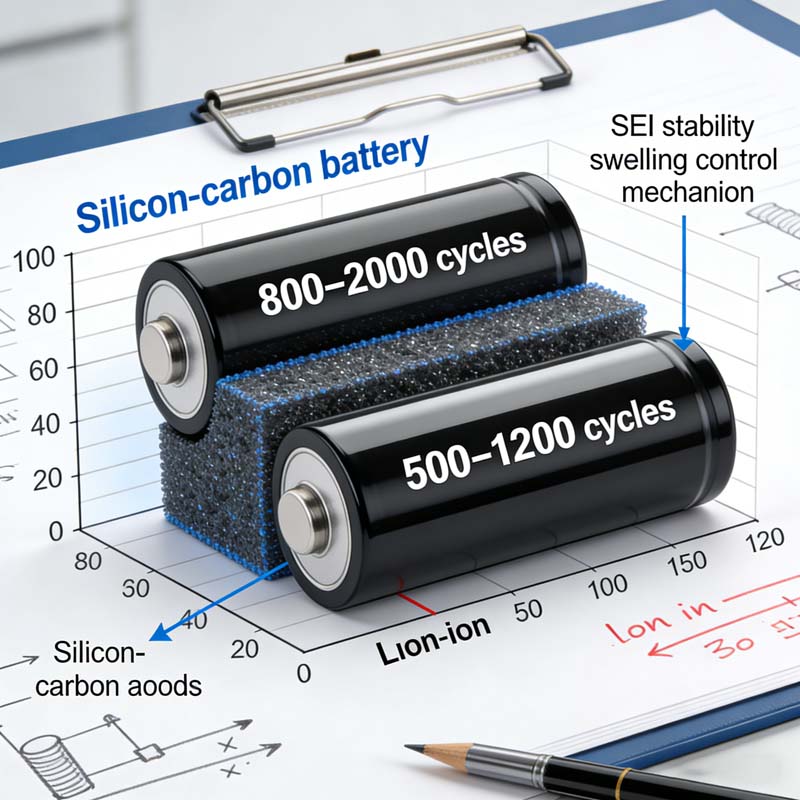
These results depend on silicon content. Low-silicon blends (~5%) improve longevity without sacrificing stability, while high-silicon blends (~15–30%) offer higher capacity but may reduce cycle life unless paired with advanced SEI stabilization techniques.
5. Thermal Characteristics and Safety Performance
Both battery types use similar electrolyte systems, but silicon-carbon batteries often show improved thermal performance due to lower internal resistance and reduced heat generation during high-current operation.
5.1 Thermal Runaway Thresholds
| Battery Type | Thermal Runaway Onset | Notes |
|---|---|---|
| Lithium-ion | 180–210°C | Stable but sensitive to overcharge |
| Silicon-carbon | 190–230°C | Improved stability due to reduced overpotential |
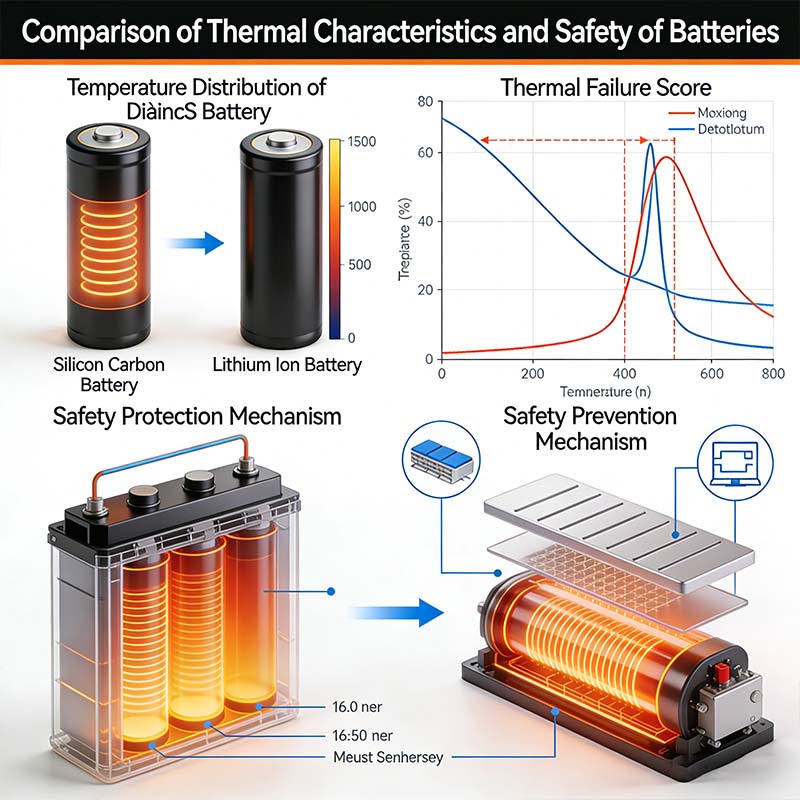
Safety depends heavily on pack design, BMS sophistication, and cathode chemistry (NMC vs LFP vs NCA).
6. Applications Comparison
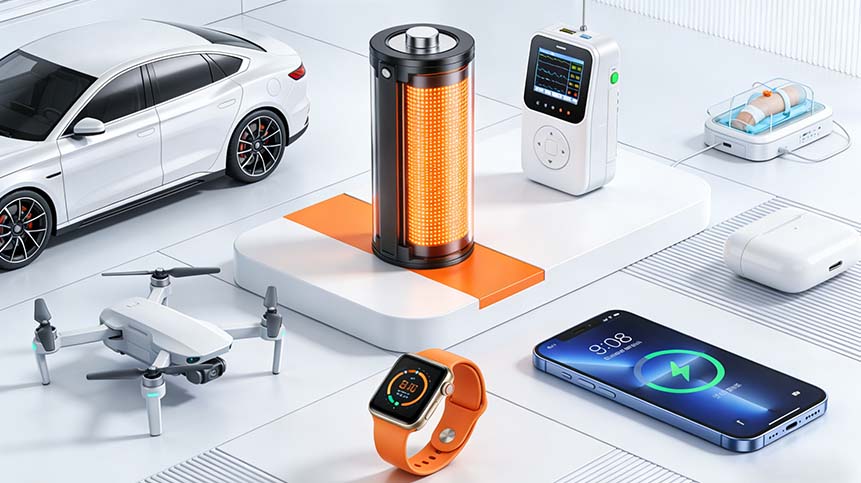
Silicon-carbon batteries are increasingly used in performance-critical applications, while lithium-ion remains dominant in cost-sensitive or established markets.
6.1 Application Suitability Table
| Application | Graphite Li-ion | Silicon-Carbon |
|---|---|---|
| Smartphones | Good | Excellent |
| Wearables | Good | Excellent |
| Electric Vehicles | Common | Growing fast |
| Medical Devices | Reliable | High performance |
| Industrial | Stable | Improving |
7. Cost Analysis and Commercial Scalability
Silicon-carbon cells are more expensive due to:
- Specialized coating processes
- Nano-composite engineering
- Higher-precision slurry mixing
- SEI stabilization materials
7.1 Cost Range Comparison
| Type | Cost per Wh |
|---|---|
| Lithium-ion | $0.09–$0.14 |
| Silicon-carbon | $0.12–$0.20 |
However, cost is expected to decline by 20–30% within the next five years as production volume increases.
8. Engineering Challenges
Key engineering challenges for silicon-carbon batteries include:
- Volume expansion management
- SEI durability improvement
- Mechanical integrity during cycling
- Cost-effective large-scale manufacturing
9. FAQs
1. Are silicon-carbon batteries safer than lithium-ion batteries?
Generally yes, due to lower internal resistance and improved heat management.
2. Do silicon-carbon batteries charge faster?
Yes, commonly reaching 80% in 20–35 minutes depending on the C-rate.
3. Will silicon-carbon batteries replace lithium-ion?
Not entirely; they will coexist. Silicon-carbon will dominate high-performance applications.
4. What industries adopt silicon-carbon first?
EVs, premium smartphones, medical devices, drones, wearables.
5. Do silicon-carbon batteries require different BMS?
Not majorly, but fast-charging profiles may require optimized algorithms.
6. What is the real commercial silicon percentage?
5–15% silicon is common in commercial cells.
7. Are silicon-carbon batteries compatible with NMC or LFP?
Yes, compatible with both; often paired with NMC for EVs.
8. Do silicon-carbon batteries swell?
Well-designed composites reduce swelling dramatically.
9. What temperature range improves most?
Low-temperature discharge shows significant improvement.
10. How much energy density improvement is typical?
10–25% depending on silicon content.
10. Conclusion
Silicon-carbon batteries represent a major step forward in lithium-ion technology. They deliver higher energy density, faster charging, better low-temperature performance, and increasingly competitive cycle life. While costs remain slightly higher than standard graphite-based Li-ion cells, rapid industry adoption—especially in EVs, premium electronics, and medical devices—indicates strong long-term commercial scaling.
For brands, OEM manufacturers, and engineering teams aiming to deliver higher efficiency and more compact battery systems, silicon-carbon batteries provide a practical, commercially available upgrade over traditional lithium-ion cells without requiring a complete ecosystem overhaul.