




Useful Overview of LiPo Battery Voltage: Complete Technical Guide for 2026
Introduction
When I first started working with lithium polymer (LiPo) battery systems in OEM product development, I quickly realized that voltage is not just a number—it is the core parameter that defines safety, performance, lifespan, and even product certification success.
In this article, I want to give you a clear, practical, and engineering-focused overview of LiPo battery voltage. I will not only explain the theoretical values but also show how voltage behaves in real applications such as consumer electronics, medical devices, drones, and industrial equipment.
My goal is to help engineers, buyers, and product managers make better design decisions based on real-world battery behavior rather than simplified datasheet assumptions.
What Is LiPo Battery Voltage?
A LiPo (Lithium Polymer) battery typically operates within a defined voltage window:
- Nominal voltage: 3.7V per cell
- Fully charged voltage: 4.2V per cell
- Safe discharge cutoff: 3.0V per cell (recommended 3.2–3.3V in practice)
These values are standardized across most lithium-ion polymer chemistries used in modern electronics.
Why Voltage Matters
Voltage determines:
- Energy output (Power = Voltage × Current)
- Battery safety limits
- Device compatibility
- Cycle life and degradation rate
- Battery management system (BMS) design
In real engineering applications, voltage is the first parameter we validate before selecting a battery pack.
LiPo Voltage Chart (Real Operating Range)
Below is a practical voltage behavior table based on industry-standard lithium polymer cells:
|
State
|
Voltage per Cell
|
Battery Condition
|
|---|---|---|
|
Full charge
|
4.20V
|
100% SOC
|
|
Normal operating range
|
3.85V – 3.70V
|
80% – 40% SOC
|
|
Mid discharge
|
3.70V – 3.50V
|
Stable operation
|
|
Low warning
|
3.50V – 3.30V
|
Needs recharge soon
|
|
Critical cutoff
|
3.20V
|
Battery protection trigger
|
|
Deep discharge risk
|
< 3.0V
|
Permanent damage risk
|
SOC = State of Charge
Understanding Nominal Voltage (3.7V Explained)
The 3.7V nominal value is often misunderstood.
From my engineering experience, this value is not a fixed operating voltage but an average voltage during discharge.
A LiPo cell does not stay at 3.7V. Instead:
- It starts at 4.2V when fully charged
- Gradually drops during discharge
- Stabilizes around 3.6–3.7V for most of its usable capacity
- Drops rapidly near cutoff
This is why many devices advertise “3.7V LiPo batteries” even though real voltage constantly changes.
Charging Voltage Behavior
Charging LiPo batteries follows a strict CC-CV (Constant Current – Constant Voltage) method.
Charging Stages:
1. Constant Current Phase
Battery voltage rises steadily from ~3.0V to 4.2V.
2. Constant Voltage Phase
Voltage is held at 4.2V while current gradually decreases.
3. Termination
Charging stops when current drops to a defined threshold (usually 0.05C–0.1C).
Important Engineering Note
Overcharging above 4.25V per cell significantly increases:
- Thermal runaway risk
- Gas expansion inside pouch cells
- Long-term capacity degradation
This is why every professional LiPo system requires a protection circuit or BMS.
Discharge Voltage and Battery Lifespan
Voltage during discharge directly impacts cycle life.
Based on industry research and field data:
- Discharging to 3.0V regularly reduces cycle life significantly
- Keeping cutoff at 3.3V can increase lifespan by 20–40%
- Operating mostly between 3.85V–3.3V maximizes durability
Practical Recommendation
In most industrial designs we work on, we set:
- Soft cutoff: 3.3V
- Hard cutoff: 3.0V
This ensures both performance stability and safety margin.
Multi-Cell LiPo Battery Voltage (2S, 3S, 4S Explained)
LiPo batteries are often connected in series to increase voltage.
Voltage per configuration:
|
Configuration
|
Nominal Voltage
|
Full Charge
|
|---|---|---|
|
1S
|
3.7V
|
4.2V
|
|
2S
|
7.4V
|
8.4V
|
|
3S
|
11.1V
|
12.6V
|
|
4S
|
14.8V
|
16.8V
|
|
6S
|
22.2V
|
25.2V
|
This structure is widely used in drones, robotics, and portable power systems.
Voltage Drop Under Load (Real-World Behavior)
One critical aspect often ignored in basic guides is voltage sag under load.
When a LiPo battery is under high current:
- Internal resistance causes voltage drop
- Higher discharge rate = more voltage sag
- Temperature also affects voltage stability
Example:
A 4.2V fully charged cell may drop to:
- 3.9V under moderate load
- 3.6V under high load
This is not battery failure—it is normal electrochemical behavior.
LiPo Voltage and Battery Management System (BMS)
A proper BMS monitors:
- Cell voltage balancing
- Overcharge protection (>4.2V)
- Over-discharge protection (<3.0V)
- Temperature monitoring
- Current limiting
From my experience working with OEM clients in Europe and the US, many product failures come from poor BMS design rather than the battery itself.
Safety Thresholds and Engineering Risks
Voltage mismanagement is the #1 cause of LiPo battery incidents.
Key risk zones:
- Above 4.25V → Overcharge risk
- Below 3.0V → Internal chemical instability
- Rapid voltage fluctuation → Internal resistance damage
In regulated industries like medical devices and wearables, strict compliance testing (IEC 62133, UN38.3) is mandatory.
LiPo Battery Voltage in Real Applications
Medical Devices |
Drones |
Wearables |
Industrial IoT |
|
|
|
|
|
Voltage Degradation Over Time
Battery aging causes:
- internal resistance increase
- faster voltage drop
- reduced usable capacity
Typical 500-cycle behavior:
- capacity loss: 10–20%
- voltage sag increase: 15–30%
Data Comparison Table
|
Parameter
|
LiPo Battery
|
Li-ion Cylindrical
|
|---|---|---|
|
Nominal Voltage
|
3.7V
|
3.6–3.7V
|
|
Energy Density
|
High
|
Very High
|
|
Shape Flexibility
|
Excellent
|
Limited
|
|
Voltage Stability
|
Moderate
|
High
|
|
Use Case
|
Compact devices
|
High-capacity systems
|
Common Mistakes in LiPo Voltage Understanding
From my experience working with OEM clients, I frequently see these mistakes:
- Assuming 3.7V is constant output
- Ignoring voltage sag under load
- Over-discharging batteries in real use cases
- Not implementing proper BMS protection
- Mixing different cell voltages in series packs
Avoiding these mistakes can significantly improve product reliability.
FAQ – LiPo Battery Voltage
Q1: What is the safe voltage range for LiPo batteries?
The safe operating range is typically 3.3V to 4.2V per cell. Going outside this range reduces lifespan or creates safety risks.
Q2: Is 3.7V always the output of a LiPo battery?
No. 3.7V is the nominal average voltage, not a fixed output. Actual voltage changes continuously during use.
Q3: What happens if a LiPo battery drops below 3.0V?
Deep discharge can permanently damage the internal chemistry and reduce capacity significantly.
Q4: Can I charge a LiPo battery above 4.2V?
No. Overcharging is dangerous and may cause swelling or thermal runaway.
Q5: Why does my LiPo voltage drop under load?
This is due to internal resistance and is normal behavior under high current demand.
Conclusion
From my perspective as a battery engineer working with OEM clients globally, understanding LiPo battery voltage is not optional—it is essential for product success.
Voltage defines everything: safety, performance, design limits, and user experience. When properly managed with correct BMS systems and design margins, LiPo batteries can deliver excellent energy density and reliability across many industries.
If you are developing a product and need customized LiPo battery solutions, working with an experienced manufacturer can help you avoid costly design mistakes and certification issues.
Contact A&S Power today to get expert guidance and a custom battery solution tailored to your exact requirements.
Our engineering team is ready to help you:
- Select the optimal battery type
- Design a high-performance custom battery pack
- Ensure compliance with global certifications
- Improve product reliability while reducing cost
Start your project with A&S Power and turn your battery challenge into a competitive advantage.
-

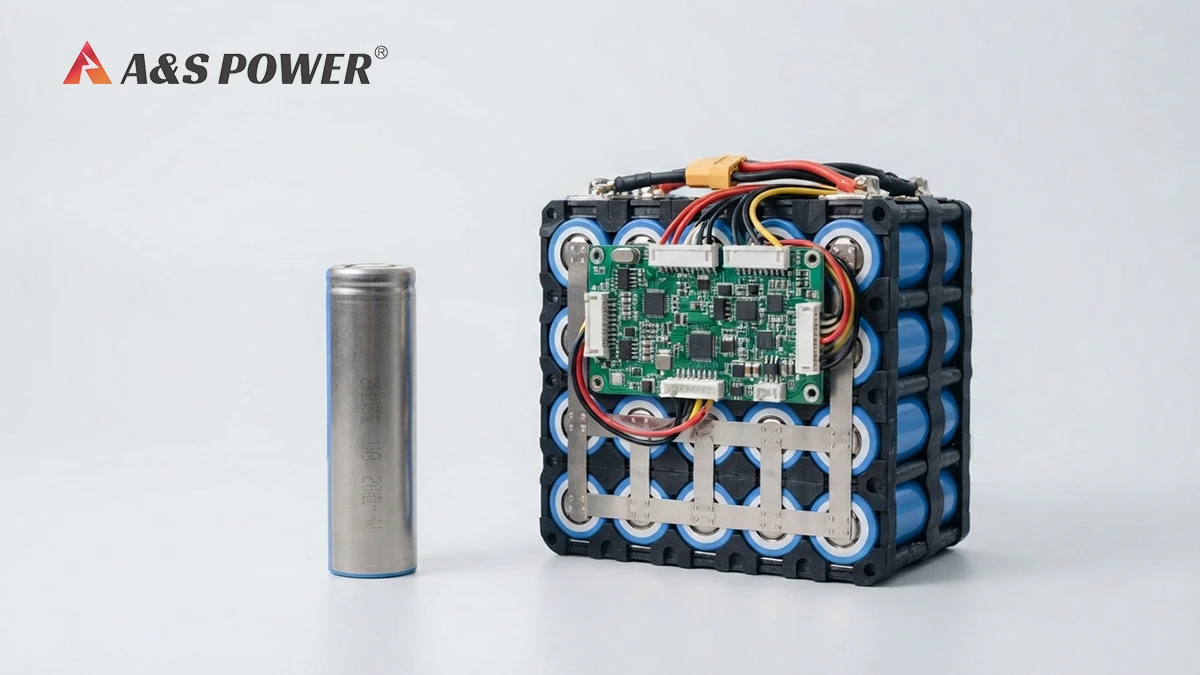 May.2026.08.0521700 Battery Pack with BMS: Design, Safety and Custom SolutionsLearn More
 -
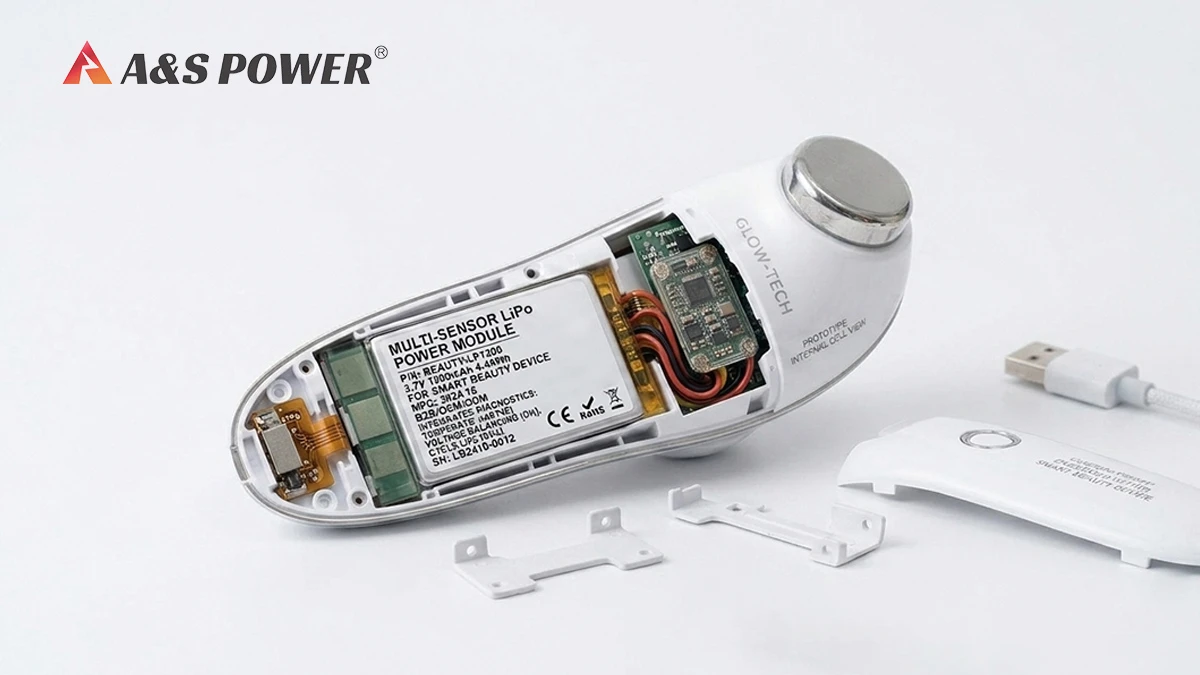 May.2026.08.04Smart Beauty Equipment Battery Pack ManufacturerLearn More
 -
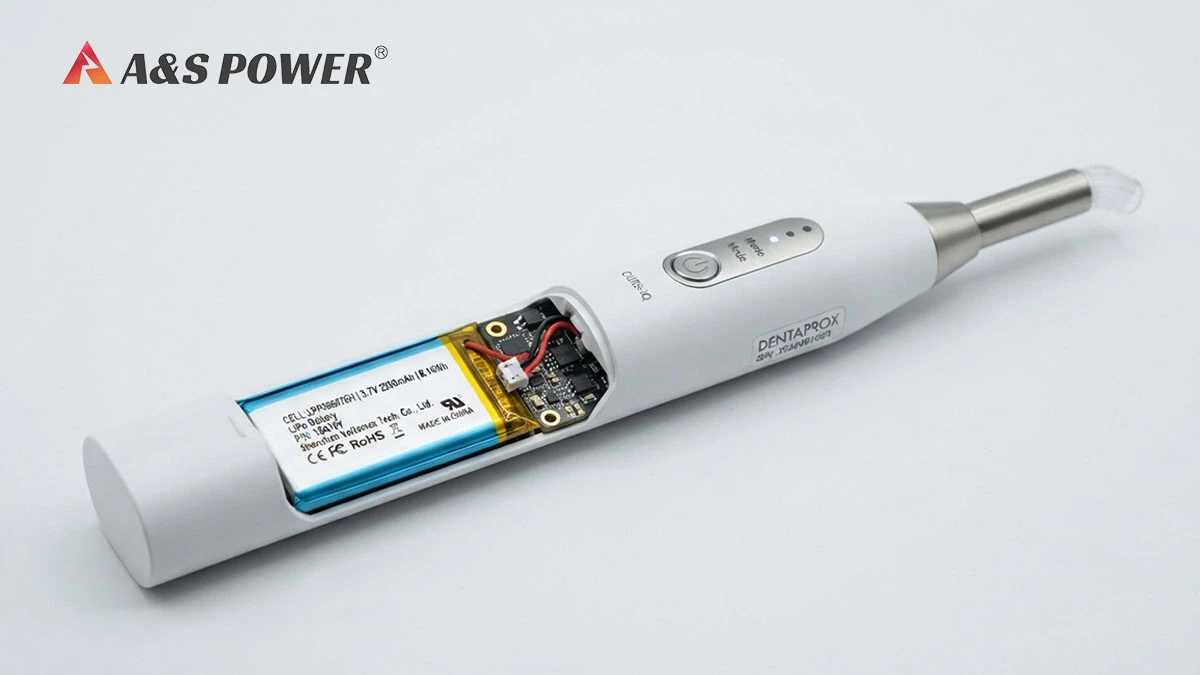 May.2026.08.04High Reliability Polymer Battery for Handheld Dental DevicesLearn More
 -
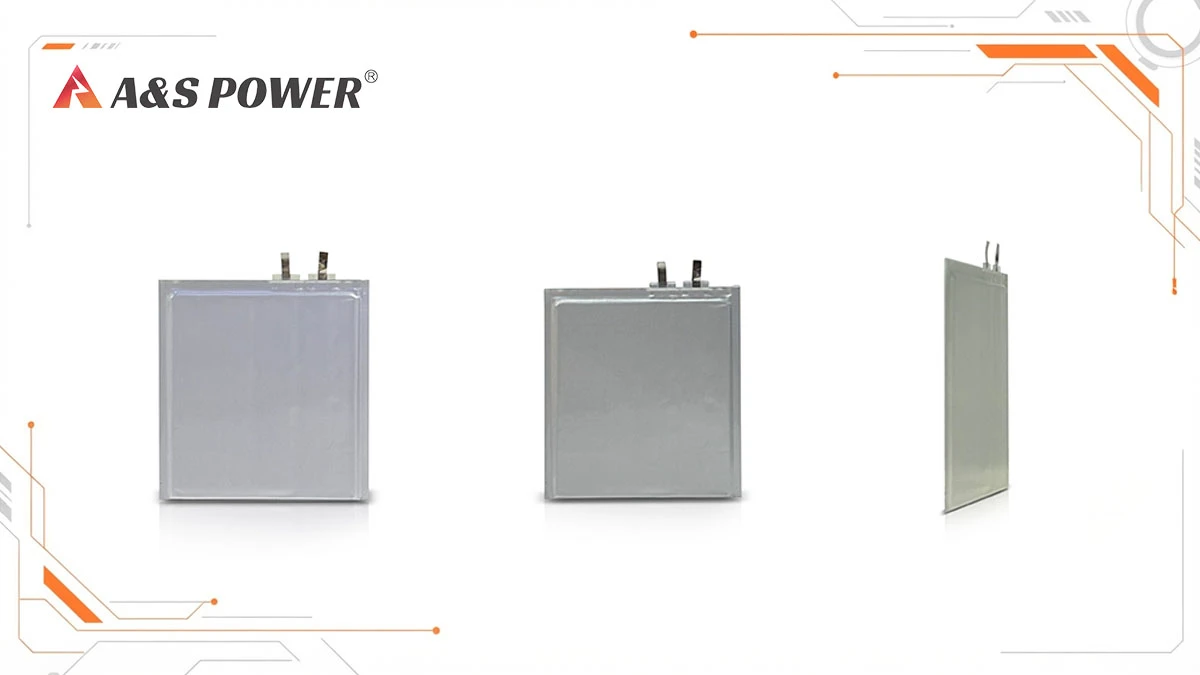 May.2026.08.04Ultra Thin Lithium Polymer Battery 0.4mm 0.5mm Custom GuideLearn More
 -
 May.2026.07.30Smoke Detector Battery Guide: Choosing the Right Battery for Reliable Fire ProtectionLearn More