




Which Solar Battery Is Right for Your Home
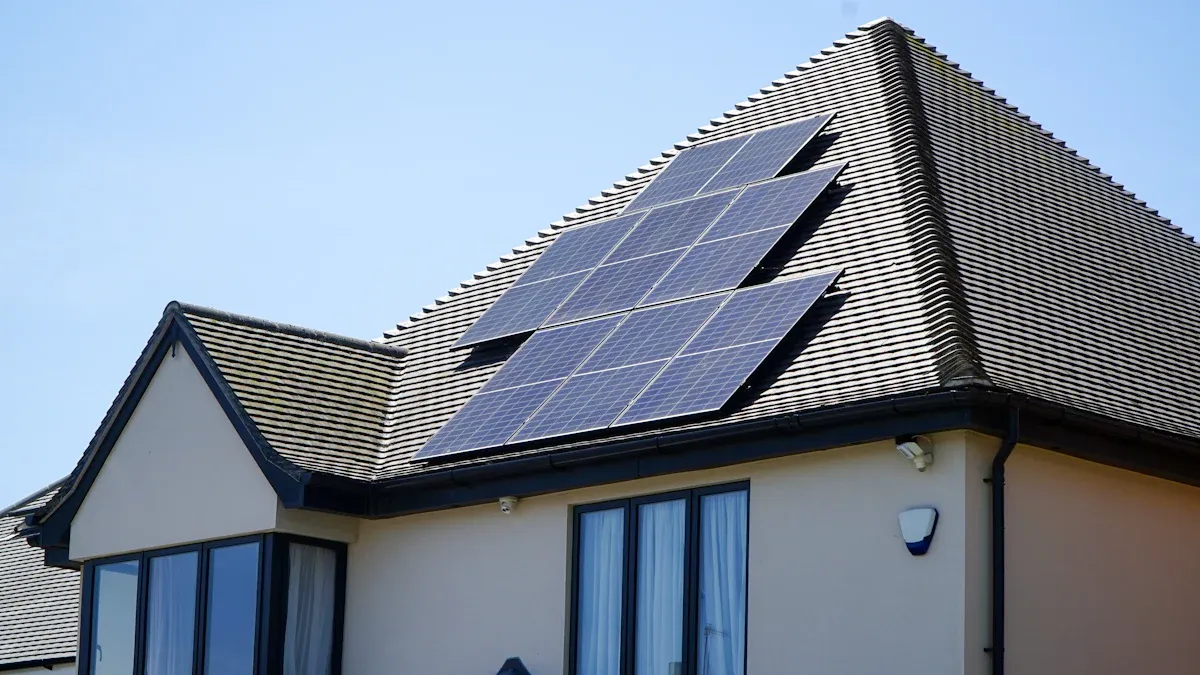
You want the best solar batteries for your house. Most people pick lithium-ion batteries. These batteries work well, last long, and need little care. The best battery for you depends on what you want. Think about how much money you have. Think about if you need backup power. Think about your future energy plans. Look at these important things:
- Efficiency
- Capacity
- Lifespan
- Warranties
- Budget
- Current energy use
- Backup power needs
- Scalability
- Self-reliance vs. grid integration
Think about your energy goals before you choose. This will help you pick the right battery for you.
Key Takeaways
- Lithium-ion batteries are a top pick for home solar. They work well, last long, and need little care.
- Think about your energy needs, your budget, and backup power. This helps you pick the right solar battery for your home.
- Taking care of your battery helps it last longer. Lithium-ion batteries need little care. Lead-acid batteries need more checks.
- Use government help and rebates to lower the first cost. This can help you save more money over time.
- Talk to a solar expert about your energy needs. Make sure your battery works with your solar system for best results.
What Are Solar Batteries and Why Use Them

How Solar Batteries Work
Solar batteries store power from your solar panels. Your panels make extra energy during the day. The battery saves this energy for later use. You can use stored power at night or when the lights go out. This helps you use more solar power and less grid power.
- Solar batteries take extra power from your solar panels.
- They keep this power until you need it, like at night or when it is cloudy.
- When your house needs power, the battery sends it through an inverter so your appliances can use it.
- The battery uses chemicals to hold and give out energy.
Solar batteries make your solar system work better. You get power even when the sun is not out.
Benefits for Homeowners
Solar batteries for homes have many good points. The table below shows the main benefits:
| Benefit | Description |
|---|---|
| Reduced Electricity Bills | Save money by using stored solar power later. |
| Increased Energy Independence | Use your own power and depend less on the grid. |
| Protection Against Power Outages | Keep important things working when the power goes out. |
| Maximized Solar Energy Utilization | Use more of the energy your panels make and waste less. |
| Reduced Peak-Time Charges | Use stored power when electricity costs more. |
| Environmentally Friendly Energy | Use clean solar power and help the planet. |
| Government Incentives and Rebates | Get money back with tax credits and rebates. |
| Enhanced Property Value | Make your home worth more with lower bills and more control. |
| Lower Grid Strain and Demand Charges | Help the grid by using your own stored power. |
| Smart Energy Management | Watch and control your energy use to save more. |
| Scalability and Future Expansion | Add more batteries if you need more power later. |
| Long-Term Cost Savings | Save money over time with lower bills. |
Tip: Solar batteries help you control your energy and save money. They also make your home cleaner and more dependable.
Solar Batteries for Home: Main Types
When you pick a solar battery for your house, you should know the main types. Each kind works in its own way and fits different needs.
Lithium-Ion Batteries
Most home solar battery systems use lithium-ion batteries. These batteries hold lots of energy in small spaces. They last a long time and work well. Many people choose lithium-ion batteries because they need little care and last for many cycles. Safety is important at home, so lithium iron phosphate (LFP) batteries are very stable. You can look at the table below to compare the main lithium-ion types:
| Feature | Lithium Iron Phosphate (LFP) | Nickel Manganese Cobalt (NMC) | Nickel Cobalt Aluminum (NCA) |
|---|---|---|---|
| Primary Advantage | Safety & Lifespan | Energy Density | High Energy & Power |
| Cycle Life | 3,000-6,000+ cycles | 1,000-2,000 cycles | 500-1,000 cycles |
| Safety | Excellent | Good | Fair |
| Energy Density | Good | Excellent | Excellent |
Lithium-ion batteries give you steady power and are easy to add more. Most new solar battery systems for homes use this kind.
Lead-Acid Batteries
Lead-acid batteries have been used in homes for many years. You often see them in off-grid solar setups. These batteries cost less than other types and work well when it is hot. You need to check water and clean them often. Lead-acid batteries are heavy and need more room. The table below shows what they are good for and their limits:
| Applications | Limitations |
|---|---|
| Cost-effective for solar energy storage | Require regular maintenance |
| Durable and can tolerate high temperatures | Heavy and bulky |
| Widely available and easy to replace | Need proper ventilation |
| Long lifespan with proper care | Environmental concerns due to toxic substances |
Nickel-Cadmium Batteries
Nickel-cadmium batteries last a long time and work in hard places. You see them where it gets very hot or cold. These batteries are tough and keep working when others stop. You must recycle them carefully because cadmium can hurt the environment. Many programs help with safe recycling.
- Nickel-cadmium batteries are very strong.
- You need to handle and recycle them safely.
Flow Batteries
Flow batteries use liquids to store energy. You can make them bigger if you need more power. These batteries last a long time and are good for the planet. You need more space and they cost more at first. Flow batteries need regular checks and careful setup. The table below shows their good and bad points:
| Advantages | Disadvantages |
|---|---|
| Scalability | High initial costs |
| Long lifespan | Requires more space |
| Environmentally friendly | Needs regular maintenance |
Emerging Technologies (Saltwater)
Saltwater batteries use water to store energy. They are safer and better for the earth. These batteries do not use rare materials like lithium or cobalt. Saltwater batteries may be used more in the future, but you might not find them everywhere yet.
Note: Learn about all battery types before you choose one for your home. Each type has special benefits for your needs.
Home Battery Comparison: Pros, Cons, and Costs
Picking a solar battery for your house can be tricky. You need to know how each battery works. You should learn how long each battery lasts. You also want to know the price. This battery comparison helps you see the big differences. Use the battery chart to find the best match for your needs.
Lithium-Ion: Advantages & Disadvantages
Lithium-ion batteries are the most common for homes. They last a long time and work well. You do not need to take care of them much. These batteries charge fast and fit in small places. Most lithium-ion batteries last 10 to 15 years. Many have warranties for 10 to 12 years.
- Lasts 10–15 years
- Charges fast
- Needs little care
- Stores lots of power in small space
Disadvantages:
- Costs more at first
- Can get too hot if set up wrong
- Does not like very hot or cold weather
Tip: Lithium-ion batteries are good for most people. They give backup power and need little care.
Here is a simple chart for lithium-ion batteries:
| Advantages | Disadvantages |
|---|---|
| Lasts Long | Costs More |
| Charges Fast | Sensitive to Weather |
| Needs Little Care | Safety Issues |
Lead-Acid: Advantages & Disadvantages
Lead-acid batteries have powered homes for many years. You see them in cabins and backup systems. They cost less than lithium-ion batteries. You must check water and clean them often. These batteries last 3 to 7 years.
Advantages:
- Costs less
- Easy to recycle
- Works well in hot places
Disadvantages:
- Heavy and big
- Needs care often
- Does not last as long
Note: Lead-acid batteries are good if you want to save money and do not mind taking care of them.
Here is a chart for lead-acid batteries:
| Advantages | Disadvantages |
|---|---|
| Low Price | Heavy and Big |
| Easy to Replace | Needs Care |
| Good in Heat | Shorter Life |
Nickel-Cadmium: Advantages & Disadvantages
Nickel-cadmium batteries are strong and last many years. You can use them in very hot or cold places. They charge fast and work when other batteries stop. You must recycle them because cadmium is bad for the earth.
Advantages:
- Stores lots of power
- Lasts many cycles
- Works in hot and cold
- Charges quickly
Disadvantages:
- Can lose power if not used right
- Has toxic parts, needs special recycling
- Costs more
| Advantages | Disadvantages |
|---|---|
| Stores Lots of Power | Can Lose Power |
| Lasts Many Cycles | Bad for Environment |
| Works in Any Weather | Limited Voltage |
| Charges Fast | Can Overcharge |
| Costs More |
Tip: Nickel-cadmium batteries are best for homes in tough places or if you want a battery that lasts a long time.
Flow: Advantages & Disadvantages
Flow batteries use liquid to hold energy. You can make them bigger if you need more power. They last a long time and are safe for the earth. Flow batteries cost more at first and need more room.
Advantages:
- Easy to make bigger
- Lasts over 15 years
- Safe and not toxic
Disadvantages:
- Costs more at first
- Needs checks often
- Takes up more space
| Advantages | Disadvantages |
|---|---|
| Easy to Expand | Costs More |
| Lasts Long | Needs More Room |
| Safe and Green | Needs Care |
Note: Flow batteries are good if you want to grow your system and have lots of space.
Typical Costs and Value
You want to know the price and what you get. The chart below shows battery price, size, and features. Use this chart to plan your budget.
| Battery Type | Price per kWh (USD) | 5kWh System Price | 10kWh System Price | Features |
|---|---|---|---|---|
| LiFePO₄ (LFP) | $960 – $1,650 | $4,800 – $8,200 | $9,600 – $16,500 | Safe, lasts long, good value |
| NMC Battery | $1,100 – $2,060 | $5,500 – $10,300 | $11,000 – $20,600 | Small, good in cold |
| Lead-Acid | $400 – $800 | $2,000 – $4,000 | $4,000 – $8,000 | Cheap, does not last as long |
| Nickel-Cadmium | $1,000 – $2,000 | $5,000 – $10,000 | $10,000 – $20,000 | Lasts long, tough, needs recycling |
| Flow | $700 – $1,500 | $3,500 – $7,500 | $7,000 – $15,000 | Easy to grow, lasts long, needs space |
Most people pick lithium-ion batteries for good value, long life, and little care. Lead-acid batteries are good if you want to save money and do not mind taking care of them. Nickel-cadmium batteries are best for homes in hard places. Flow batteries are great if you want to add more power later.
Remember: Pick a battery that fits your budget, space, and power needs. Always check the warranty and how long the battery will last before you buy.
Key Technical Terms for Solar Batteries
Depth of Discharge (DOD)
You should know how much energy you can use from your solar battery. Depth of Discharge (DOD) tells you what percent of the battery’s energy you use before charging it again. DOD is like a fuel gauge for your battery. If you use more energy, the battery works harder and may not last as long. Experts say you should keep DOD between 20% and 80%. This helps your battery last longer and work better.
- Keeping DOD in the safe range helps your battery last longer.
- Using DOD the right way saves money and keeps your battery healthy.
- Smart DOD use means you use less grid power and save more.
Cycle Life
Cycle life tells you how many times you can charge and use your battery before it wears out. If you use shallow discharges, your battery will last for more cycles. Deep discharges make the cycle life shorter. The table below shows what changes cycle life:
| Factor | Impact on Cycle Life |
|---|---|
| Depth of Discharge (DoD) | Shallow discharges can give you more cycles than full discharges. |
| C-rate | High C-rates make heat and stress, which shortens battery life. |
| Battery Chemistry | LiFePO4 batteries can last over 15 years if used the right way. |
Capacity & Power Rating
You should check battery capacity and power rating when picking a solar battery. Battery capacity means how much electricity the battery can store when it is full. Power rating shows how much electricity the battery can give at one time. The table below explains these words:
| Metric | Description |
|---|---|
| Total capacity | The total electricity stored in the battery when it is full, measured in kilowatt-hours (kWh). |
| Usable capacity | The electricity you can use, after the battery’s own needs. Not all stored electricity is usable. |
- More battery capacity lets you run more things for longer when the power goes out.
- Higher battery capacity helps you save money by using stored energy when electricity costs more.
- Charging with solar panels and having enough battery capacity helps you save more.
Efficiency
Efficiency shows how much energy you get out compared to what you put in. Lithium-ion batteries are very efficient, usually between 90% and 95%. This means you lose very little energy when you store and use power. Lead-acid batteries are less efficient, so you lose more energy. Lithium Iron Phosphate batteries are safe, last long, and work well, especially in hot places like Arizona.
- High efficiency means you get more energy from your battery.
- Efficient batteries help you save money and use more solar power.
Tip: Knowing these words helps you pick the best solar battery for your home and reach your energy goals.
Choosing Solar Batteries for Home
Assessing Your Energy Needs
First, find out how much electricity your home uses. Look at your power bills each month. See if your usage changes in summer or winter. Make a list of things you need during a power outage, like your fridge and lights. Check how much power your solar panels make. Think about adding new things, like an electric car or more appliances. You can ask a solar expert for help with battery size.
- Look at your bills to see how much energy you use.
- Write down what you want to keep on if the power goes out.
- Find out how much power your solar panels make.
- Think about what you might add later.
- Ask an expert for advice.
Sizing Your Battery
Pick a battery size that fits your needs. If you use 20 kWh a day, get a battery with at least 20 kWh. Give your installer the exact numbers for your electricity use. Tell them if you plan to use more power later. This helps you get a backup system that fits your home. Make sure the battery is installed safely and follows local rules.
- Choose a battery size that matches your daily use.
- Give your energy numbers to your installer.
- Plan for more power if you need it later.
Compatibility with Solar System
Check if your battery works with your solar system. The inverter type is important. Some inverters do not work with batteries. Older solar panels may need upgrades. Sometimes you need to update your system. A certified installer can help you check everything.
| Factor | Description |
|---|---|
| Inverter Type | Some inverters work better with batteries than others. |
| System Age | Older systems may need upgrades. |
| Integration Method | AC-coupled systems are often easiest to add batteries to. |
Budget and Incentives
Think about how much money you want to spend. Solar batteries cost a lot at first, but you save money over time. Many states give rebates or incentives. For example, California has the SGIP program. New York gives rebates for battery storage. You may get a federal tax credit or special loans. These programs help you pay less and make it easier to use solar energy.
Matching Battery Type to Priorities
Pick a battery that fits your main goal. If you want safety and long life, choose LFP batteries. If you have little space, NMC batteries are a good choice. Batteries are quieter and cleaner than generators. Batteries help you use more of your own energy and help the planet.
Tip: The right battery helps you control your energy and be more independent.
Installation & Maintenance Tips
Professional vs. DIY Installation
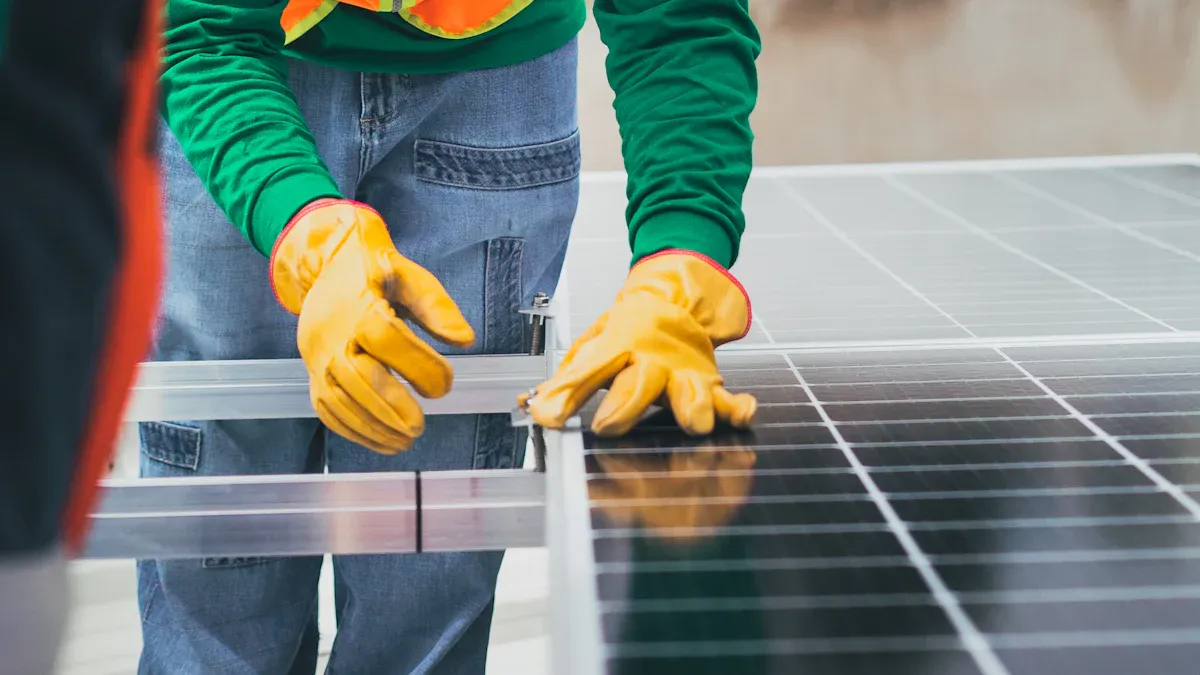
You may think about installing your solar battery yourself. You could also hire a professional. There are some things you should know. Local rules are important. You need permits for home battery systems. Certified installers know these rules. They make sure your system follows the law. Safety is very important. Home batteries hold a lot of energy. If you install them wrong, it can be dangerous. You could have electrical problems or even a fire. Professionals know how to keep you safe. Most battery makers want a certified installer. If you install it yourself, you might lose your warranty. Certified installers set up your battery the right way. They make sure it works well with your solar panels. You get the best performance from your system.
Tip: Getting a professional to install your battery helps you feel safe. It also protects your money and your home.
Maintenance by Battery Type
All batteries need some care to work well. Lithium-ion batteries need very little care. You should check them sometimes for dust or loose wires. Lead-acid batteries need more care. You must check the water and clean the terminals. Nickel-cadmium batteries need you to watch for leaks. You should recycle them safely. Flow batteries need you to check the liquid and system parts often. Good care helps your battery last longer. It also keeps your home safe.
Safety Tips
You should keep your battery in a safe spot. Use this table to help you pick the best place:
| Location Criteria | Recommendation | Reasoning |
|---|---|---|
| Temperature | Keep the battery in a place that is not too hot or cold. | Very hot or cold places can hurt the battery and make it not last as long. |
| Ventilation | Put the battery where air can move around it. | Good airflow helps keep the battery cool. |
| Moisture | Keep the battery dry and away from water. | Water can cause problems like short circuits. |
| Accessibility | Make sure you can get to the battery easily. | You or a worker need to check the battery sometimes. |
| Proximity | Keep the battery away from bedrooms and things that can catch fire. | This helps keep your family safe if something goes wrong. |
- Look for damage on the battery, inverter, or wires.
- Keep the area clean and free of dust.
- Watch for leaks or rust, and call a professional if you see any.
- Make sure all wires are tight and not loose.
Note: Taking care of your battery and putting it in a safe place helps it work better and last longer.
You now know that lithium-ion batteries work best for most homes. Your needs and goals matter most when you choose a battery. Use the guides and charts in this blog to compare your options. Talk to a solar expert for advice that fits your home.
Remember: The right battery helps you save money and use more clean energy.
Quick Checklist:
- Know your energy use
- Set your budget
- Check battery compatibility
- Think about future needs
- Ask a professional for help
FAQ
What is the best solar battery for most homes?
You will find lithium-ion batteries work best for most homes. These batteries last long, need little care, and store lots of energy. You get reliable backup power and save money over time.
How long do solar batteries last?
Most solar batteries last between 5 and 15 years. Lithium-ion batteries often last the longest. You can extend battery life by following care tips and keeping the battery in a safe spot.
Can you add more batteries later?
Yes, you can add more batteries to your system. Many lithium-ion and flow batteries let you expand easily. You should check with your installer to make sure your system supports extra batteries.
Do solar batteries work during a power outage?
Solar batteries give you backup power when the grid goes down. You can keep lights, your fridge, and other important devices running. You need to set up your system for backup use.
-

 May.2026.05.21IEC 62133 Rechargeable LiPo Battery for Medical Devices GuideLearn More
 -
 May.2026.05.20Custom UL2054 Certified Lithium Polymer Battery Pack: Complete OEM GuideLearn More
 -
 May.2026.05.20Battery for Portable PA System: Complete Guide to Lithium Battery Solutions for Professional Audio EquipmentLearn More
 -
 May.2026.05.19What Battery Is Used in Portable Guitar Amplifiers? A Complete Technical & Practical GuideLearn More
 -
 May.2026.05.15Complete Guide to Portable Amplifier Battery Packs (Li-ion & LiFePO4 Solutions)Learn More