



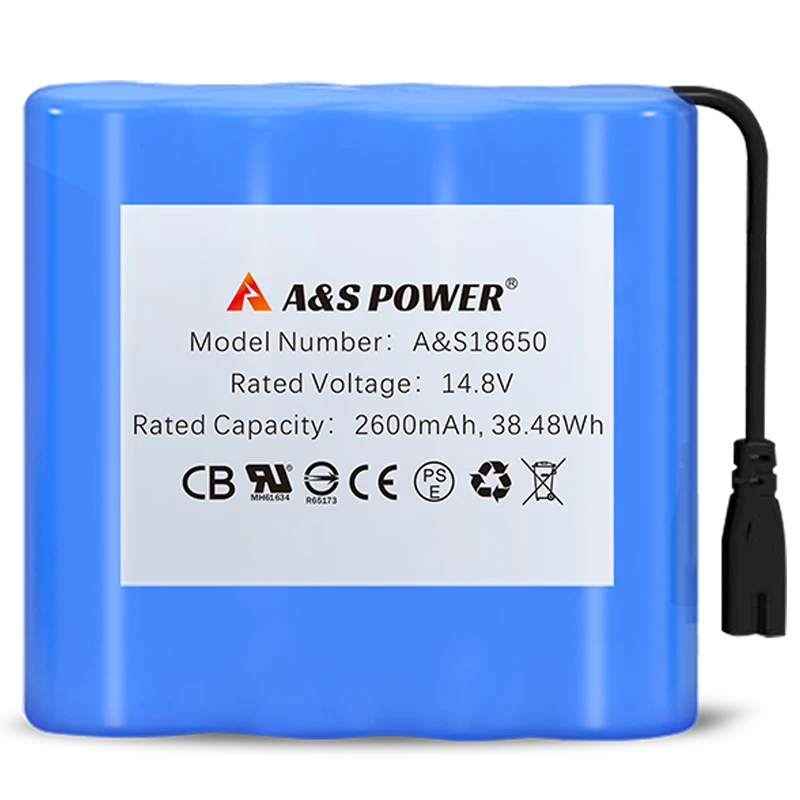



Why Do Lithium Batteries Need to Undergo Aging Tests?

Introduction: Why Aging Tests Matter More Than Ever
As a lithium battery manufacturer serving global OEM and industrial clients, we are often asked a critical question:
“Why do lithium batteries need aging tests before shipment?”
The short answer is risk control.
The long answer involves electrochemistry, safety engineering, quality consistency, and regulatory compliance.
Lithium-ion and lithium polymer batteries power medical devices, wearables, EV systems, energy storage units, and industrial electronics. A single hidden defect can result in capacity loss, swelling, thermal runaway, or even fire—sometimes weeks or months after deployment.
That is exactly why battery aging tests exist.
From our experience, aging is not an optional step—it is a non-negotiable gatekeeper between production and real-world application.
This article provides a deep, engineering-level explanation of:
-
What battery aging tests are
-
Why lithium batteries are especially sensitive
-
How aging exposes early-life failures
-
What data aging tests reveal
-
How aging supports safety certifications
-
Why OEM buyers should care
What Is a Lithium Battery Aging Test?
A lithium battery aging test is a controlled process where finished batteries are stored, monitored, and sometimes cycled for a defined period under specific environmental conditions.
The goal is simple but critical:
To identify early-stage failures and unstable cells before the battery reaches the customer.
Typical Aging Test Conditions
-
Time duration: 24 hours to 30+ days
-
State: Fully charged, partially charged, or resting
-
Temperature: Room temperature or elevated (e.g., 45–60°C)
-
Monitoring parameters:
-
Open circuit voltage (OCV)
-
Self-discharge rate
-
Internal resistance
-
Swelling or deformation
-
Temperature anomalies
-
Unlike performance tests, aging tests focus on time-dependent failure mechanisms.
Why Lithium Batteries Require Aging More Than Other Batteries
Lithium batteries are energy-dense electrochemical systems, which makes them powerful—and unforgiving.
High Energy Density = High Sensitivity
Compared with NiMH or lead-acid batteries, lithium cells:
-
Store more energy per unit volume
-
Operate within narrow voltage windows
-
Are highly sensitive to micro-defects
Even small inconsistencies can lead to exponential degradation over time.
The Core Reasons Lithium Batteries Must Undergo Aging Tests
1. Detect Early-Life Failures Caused by Manufacturing Defects
In battery engineering, failures follow a bathtub curve:
| Phase | Failure Rate |
|---|---|
| Early-Life Failures (ELF) | High |
| Normal operation | Low |
| End-of-life | Rising |
Aging tests are specifically designed to eliminate early-life failures.
Common defects exposed during aging:
-
Micro internal short circuits
-
Contamination-induced self-discharge
-
Poor electrolyte wetting
-
Defective separator alignment
Without aging, these batteries may pass final inspection—but fail in the field.
2. Identify Abnormal Self-Discharge
Self-discharge is one of the most critical indicators of lithium battery health.
| Self-Discharge Rate | Interpretation |
|---|---|
| <2% / month | Normal |
| 3–5% / month | Marginal |
| >5% / month | High-risk defect |
Aging allows us to track voltage drop over time, which directly reveals internal instability.
3. Prevent Swelling and Gas Generation Issues
Lithium polymer batteries are especially prone to swelling due to:
-
Electrolyte decomposition
-
Gas formation reactions
-
Poor formation quality
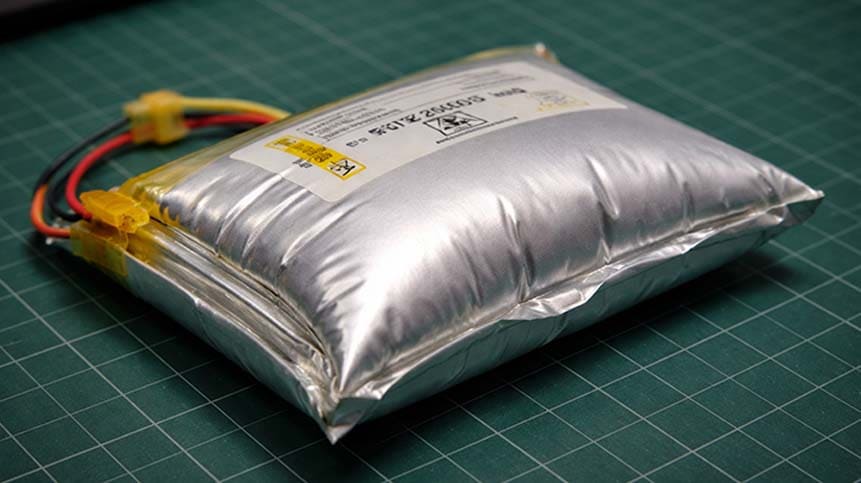
Swelling may not appear immediately after production.
Aging creates the time window needed for these issues to surface.
4. Validate Formation Process Quality
Battery aging is closely linked to the formation process, where SEI (Solid Electrolyte Interphase) layers are created.
If SEI formation is unstable:
-
Internal resistance rises
-
Cycle life drops
-
Thermal stability decreases
Aging confirms whether formation was:
-
Complete
-
Uniform
-
Chemically stable
5. Reduce Safety Risks in Real Applications
From medical devices to consumer electronics, lithium batteries operate in unpredictable environments.
Aging screens out cells that are:
-
Prone to overheating
-
Voltage unstable
-
Structurally weak
This directly reduces:
-
Field failure rates
-
Warranty claims
-
Product recalls
Aging Test Data: What Manufacturers Actually Measure
Below is a simplified example of aging test evaluation metrics:
| Parameter | Before Aging | After Aging | Pass Criteria |
|---|---|---|---|
| OCV drop (7 days) | 4.18V | 4.12V | ≥4.10V |
| Internal resistance | 48 mΩ | 50 mΩ | ≤55 mΩ |
| Swelling | None | None | No deformation |
| Temperature delta | +1.2°C | +1.4°C | ≤3°C |
Cells outside acceptable thresholds are rejected or reworked.
Aging Tests and Global Compliance Standards
While not always explicitly named, aging supports compliance with:
-
ISO 9001 / IATF 16949 – Quality systems
Regulatory bodies expect manufacturers to demonstrate process control, not just test results.
Aging is a core part of that proof.
Why OEM and B2B Buyers Should Care About Aging Tests
From a buyer’s perspective, aging tests translate into:
-
Lower field failure rates
-
More stable capacity consistency
-
Improved product lifespan
-
Stronger brand reputation
If a supplier skips or shortens aging:
-
Risk is shifted to you
-
Failures appear after deployment
-
Root-cause tracing becomes costly
Aging is not a cost—it is insurance.
Aging vs Cycling Tests: Not the Same Thing
| Test Type | Purpose |
|---|---|
| Aging Test | Detect early instability |
| Cycle Life Test | Measure long-term durability |
| Capacity Test | Verify rated performance |
A battery can pass cycle testing and still fail aging.
That is why both are required, not interchangeable.
How Professional Manufacturers Implement Aging at Scale

In our factory operations, aging involves:
-
Dedicated aging rooms
-
Real-time voltage & temperature logging
-
Batch-level traceability
-
Automated alarm thresholds
This allows us to:
-
Identify systemic process issues
-
Improve yield consistency
-
Deliver predictable quality to OEM clients
FAQ – Lithium Battery Aging Tests
How long does a lithium battery aging test take?
Typically between 3 and 14 days, depending on application risk level and customer requirements.
Is aging required for all lithium batteries?
For OEM, medical, industrial, and export batteries, aging is strongly recommended and often expected.
Can aging tests be skipped to reduce cost?
They can—but doing so significantly increases failure risk, recalls, and long-term cost.
Do lithium polymer batteries need aging more than lithium-ion?
Yes. LiPo cells are more sensitive to swelling and gas formation, making aging even more critical.
Does aging affect delivery lead time?
Slightly—but it ensures predictable, safe, and compliant delivery, which outweighs speed risks.
Conclusion: Aging Tests Are a Marker of a Serious Manufacturer
From our professional standpoint, battery aging tests represent responsibility.
They show that a manufacturer:
-
Understands lithium chemistry
-
Respects end-user safety
-
Commits to long-term reliability
If you are sourcing lithium batteries for critical applications, always ask one question:
“What is your aging test process?”
The answer will tell you everything.
-

 May.2026.08.0521700 Battery Pack with BMS: Design, Safety and Custom SolutionsLearn More
 -
 May.2026.08.04Smart Beauty Equipment Battery Pack ManufacturerLearn More
 -
 May.2026.08.04High Reliability Polymer Battery for Handheld Dental DevicesLearn More
 -
 May.2026.08.04Ultra Thin Lithium Polymer Battery 0.4mm 0.5mm Custom GuideLearn More
 -
 May.2026.07.30Smoke Detector Battery Guide: Choosing the Right Battery for Reliable Fire ProtectionLearn More